The Court / Public register
PRIMOGEN
Eight voices around the throne. Alongside François Villon, the Primogen Council governs Paris. It gives voice to the alliances, debts, ambitions and fault lines that run through the Court.
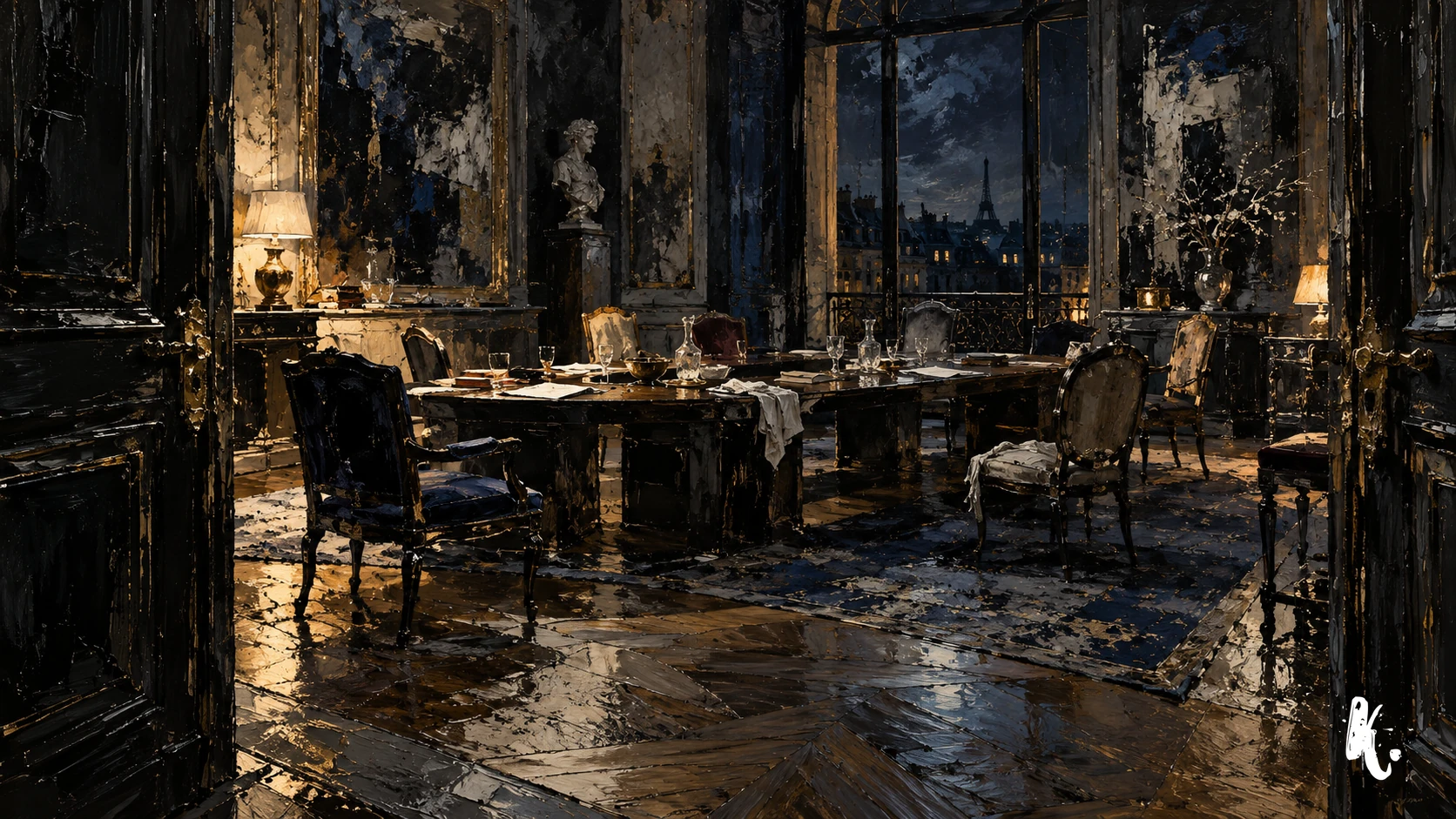
A Council of people, not clans
Every seat joins a person, an office and interests that do not always coincide. The Council takes part in governing Paris; it replaces neither the Prince’s decisions nor the responsibilities of the Bourgs.
01 / Established seats
0801
 Primogen
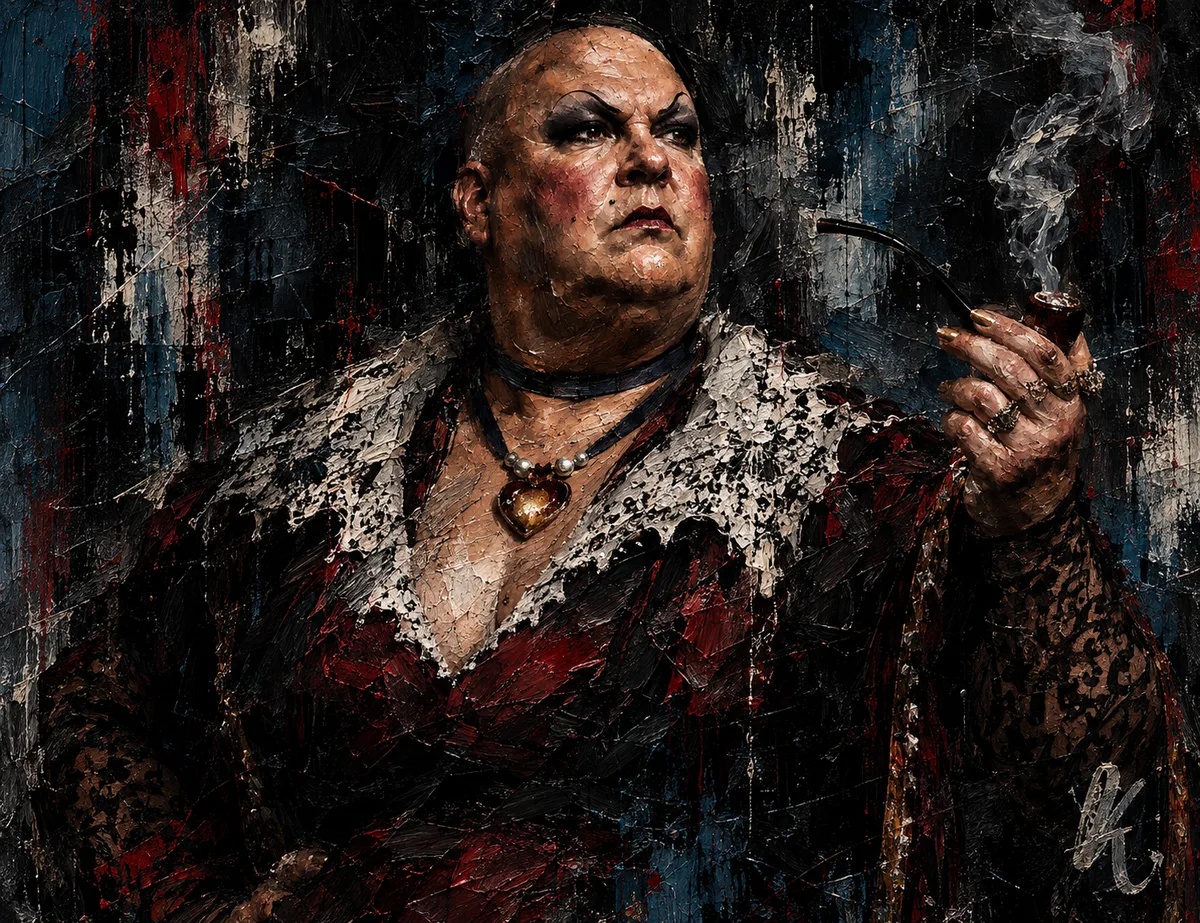
Dame Freesia
ClanVentrueOpen profileClose profileIllustration by Joh'K Since 2010
Dame Freesia represents the Ventrue through the strength of institutions, not nostalgia for the old nobility. At the Council, she first asks who will actually bear the cost of a decision.
Freesia does not owe her seat to the old French lineages. Her authority is a personal and political construction, reinforced by her presidency of the Ventrue Directorate of France since 1990. She wants to prove that an institution can endure without forcing those who serve it to become copies of their predecessors.
Her caution with Villon reflects both the history of the French Ventrue and their mutual need for continuity. She distrusts decisions whose cost no one will bear and can take institutional responsibility so far that she sometimes treats emotion as a variable to be managed.
02
 Primogen
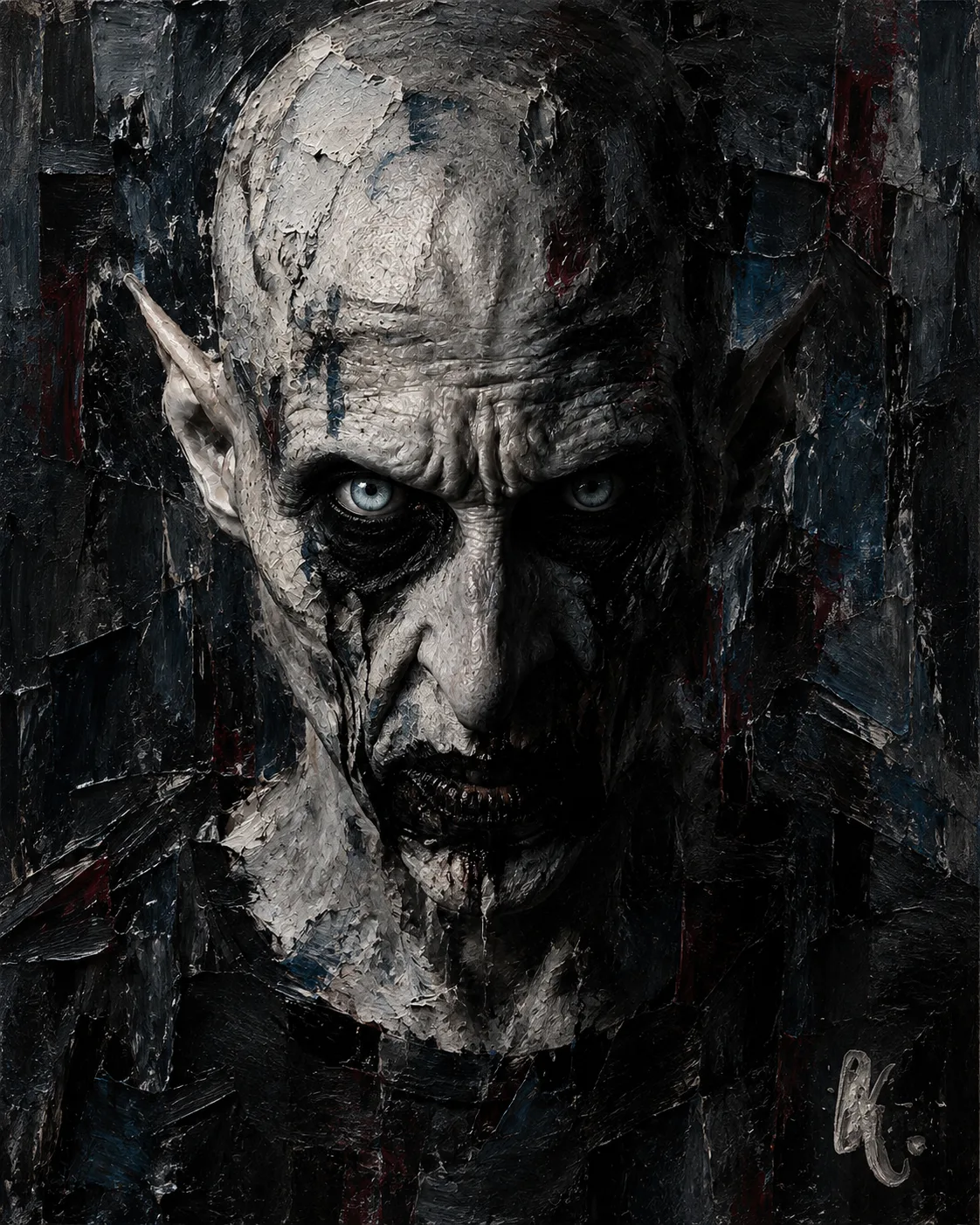
Orlok
ClanNosferatuOpen profileClose profileIllustration by Joh'K Since 1972
Orlok does not try to know everything. He tracks what is missing, who profits from absent information and what verification would cost. At the Council, he unsettles comfortable certainties.
In the nineteenth century, Orlok built the public identity of Max Schreck, then played Count Orlok in Nosferatu in 1922. Fiction turned his face into a mask known to everyone and his biography into far less reliable ground. His sire remains unknown.
He is less interested in collecting secrets than in locating gaps: who benefits from missing information, what verification would cost and what trace the search would leave. After SchreckNET, this discipline makes his networks essential. It also feeds his best-known flaw: sometimes suspecting a second game behind a simple fact.
03
 Primogen
Elara von Stein
ClanTremereOpen profileClose profileIllustration by Joh'K Since 6 June 2006
Elara von Stein approaches the Council as a structural problem. She separates real danger, the fear it creates and the political use of that fear, with a marked preference for method and verification.
Elara already held her seat before the fall of Vienna. She did not receive the office as a reward for breaking with the old Pyramid: she was a Parisian power before that structure collapsed. Bourdana is publicly recognised as her sire, and Elara is now affiliated with House Carna.
The Château de Vincennes reflects her preference for systems whose limits can be understood. She requires provenance, method and named costs. Orlok sometimes reproaches her for verifying useful information too slowly; she reproaches him for offering a hypothesis too early to those already looking for certainty.
04
 Primogen
Mathilda Giovanni
ClanHecataOpen profileClose profileIllustration by Joh'K Since 21 March 2025
Mathilda Giovanni brings the memory of the dead, archives and contracts to the Council. Her seat establishes a recognised Hecata voice without granting her clan territorial sovereignty.
Born in Venice in 1668 and Embraced in 1695, Mathilda returned from a long torpor that began in 1794. She joined the Council as a representative of Hecata interests without claiming that the Hecata had joined the Camarilla. Her allegiance to the Sect is individual, and Villon fully recognises her seat.
Her work lies where legal memory meets the memory of the dead: archives, inheritances, contracts and old obligations. Her appointment gives the Hecata of Paris a stable political channel. She must still convince those who regard her as a long-term guest rather than a transformation of the Praxis.
05
 Primogen
Lydia Veyrac
ClanSacerdoceOpen profileClose profileIllustration by Joh'K Since 5 May 2025
Lydia Veyrac questions desire, consent and imposed roles. Her knowledge of procedure lets her recognise elegant decisions that would prove impossible to carry out cleanly.
A former Prévôt, Lydia knows Parisian law from its coercive side. Her appointment does not mean that the Sacerdoce joined the Camarilla: she entered it as an individual. Her recent position places her at the centre of decisions while leaving her with a precise memory of how they reach the streets.
She questions proclaimed freedoms, consent obtained under pressure and procedures too elegant to be carried out cleanly. Villon opened the Council to her without expecting convenient obedience. Her critics sometimes believe she suspects coercion where habit and fear are the stronger forces.
06
 Primogen
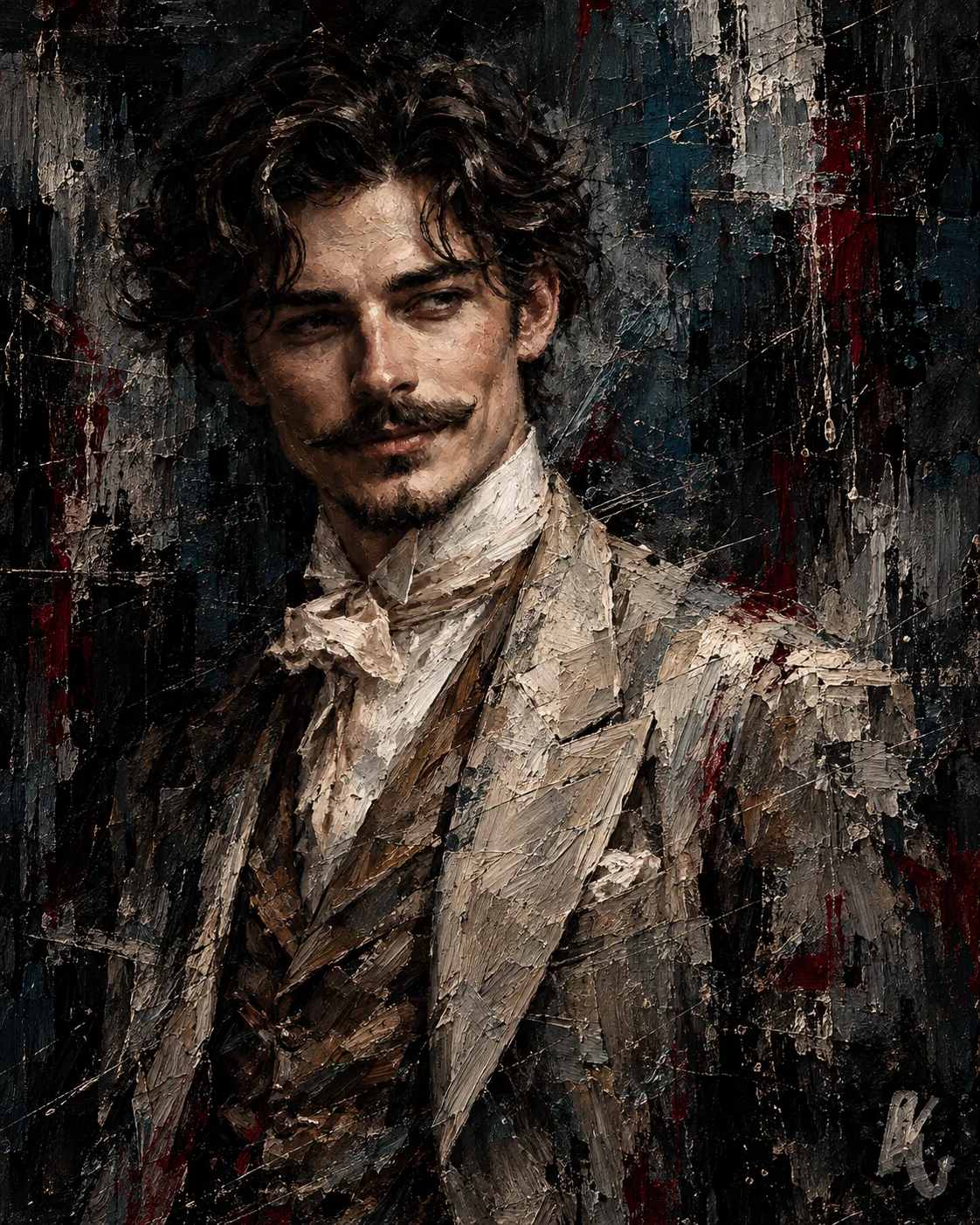
Adrien Moreau
ClanMalkavianOpen profileClose profileIllustration by Joh'K Since 2009
Adrien Moreau maps branching paths rather than predicting the future. When the Council demands a binary answer, he shows which paths a decision closes and which risks it opens.
Adrien refuses the convenient role of prophet. His title, Cartographer of Possibilities, describes a more demanding practice: observing repetitions, choices that close paths and consequences hidden by an immediate solution. Sainte-Anne remains the symbolic anchor of this work without becoming Malkavian territory.
Villon listens to him for the branching paths he can make visible, never as an infallible voice. Adrien fears becoming captive to his own interpretations. His peers value his ability to dismantle a false certainty and dread the moment when the map becomes so broad that it delays necessary action.
07
 Primogen
Claudia de Lyon
ClanToréadorOpen profileClose profileIllustration by Joh'K Since 5 November 1948
Claudia de Lyon treats culture as an infrastructure of power. Reputation, patronage, programming and scandal become channels through which authority circulates.
Claudia is one of the longest-standing voices on the contemporary Council. She reads cultural institutions, criticism, patronage and scandal as political routes. The Palais Garnier captures her method: a monument visible to everyone whose nocturnal uses remain opaque to almost all.
She often waits for others to reveal their positions before reframing the issue through reputation and duration. Her relationship with Villon is old and functional. She knows that a stable Praxis protects the institutions she built, even when she denies the Prince the comfort of immediate approval.
08
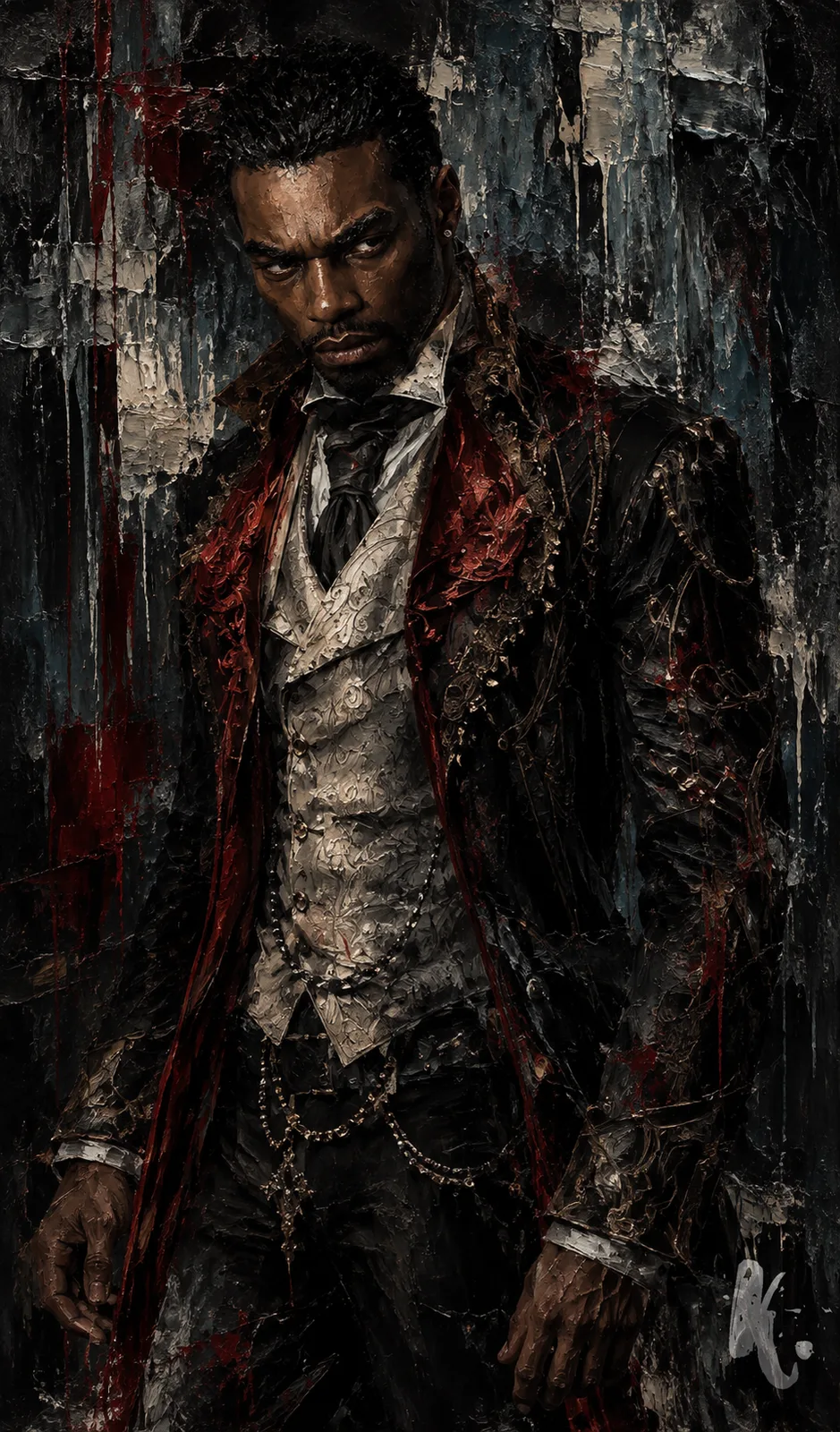 Primogen
Malik al-Faransi
ClanBanu HaqimOpen profileClose profileIllustration by Joh'K Since 2018
Malik al-Faransi measures a rule by the way it affects the weak and the powerful alike. At the Council, he distinguishes justice, vengeance and mere political convenience.
Malik is a recent figure on the Council without being a young Kindred. His seat accompanies the Parisian integration of the Banu Haqim, but he refuses to be reduced to a diplomatic symbol. He knows that the Praxis lives through compromise; he asks when an exception becomes nothing more than a privilege of the powerful.
He readily lets others establish the facts before questioning the precedent their decision will create. This rigour brings him close to Elara on matters of method and sets him against arrangements that replace justice with a private favour. His human name, direct sire and personal faith are not published.