Paris / Public register / The city in motion
Paris After Midnight
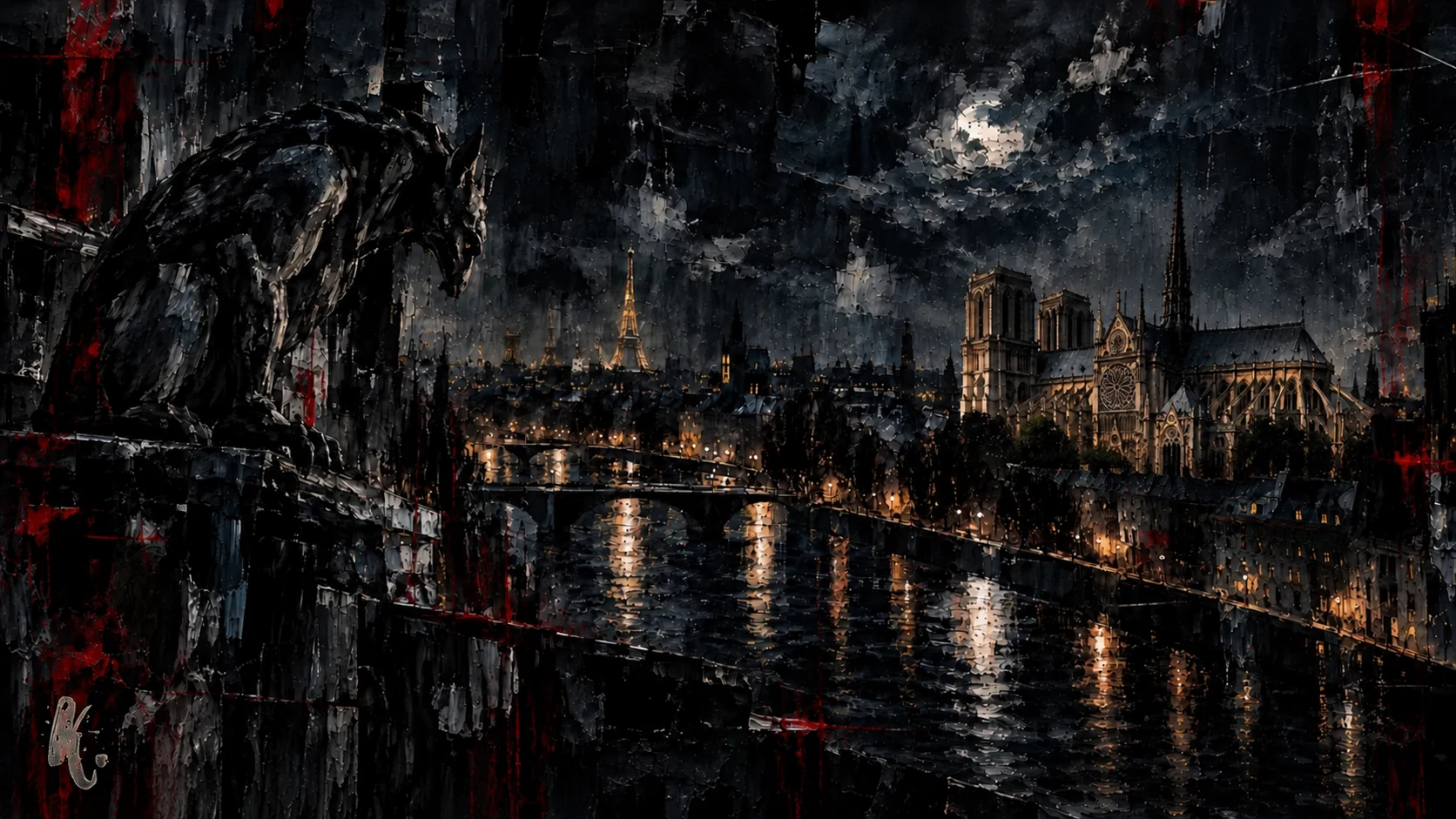
In Paris, in July 2025, the night does not stop: its population changes. Residents, travellers, staff and night services leave ordinary traces. For a vampire, survival means making their presence plausible, not erasing every trace.
01 / Paris After Midnight
A city whose population changes
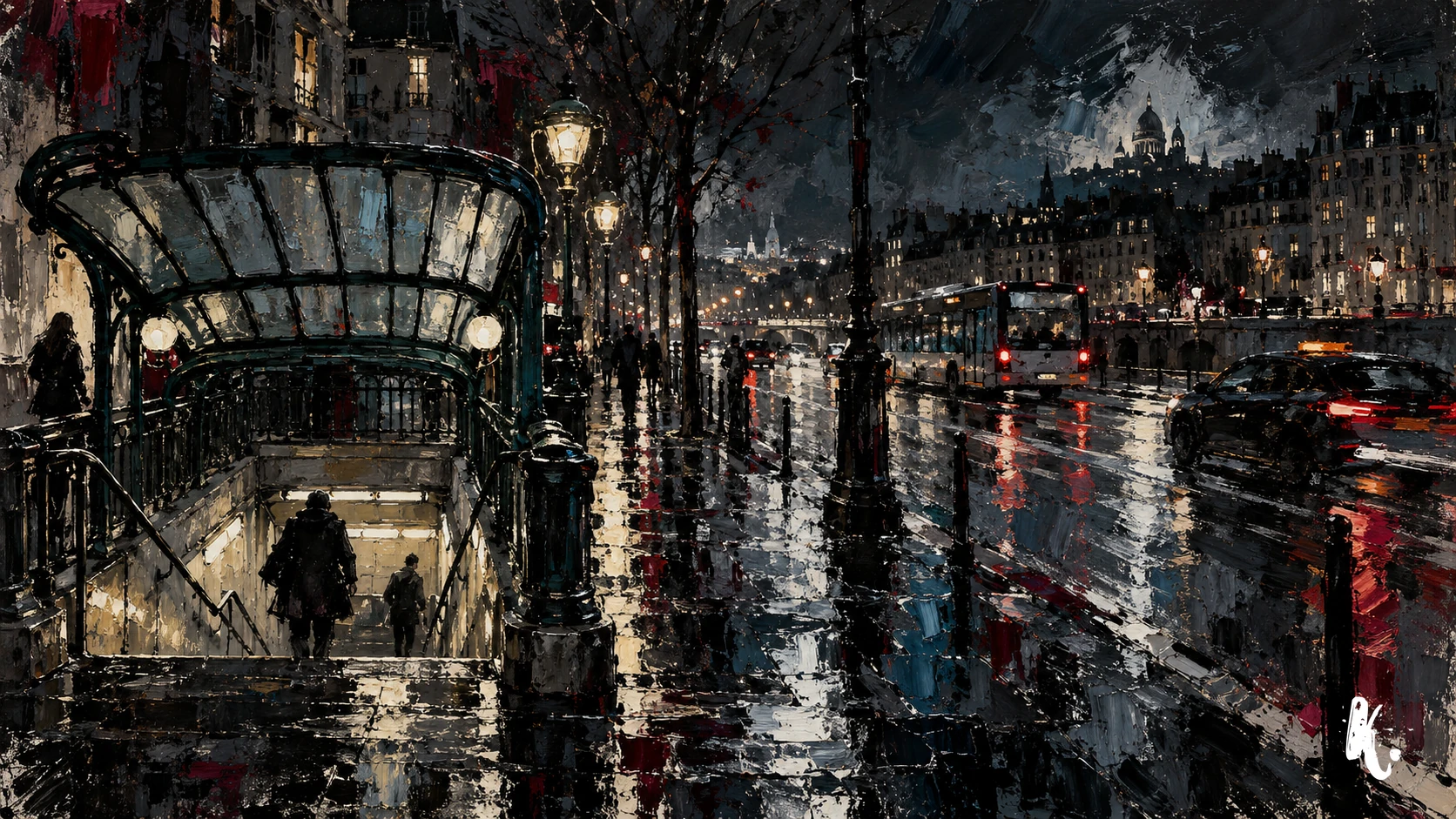
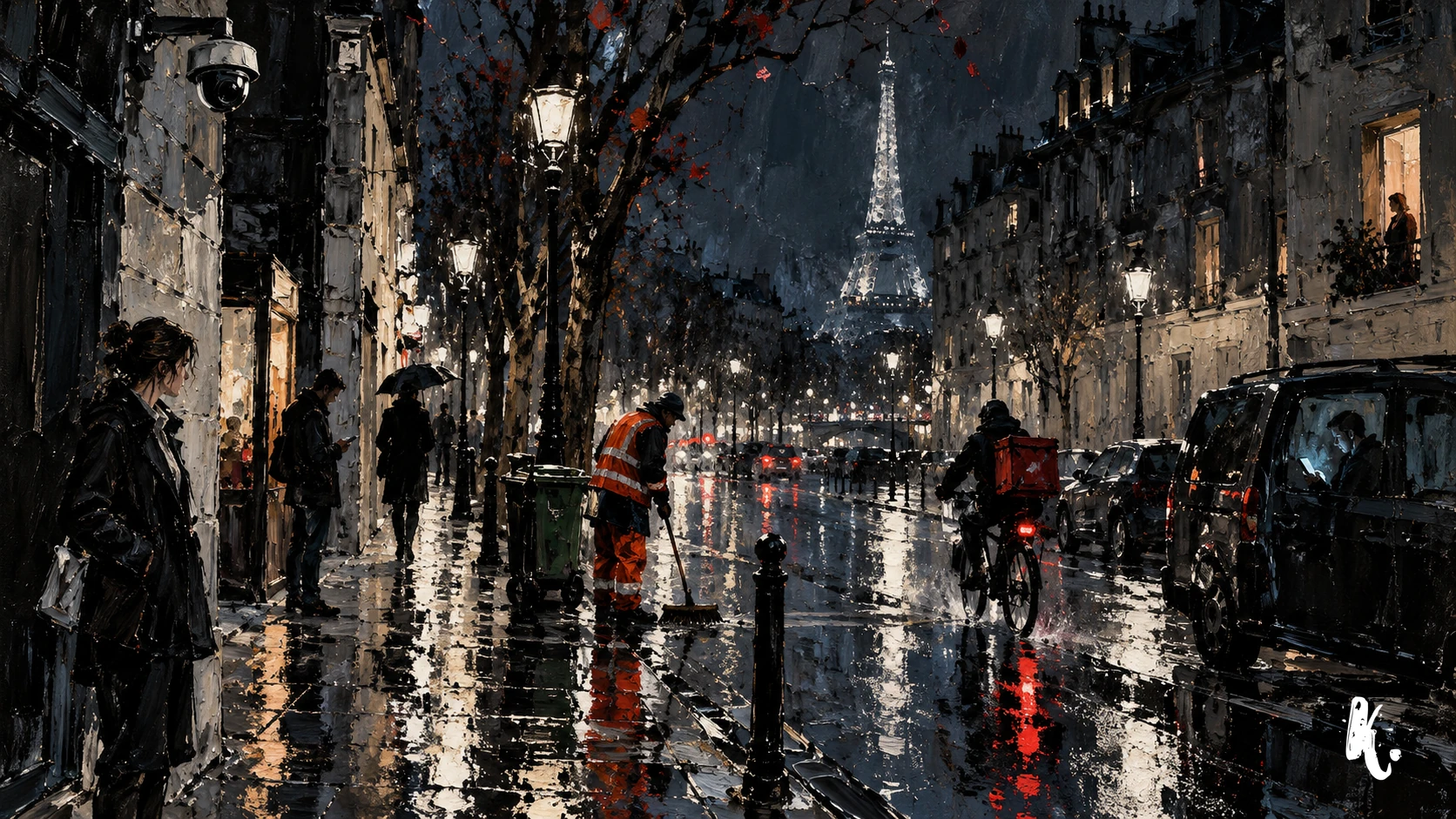
Around venues, stations and late-opening businesses, different groups come and go: workers, customers, travellers, couriers and the first morning shift. A temporarily quiet street is not an empty space. A window, driver, employee or phone may preserve a fragment of the night.
A crowd may conceal someone passing through, but it does not guarantee that they will be forgotten. Schedules, payments, images and habits can be connected afterwards. The question is not only who saw a vampire, but what story those ordinary fragments appear to tell together.
02 / Paris After Midnight
Districts, not a single setting
Night-time activity differs sharply between a station district, a residential area, an office zone, a tourist destination and a street of clubs. The twenty arrondissements do not close at the same hour or tolerate the same kinds of presence.
The Seven Bourgs provide a political reading of those differences. They do not freeze the city: transport, night venues and visitors continually cross their boundaries. Movement connects the territories as much as it creates friction between them.
03 / Paris After Midnight
Living in the city
A haven is first a logistical identity. A flat entails bills, neighbours and maintenance visits; a hotel continually renews its records; a cellar may be reopened by construction work. Even forgotten underground spaces belong to human networks of ownership, maintenance and access.
Long-term residents know the rhythms that make their presence ordinary. Visitors need recommendations, an understanding of Domains and knowledge of which local authority can answer for them. In Paris, ignorance of a custom does not erase the debt created by breaking it.
04 / Paris After Midnight
The city between places
Métro, RER, night buses, taxis, quays, stations and the ring road form a second geography. They offer the camouflage of movement while multiplying ticket validations, number plates, schedules and cameras. Younger Kindred grew up within this network; older ones had to learn that a journey can now be reconstructed without any witness having followed it in full.
The Seine and the underground complicate this map further. The river crosses several Bourgs and quickly turns an incident into a dispute over responsibility. Beneath the streets, quarries, tunnels, cellars and technical networks allow passages that no one controls completely. Knowing an entrance means neither owning the network nor knowing what condition it will be in tomorrow.
05 / Paris After Midnight
Old offices, modern tools
After the compromise of SchreckNET, sensitive communications returned to paper, spoken messages, intermediaries and compartmentation. Digital tools remain useful for building the human layer of an activity: booking a room, paying a supplier or providing a credible reason for a journey. They must not become a directory of the Paris night.
This caution does not make the city archaic. It requires every generation to distinguish a tool from the trust placed in it. Old structures survive when they can delegate, vary their procedures and give each intermediary too little information for any single failure to map the whole.
06 / Paris After Midnight
Hunting without becoming a pattern
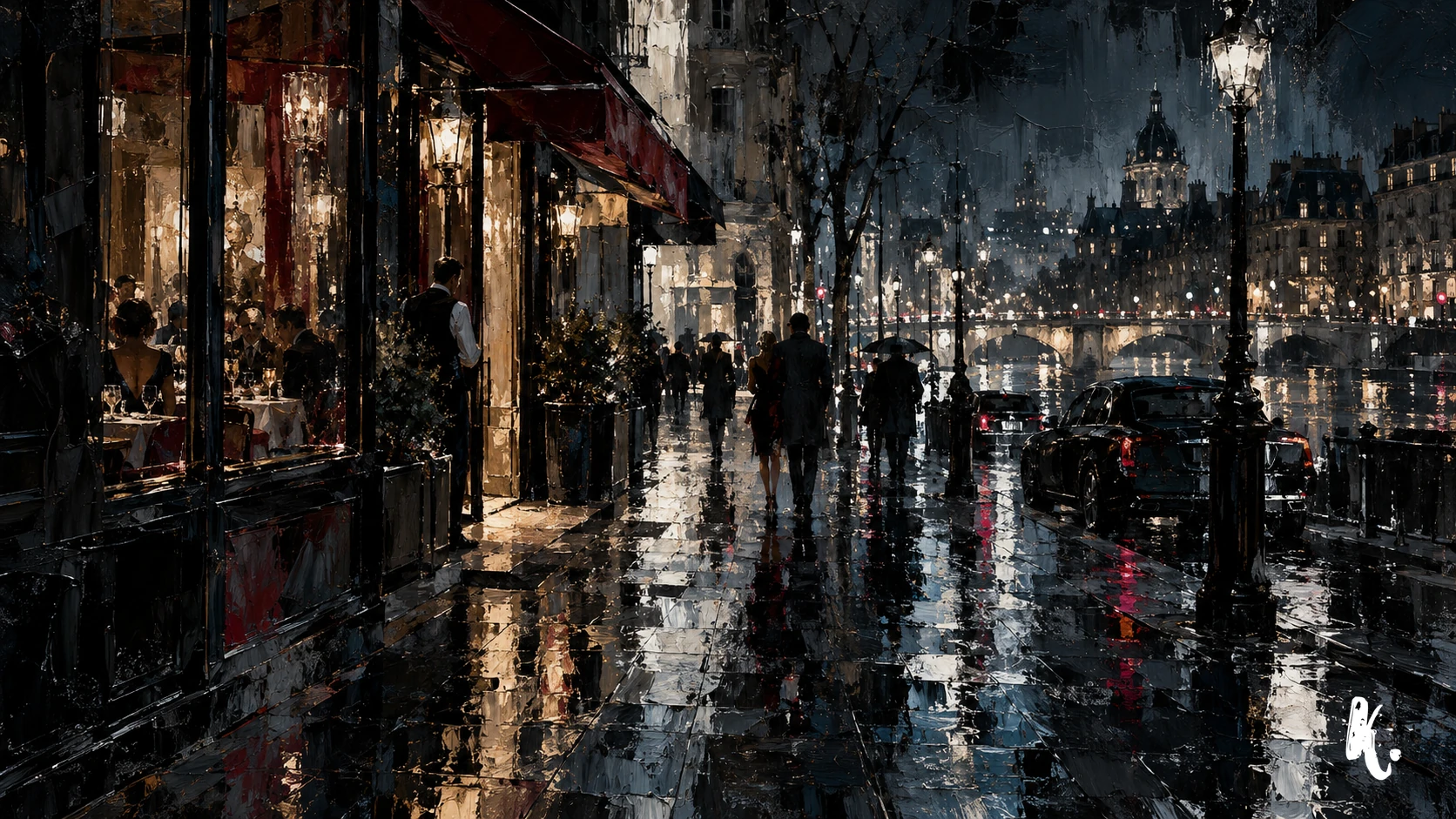
A closing restaurant, a concert crowd, a hotel, a ride or a delivery can give an encounter an understandable reason. None is automatic cover: witnesses, staff, images and local habits remain. Hunting begins before the act, with the choice of a situation mortals can already explain.
The same method repeated at the same hours eventually stands out from a neighbourhood’s rhythm. In Paris, a crowd is an opportunity, not protection. The chapter on hunting explores opportunities, consequences and territorial differences without treating the city as uniform ground.
07 / Paris After Midnight
Elysiums within the city
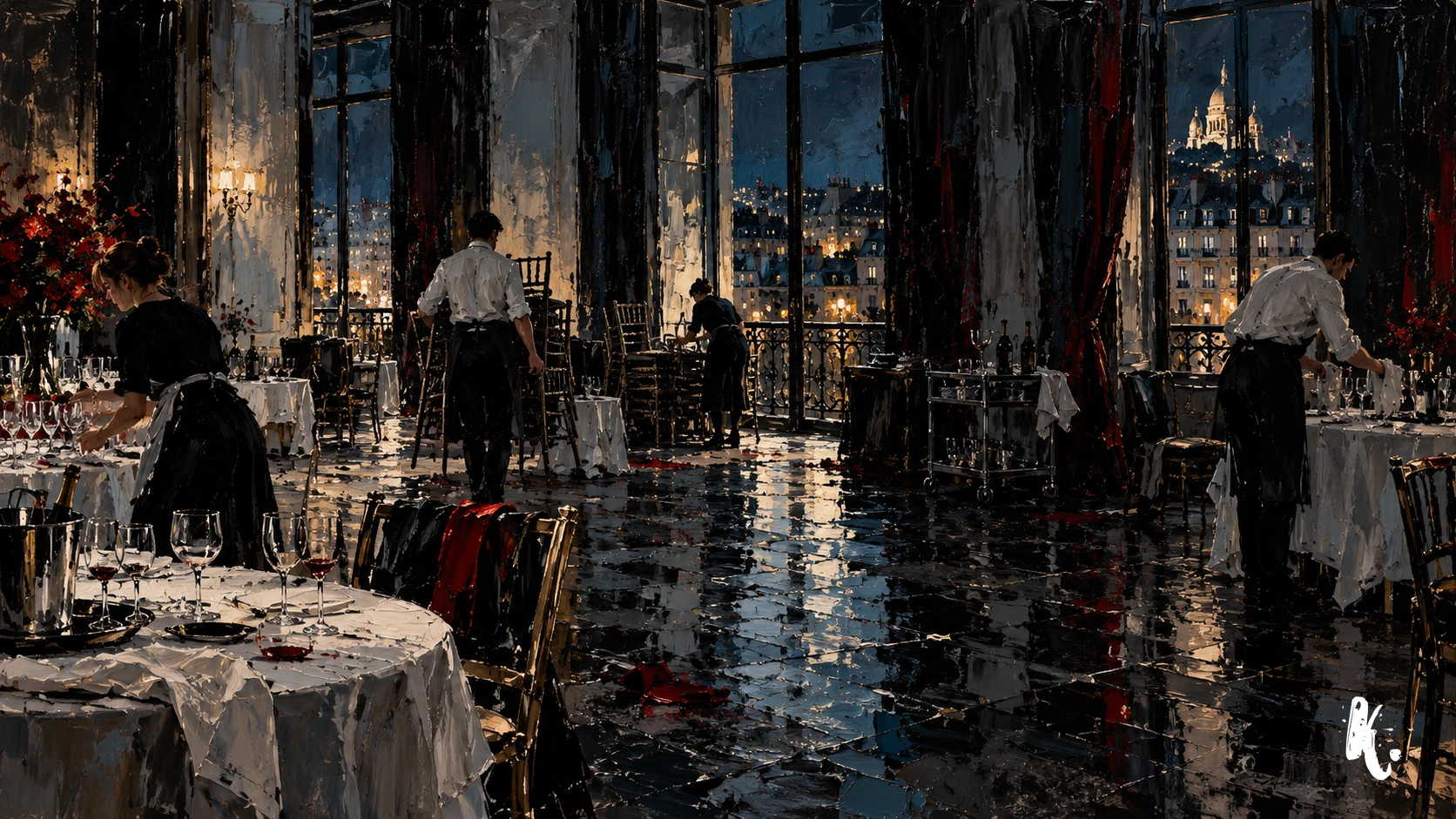
The Peace of Paris does not suspend a venue’s mortal uses. A reception, rented hall or cultural space still needs staff, schedules and a reason to welcome its guests. A Keeper’s authority applies to the gathering placed under the Peace; it does not turn the building into vampiric property or reduce the Bourg to a backdrop.
The Seven Bourgs map lets the Storyteller consult the places active on a chosen game date. It connects political geography to the chronicle’s scenes; it replaces neither local authorities nor the human explanations on which the Masquerade depends.
08 / Paris After Midnight
Pressure, not a countdown
The Second Inquisition is a reminder that human institutions can connect anomalies without first understanding their nature. Its threat weighs on decisions: repetition, an unexplained trace or a disproportionate response can turn a local incident into a political problem. It need not appear in every scene to shape Kindred behaviour.
Caution does not mean every camera belongs to an enemy or every mistake triggers an operation. The danger lies in accumulation and interpretation. A coherent human explanation protects better than an absence no one can justify.
09 / Paris After Midnight
Playing Paris
To build a scene, start with a mortal activity already under way: leaving a shift, waiting for a ride, closing an event, receiving a delivery or crossing a neighbourhood that has not yet gone quiet. Then add a Bourg responsibility, an institutional rule or a trace that will outlast the characters’ departure.
The map helps locate a date, a territory and the Elysiums active at that time. The pages on Bourgs, institutions and places provide public authorities and landmarks; the Storyteller determines who is present, what is at stake and what follows. Paris supplies constraints and opportunities, not an automatic scenario.
Web adaptation of Fascicle I, “Paris After Midnight”, pp. 5 to 10, and “Playing Paris”, pp. 84 to 89.