05 / Territory
Le Carrefour
The Bourg where Paris meets, mixes and trades.
01 / Le Carrefour
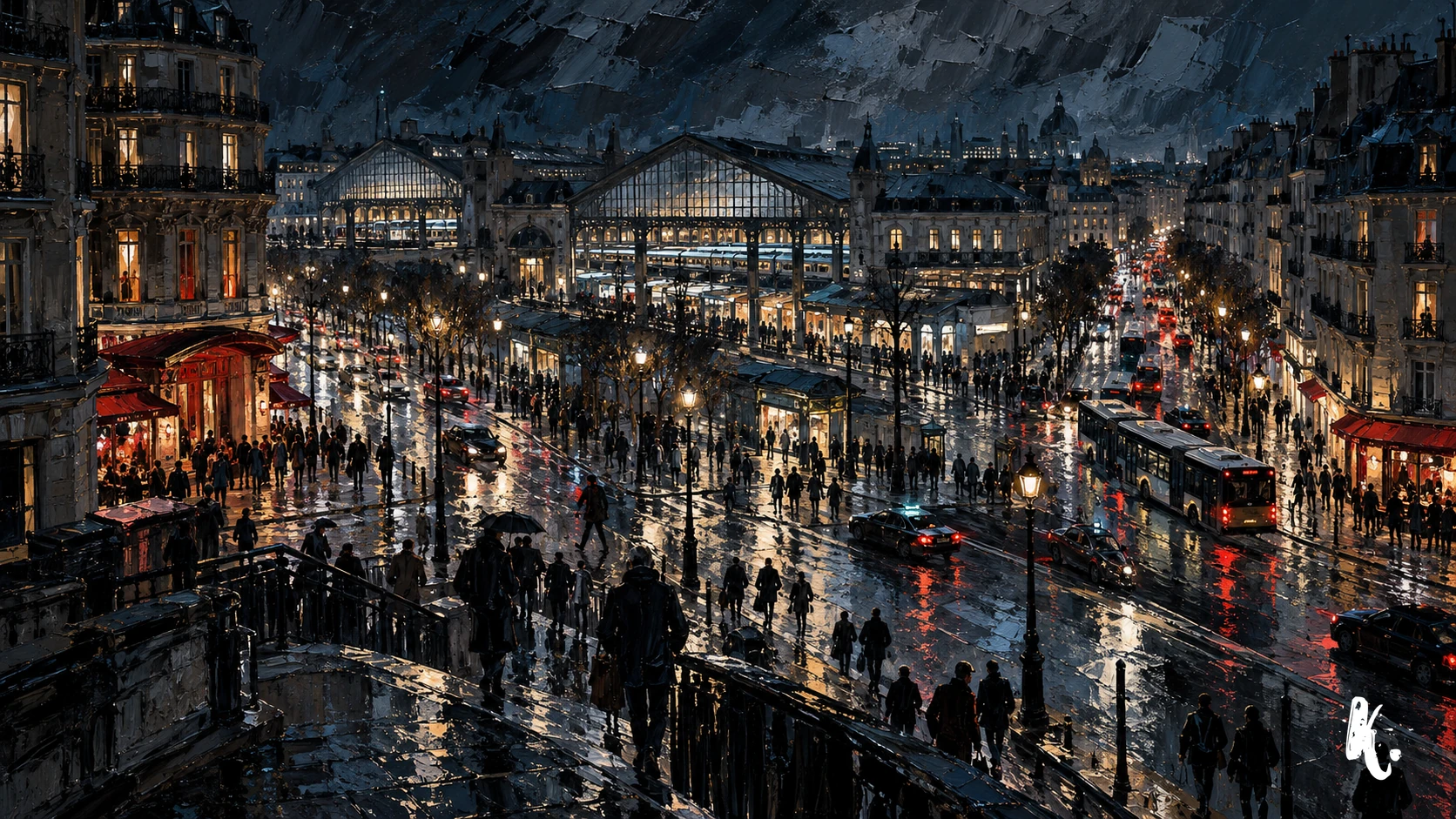
A visitor leaving a train can reach a hotel, a concert venue or another station before those awaiting them have decided what they represent. Le Carrefour lives in such intervals. It covers the ninth, tenth and eleventh arrondissements, where office hours cross those of performance, transport, restaurants and night work. A meeting often looks ordinary because so many other meetings are taking place at once. That convenience does not remove witnesses; it multiplies them.
The Bourg is not without authority. Lucien de Veyrac governs territory Kindred use to pass through, negotiate and receive visitors without immediately entering either side's domain. He preserves that latitude provided someone vouches for a presence and answers for the consequences of an agreement. Mina Varga, Keeper of Elysium, studies the same night from streets and venues: a queue that stops moving, an audience dispersing too early, an exit suddenly too quiet. Lucien sets the political terms; Mina checks whether human movement still allows them to hold.
02 / Passage and responsibility
Passage and responsibility
For a long time few powers wanted to own Le Carrefour in its entirety. Stations draw strangers, venues change audiences, bars change owners and passages change use. That instability made the Bourg valuable: a delegation can arrive without acknowledging an opponent's Domain; an intermediary can be received without hospitality becoming an alliance. The territory offers thresholds and time. Lucien does not sell immunity. He makes a meeting possible under terms clear to everyone involved.
Neutrality is tested the morning after. A car was booked, a room paid for, a hall handed back, a guest listed or omitted. Those acts remain if the agreement fails. The Bourgmestre asks who authorised the meeting, who guarantees a safe departure and whom to approach with a complaint. He need not know every conversation to require territorial accountability. The room allowed to passing Anarchs and independents rests on that distinction: their presence is not automatically a provocation, but it does not exempt them from the Masquerade.
The Parisian Praxis holds this Bourg without turning it into Anarch territory. Lucien must be able to tell other Bourgmestres why their visitors were received and what will keep a negotiation from spilling into neighbouring Domains. That role attracts anyone needing a temporary door. It worries those who want political boundaries as clear as lines on a map. When two sides request the same neutrality for incompatible aims, the issue is no longer whether Lucien can host them both. Someone must answer for what they do.
03 / PARIS
Three changing arrondissements
The ninth: one performance ends, another begins
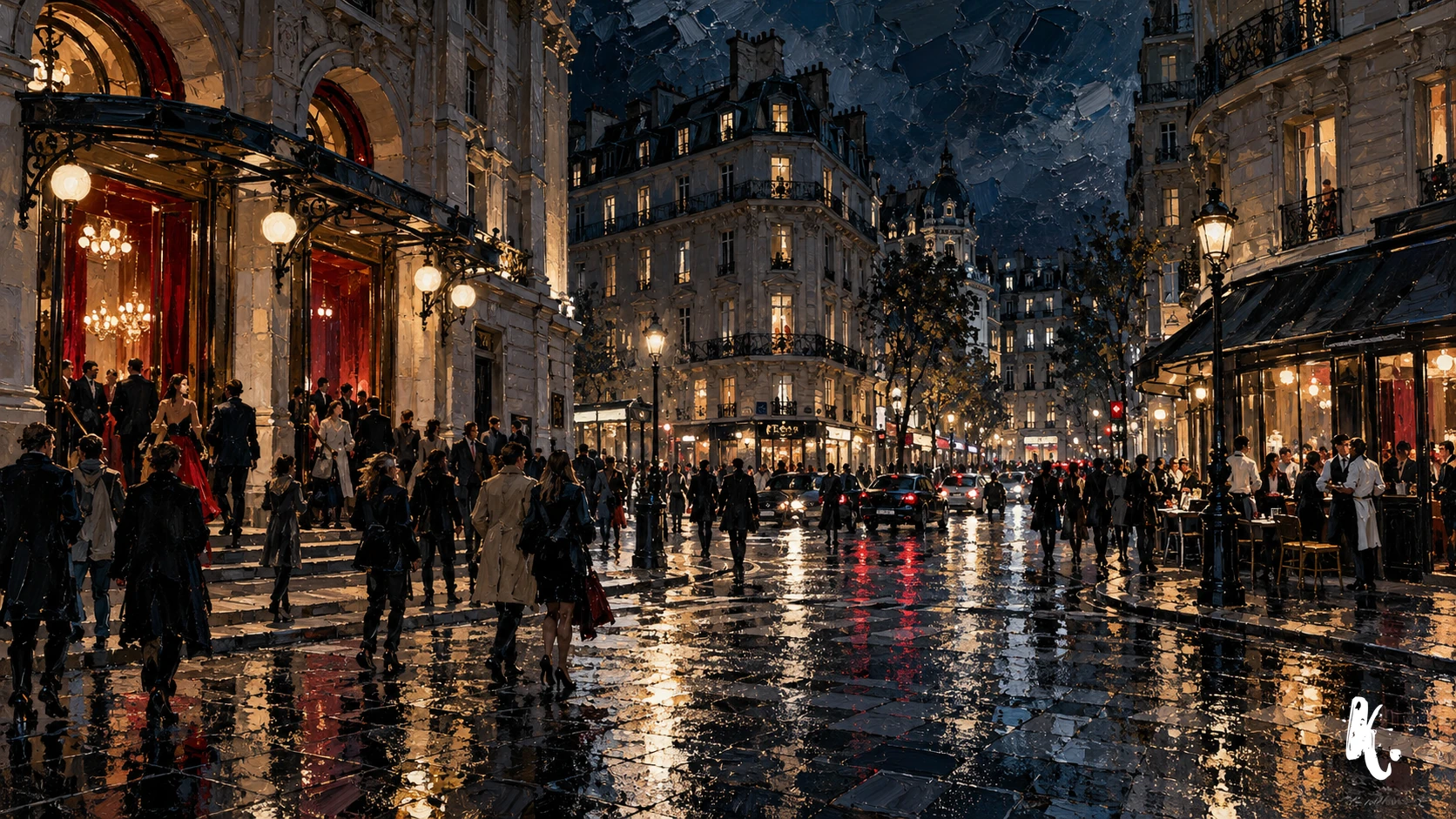
The ninth is more than Pigalle or the Grands Boulevards. Theatres, venues, hotels, offices, passages and restaurants bring different publics onto the same streets. Their purpose changes as performances end, staff leave work and visitors seek a table or a car. A late appointment raises little interest when its timing and address fit a real activity. That requirement is harder than it sounds: tickets, reservations and staff also tell the evening's story.
The Palais Garnier is a major landmark, not a nocturnal property to annex. Around it, performances produce predictable movement: concentrated arrivals, waiting and rapid dispersal. Drivers and front-of-house staff read those sequences better than guests who merely cross the foyer. For Kindred, a performance exit can cover a short meeting; it also makes a solitary figure who lingers too long more noticeable.
A hotel offers another grammar. A travelling guest, business dinner or private reception can explain a late presence, but the establishment knows its rooms, schedules and staff. Hôtel Orphée appears among the Bourg's possible Elysium venues under the cover of a reception; nothing says it hosts the Peace of Paris every night. Such a setting depends on a credible event as much as on prestige. A camera recording an expected arrival stops being a detail when a guest later denies entering.
Covered passages and shopping streets are good places to cross paths, less good places to vanish. Businesses close at different hours, delivery workers know the entrances and residents recognise regular visitors. An intermediary can pass information there without a spectacle. If they turn the same route into a ritual, repetition creates the witness the crowd was meant to spare them. The ninth rewards meetings that fit human life, not habits that claim to command it.
The tenth: receiving someone who will leave
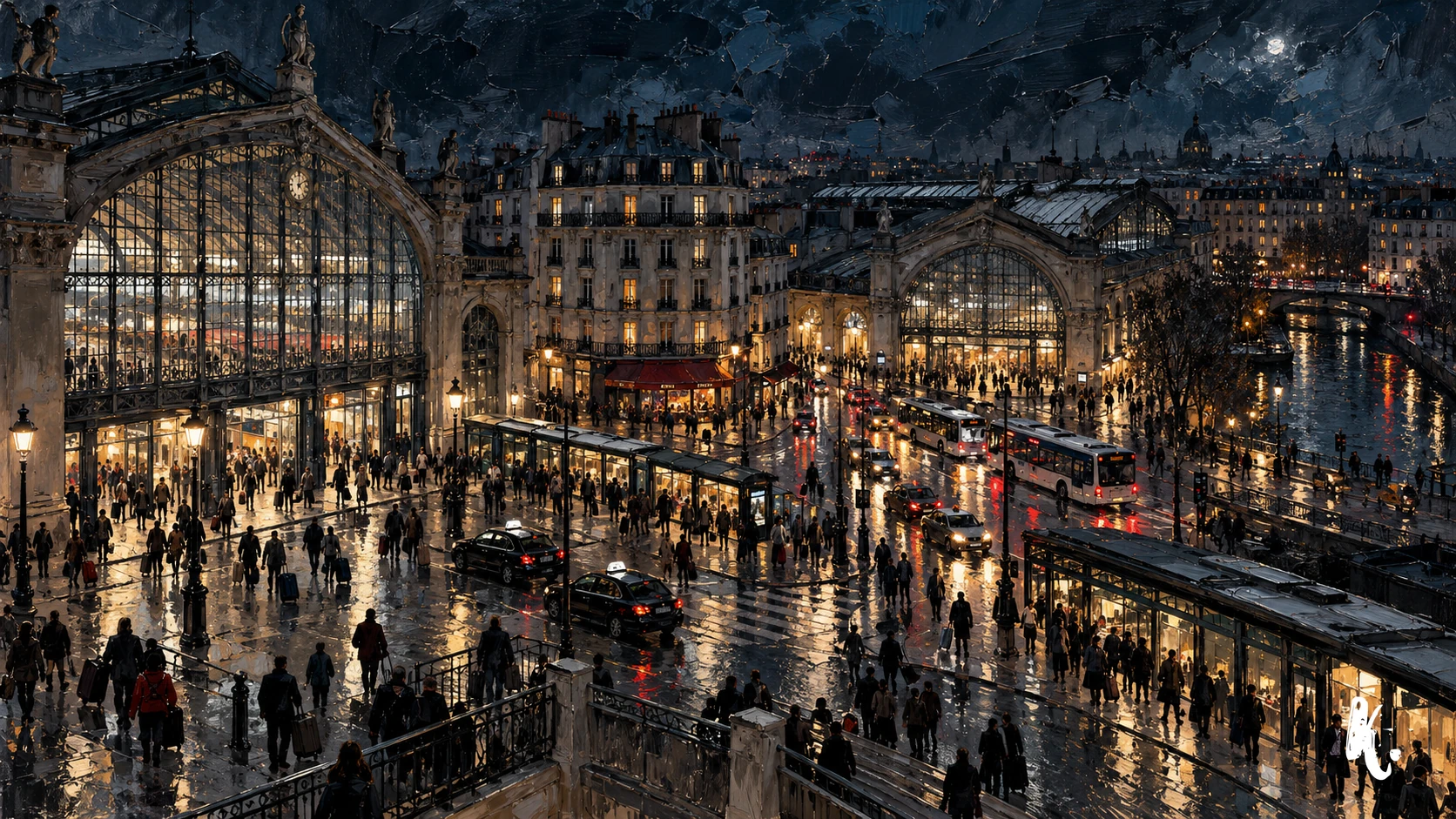
Gare du Nord and Gare de l'Est give the tenth its weight in the Bourg. Strangers arrive with ordinary reasons to be hurried, tired or lost. Some spend only minutes in Paris before a car or a connection. For Kindred, that makes it possible to receive an envoy, refugee or visitor whose presence remains to be negotiated. It also makes it hard to pretend nobody saw the arrival: platforms, tickets, cameras, staff and companions are part of the journey's record.
A station is no secret apparatus of the Praxis. Railway workers, security services, shops, taxis and passengers pursue their own business. A human check can interrupt a nocturnal plan without suspecting its purpose. Lucien cannot guarantee a train's punctuality or make registered luggage disappear. He can require that a guarantor be reachable as a visitor leaves the concourse. Mina can judge whether the planned route still fits the actual arrivals.
Between the stations, hotels and streets around the Canal Saint-Martin, an unfamiliar presence often has a plausible reason to be there. The same variety complicates observation: groups gather, split up, drink and wait for rides. An observer who imagines one continuous crowd soon loses their target; one who knows closing times and staff changes sees the shifts. Nearby Saint-Lazare may matter to an itinerary without becoming part of Le Carrefour's territory.
Théâtre des Deux Nuits and Verrière de l'Est appear in the catalogue of possible Elysiums, under the cover of a rehearsal, reception or cultural event. Programming is not set by vampiric decree. Technicians, performers, employees and unexpected audiences can change what discretion is possible. The tenth requires the Keeper to choose not merely a credible place, but a time when that place still has its own reason to be open.
The eleventh: nights that change audience
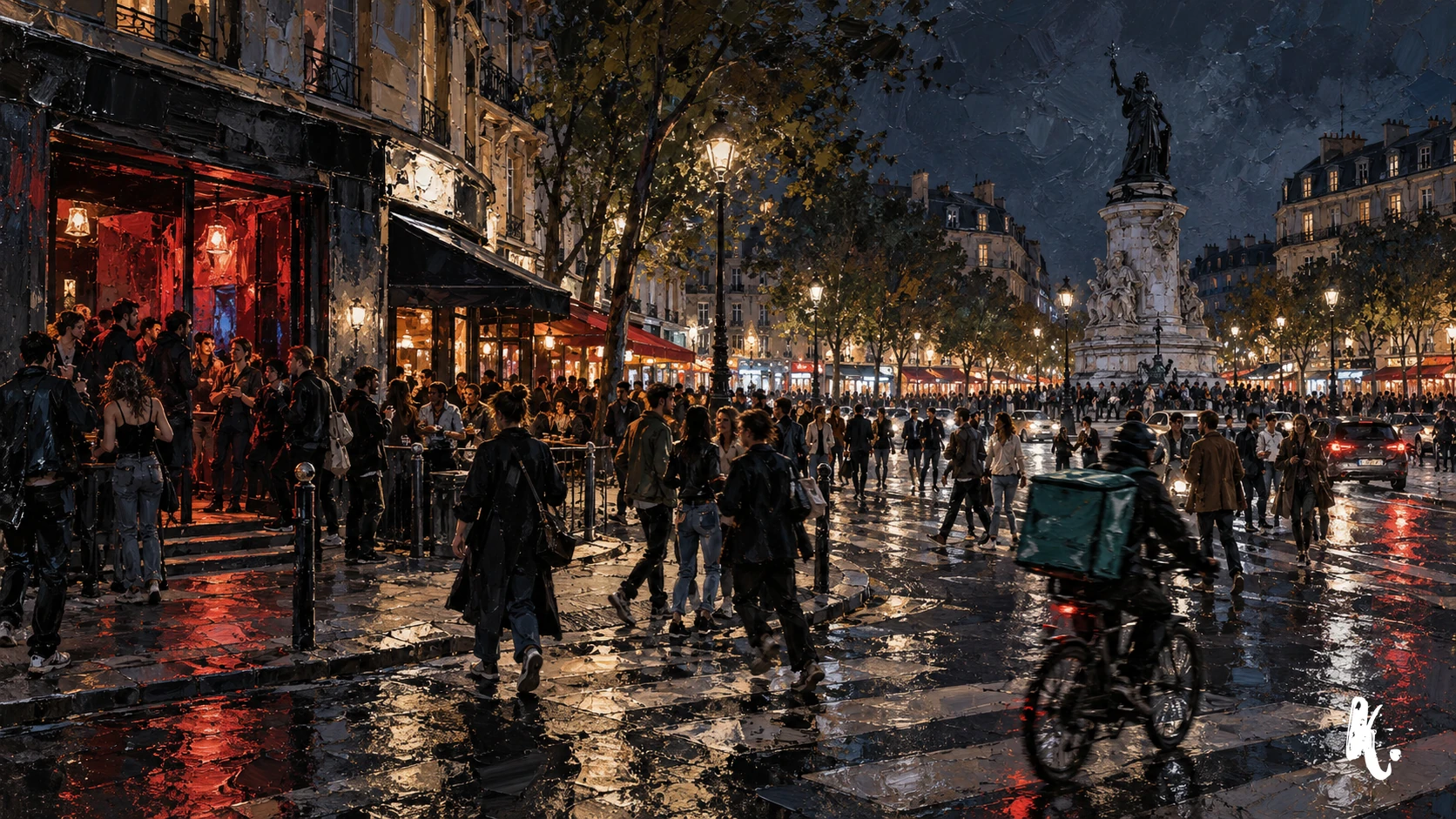
Oberkampf, the streets around République and routes towards Bastille form a territory of music venues, bars, restaurants and streets active well into the night. Crowds are not constant. A concert draws regulars, then a bar's closing moves another group; workers cross people only beginning their evening. A venue that felt reliable last year may have changed team and clientele. Immortals relying on an old rhythm risk becoming the only visitors who have failed to notice the change.
Countercultures and independent nightlife belong to the human city, not to vampiric property. A passing Anarch may find contacts or an audience there without owning the neighbourhood. The distinction matters to both the account and the characters: using a human scene as cover requires respect for the people who keep it alive. An argument outside a venue will be described by door staff, neighbours and phone users long before it reaches the Court.
Sous-Sol 27 and Studios Parmentier are very different possible Elysium venues. The first may borrow the crowd of a concert or afterparty; the second the apparent discretion of a recording session. Each cover has its own constraints. An overflowing crowd cannot be commanded, while a studio open at night has employees, schedules and reasons to ask who made the booking. Mina tests whether the event fits that human operation, not whether the décor resembles an Elysium.
The eleventh allows brief meetings, changes of car and separate departures. It also exposes habits. A person seen at the same door after three concerts is no longer a stranger lost in the crowd. The Bourg works when visitors understand that density may help them pass through, but excuses neither carelessness nor the need to answer those who waited for them.
04 / PARIS
Stations and movements
Stations give Le Carrefour a moving boundary. An hour's delay shifts a reception, a missed connection leaves a visitor without accommodation, an evacuation moves a crowd onto a street meant to stay quiet. Not every difficulty is an enemy plot. Ordinary transport operations suffice to test a guarantee. Someone vouching for a stranger must be able to adapt without claiming to command staff, drivers or other travellers.
An arrival may be an envoy, refugee, messenger or passing predator. A ticket does not state which. Human surveillance and, in a chronicle, the risk of hunters or the Second Inquisition make overconfident clandestine procedures dangerous. Lucien can assign responsibility for the reception; Mina can report that a platform, exit or street no longer follows its expected rhythm. Neither turns a station into a guaranteed haven.
05 / Authority and stewardship
Authority and stewardship
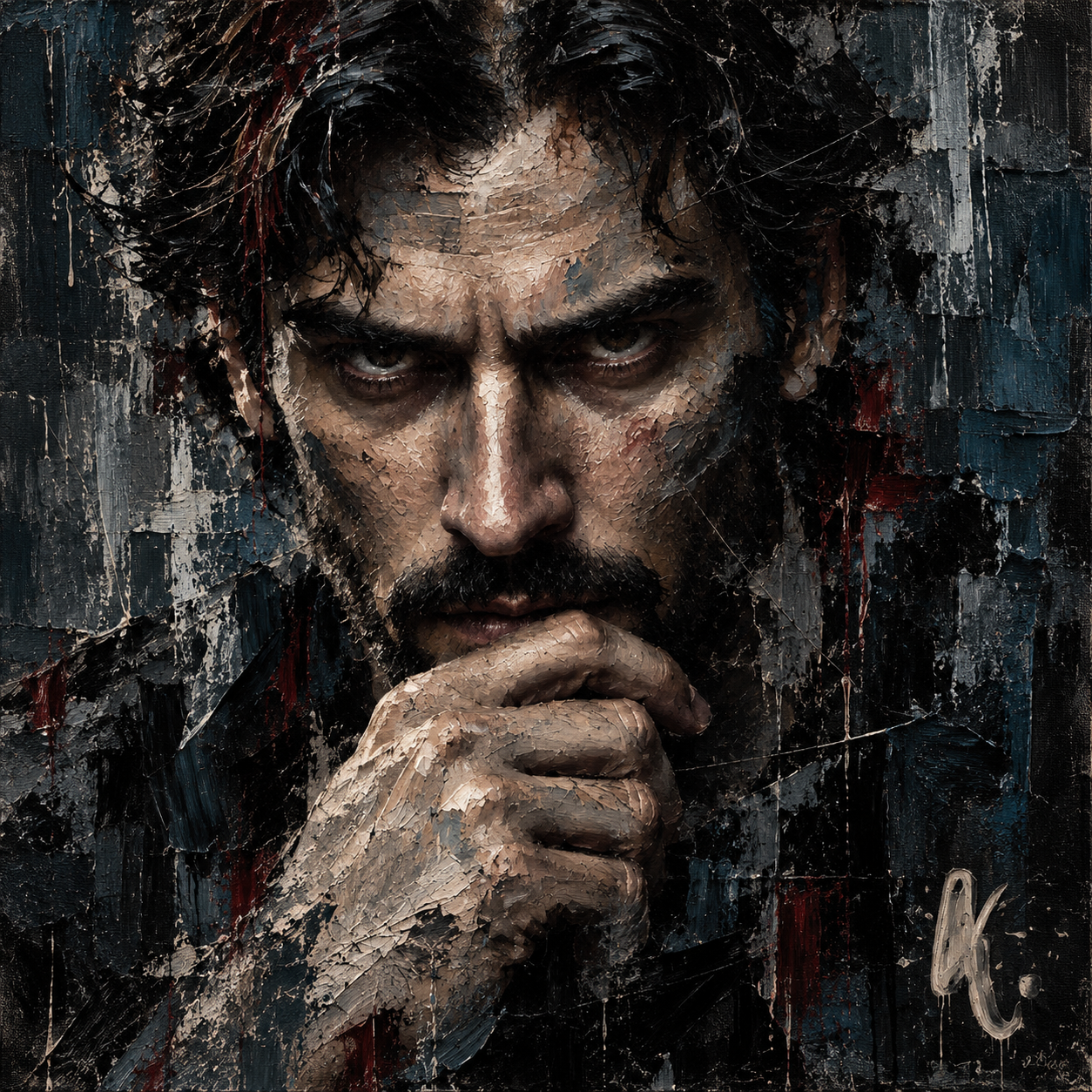
Bourgmestre / Lasombra
Lucien de Veyrac
Lucien de Veyrac governs the ninth, tenth and eleventh arrondissements as a Bourgmestre of the Praxis, not as owner of every venue. A Lasombra, he holds a Bourg where authority must deal with people merely passing through. His inheritance is not a general licence. He accepts negotiations on ground less marked than a rival's Domain, but requires terms and someone able to answer for the meeting. A name, a duration, a departure: those particulars stop neutrality becoming a cover for an attack.
His approach to strangers is conditional hospitality. An envoy is not guilty for being unknown; nor may they demand unvouched passage. Lucien has less reason to bar passing Anarchs and independents than to establish the minimum commitment binding them to the Masquerade and the Bourg during their stay. If they use a venue, hotel or route, their host must understand the promise. A presence that remains after its reason has ended requires a new conversation.
A guarantee need not be a written contract. It may take the form of an introduction, an acknowledged debt or a person whose word binds a network. Its value appears when something goes wrong. If two delegations leave the same address with incompatible accounts, Lucien will ask who received them and who knew they would meet. He cannot save his reputation by declaring that both parties were free to act. He chose to offer them ground.
That calculation defines his limits. The more useful Le Carrefour becomes, the more opposing sides expect Lucien to guarantee their safety without taking a position. At times he must refuse a profitable passage, postpone a meeting or demand a guarantor neither side wishes to name. Neutrality is a political service under conditions, not a superior moral state. When it knowingly shelters violence or makes accountability impossible, it ceases to serve the Praxis.

Guardian / Malkavian
Mina Varga
Mina Varga oversees Elysiums hosted in Le Carrefour. A Malkavian of the eleventh generation, Embraced in 2002, she formerly programmed venues, clubs, concerts and festivals. That mortal work taught her circulation plans and, more importantly, departures from them: a hesitant queue, an exit an audience avoids, a technician waiting in the wrong place. She needs no prophecy to see when an evening no longer resembles the plan. She does not always know why a pattern has changed; that is why she checks.
Her doctrine is to blend into the night’s natural movements. A temporary Elysium must fit human reasons to open a hall, retain staff and welcome guests. During the gathering, the Peace of Paris falls under her charge. The Bourgmestre may guarantee a delegation's political passage; he does not replace the Keeper in deciding whether that place and moment can bear the Peace. Mina does not govern Lucien's territory in return. They read the same situation at different scales.
On a busy street a crowd is not a number. It has directions, expectations and quiet intervals. Mina watches who enters without looking for the exit, which employee returns to a normally closed door, why a courtyard empties before a performance ends. A break in the pattern may indicate a human check, a technical fault, an argument or a scheduling mistake. It first describes the context; it does not make every variation an occult threat.
Her weakness matters. Mina may mistake an anomaly for a threat and complicate the evening by moving it too quickly. Changing venue means calling guests, informing staff and perhaps altering human bookings. Each act creates the traces she hoped to avoid. Staying is not always the right decision; assuming the move itself will be invisible never is. Her skill becomes dramatic when she must choose with incomplete information.
06 / Human nights and their rhythms
Human nights and their rhythms
Le Carrefour's venues change too quickly for old maps to remain reliable. A club closes, a hall changes management, a restaurant alters its hours. Its night population is no anonymous stock for Kindred: people work, celebrate, wait, travel and watch over friends. Door staff know returning customers, drivers keep journeys, ticket systems match names to times. Immortality does little for someone who keeps using a street according to a vanished habit.
Strangers are received in a human city that never suspends its obligations. A hotel must house its guests, a venue observe its capacity, a station manage a disruption. Kindred may hire, negotiate or use those systems; passage does not confer ownership. Even a neutral meeting depends on staff who may ask a perfectly ordinary question. Dismissing it can endanger the Masquerade more readily than an openly acknowledged rivalry.
07 / Hunting in Le Carrefour
Hunting in Le Carrefour
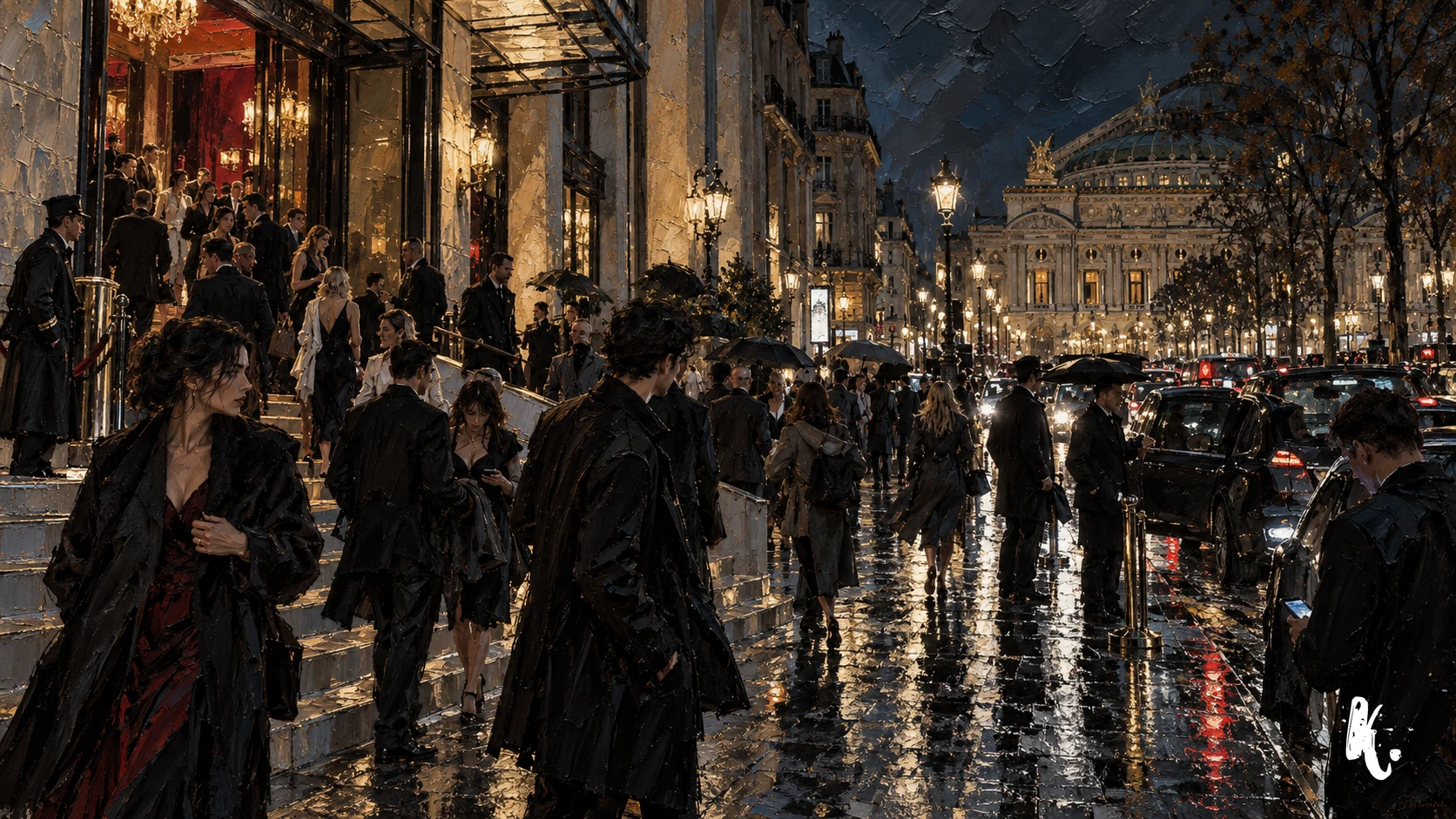
Hunting in Le Carrefour means reading departures. Someone alone after a concert has a different circle from a traveller expected at the station; a worker ending a shift will be missed at another hour. Density creates brief, repeated opportunities, but it creates witnesses too. Phones, tickets, bookings, payments and vehicles connect moments a predator thought separate. A crowd does not make someone invisible when they leave it with a person whose absence will be noticed at once.
Changes of rhythm are the Bourg's particular terrain. A train arrival, last Metro, move towards an afterparty or bar closing reorganises groups at each threshold. A careful hunter may appear to belong to that movement. They must also know when to leave it. Too late a choice puts them before a locked door; too early a choice leaves them alone on a street nobody else has departed. Hunting becomes a matter of timing as well as desire.
A possible victim retains relationships and rights. A traveller may share their location, a guest waits for a booked car, a technician must return keys. None forbids a scene of predation in a chronicle; each gives it a moral and practical cost. Lucien must prevent incidents that stain his Bourg. Mina notices visible disruptions around a venue. Neither office grants a general licence to treat passers-by as scenery.
Police officers, transport staff, night workers and relatives may intervene for reasons unrelated to Kindred society. An ordinary human response is not automatically a Second Inquisition operation. Confusing the two invites an excessive reaction and further traces. Le Carrefour's practical wisdom lies in distinguishing an observed risk from fear projected onto the city.
D10 / Hunting circumstances
- 01
A train arrives late. A traveller searches for the person meant to meet them; their phone still shares the platform with that person.
- 02
After a concert someone waits alone for a booked car. The street empties quickly, but the driver knows their pickup point.
- 03
A hotel worker ends a shift by a side door. The access looks discreet; colleagues expect the keys to be handed over.
- 04
Two friends separate at République after the last Metro. Each thinks they know the other's destination and will soon send a message.
- 05
A diner steps out to make a phone call. Staff keep her table and watch for her return.
- 06
A technician leaves rehearsal early. The venue log retains their time and badge.
- 07
A tourist asks the way between two stations. Several passers-by answer, any of whom may later remember the encounter.
- 08
A group leaves a full bar for an afterparty. One person changes their mind; the others keep sharing their route.
- 09
An Oberkampf street suddenly quietens after a minor incident. Anyone standing still becomes more visible than an hour earlier.
- 10
A delegation waits for its car outside a venue. One member seems easy to approach, but the others know exactly who is missing.
08 / PARIS
Places and landmarks
9e
Palais Garnier
A performance landmark whose schedules make some movement predictable. Audiences leaving and staff working explain many passages while creating witnesses.
Local importance : The Palais Garnier is associated with Claudia de Lyon. An unidentified presence also remains there, with no known pact between them.
Explore the placeView the territorial map10e
Gare du Nord
An arrival may last only minutes before a connection or a car. The station gives the Bourg a major gateway, never a space exempt from human checks.
Explore the placeView the territorial map10e
Gare de l'Est
Another entrance to the tenth, the station multiplies delegation routes and timetable surprises. A visitor's guarantor must be reachable when a train changes platform or runs late.
Explore the placeView the territorial map10e
Canal Saint-Martin
Its streets combine residents, leisure, trade and nightlife. A meeting by the canal retains human cover only while it makes no claim to own public space.
Explore the placeView the territorial map10e / 11e
Place de la République
A human crossroads between arrondissements, demonstrations, transport and evening departures. Routes cross there; for that very reason a long wait can become visible.
Explore the placeView the territorial map11e
Oberkampf
Changing venues and audiences make the area useful to those who can read the present. An old nocturnal routine soon becomes less discreet than a new passage.
Explore the placeView the territorial map09 / Possible mobile Elysiums
Possible mobile Elysiums
Examples from the public register. These are possibilities, not an exhaustive list, a fixed rotation or an active selection for this date.
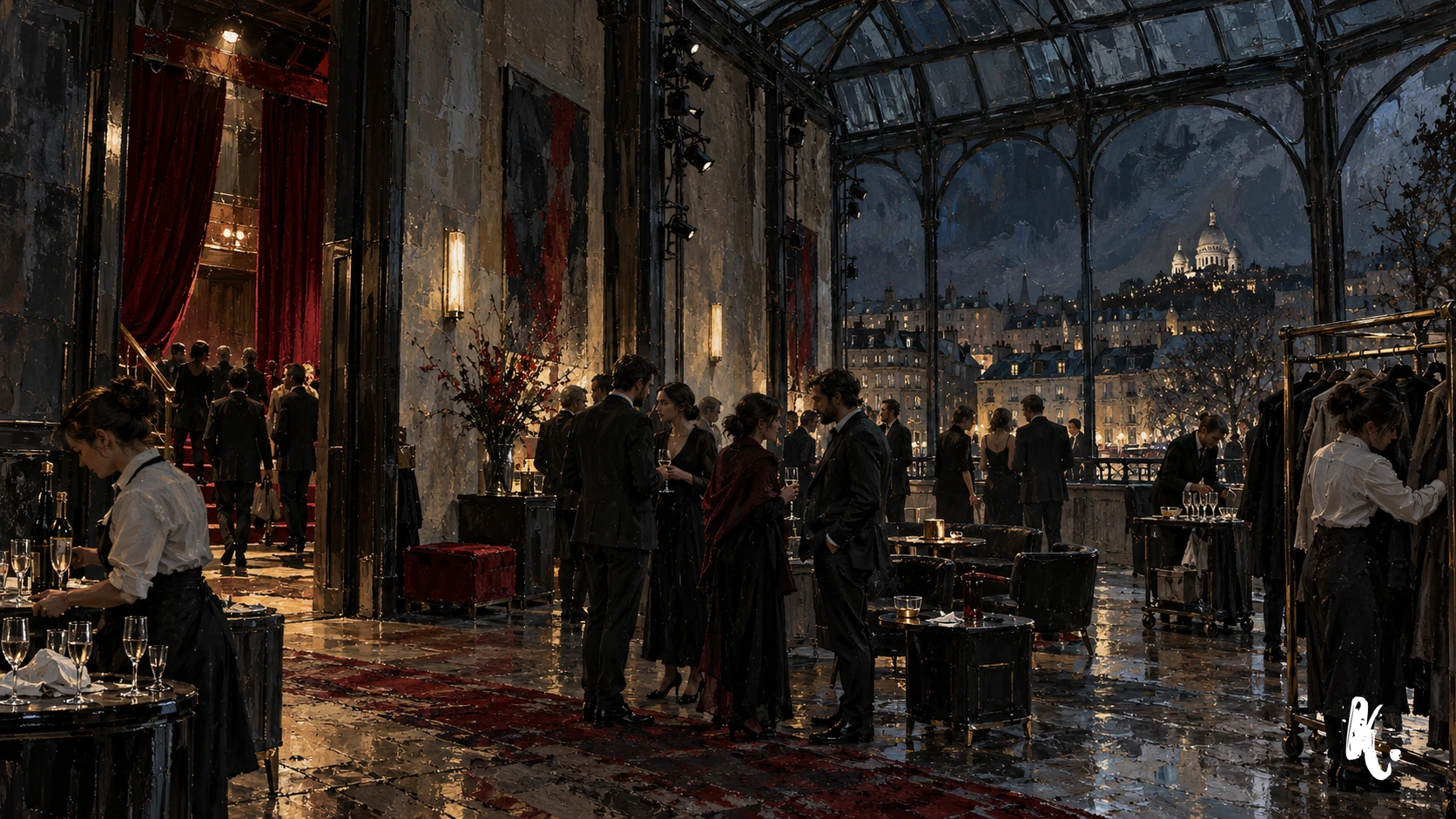
11e / Human cover : Concert or afterparty
Sous-Sol 27
- Atmosphere
- Sound, comings and goings, a shifting threshold between venue and street.
- Possible use
- A meeting may blend into an existing event without promising that the crowd will obey.
- Constraint
- The crowd may exceed the reception's control; indicative capacity is 90.
- Why this venue
- The venue tests Mina's ability to keep the Peace without stopping human activity around it.
9e / Human cover : Hotel reception
Hôtel Orphée
- Atmosphere
- Ordered reception, temporary guests, staff who recognise familiar routes.
- Possible use
- A delegation can be received under a credible professional pretext.
- Constraint
- Cameras and access records persist; indicative capacity is 50.
- Why this venue
- Discreet neutrality here depends on entirely ordinary human logistics.
11e / Human cover : Recording session
Studios Parmentier
- Atmosphere
- Technical doors, unusual hours, small but attentive crews.
- Possible use
- A small group can meet without drawing an extra crowd.
- Constraint
- Night staff know who booked and who is working; indicative capacity is 35.
- Why this venue
- The venue gives a precise, and therefore checkable, reason for a limited meeting.
10e / Human cover : Rehearsal or reception
Théâtre des Deux Nuits
- Atmosphere
- Service corridors, performers and technicians, an exit that may not follow the planned time.
- Possible use
- A meeting can occupy an interval between stage work and guest reception.
- Constraint
- An unexpected audience changes the available discretion; indicative capacity is 100.
- Why this venue
- Mina must distinguish actual programming from a cover someone would impose on the theatre.
10e / Human cover : Cultural event
Verrière de l'Est
- Atmosphere
- Open space, mutual visibility, visitors with different reasons to attend.
- Possible use
- A larger reception can allow several conversations without isolating one group.
- Constraint
- Excessive attendance and changes in flow increase the risk; indicative capacity is 150.
- Why this venue
- The setting's flexibility comes from its cultural life, not immunity granted to Kindred.
10 / Kindred linked to the Bourg
Kindred linked to the Bourg
The public corpus explicitly ties four figures to Le Carrefour. Lucien de Veyrac is its Bourgmestre; Mina Varga keeps Elysium when a venue receives the Peace of Paris. Emmanuel de Morlac, a ninth-generation Ventrue and former senior civil servant Embraced in 1908, knows how to keep institutions working when nobody wants responsibility for their failure. Mathurin Goyet, a tenth-generation Brujah Embraced in 1978 and once a labour lawyer, brings legal experience to disputes where force would be too politically costly. Their abilities make them neither permanent deputies to the Bourgmestre nor owners of the places they pass through.
Emmanuel may clarify the administrative chain behind a promise. Mathurin may expose the price of a negotiation each side claims to be winning. That complementary use establishes no personal bond between them. Their public clan records describe them further; this chapter links them to their Bourg without assigning a new mission or alliance. Lucien and Mina have separate institutional records.

Brujah
Mathurin Goyet
A former labour lawyer, Mathurin knows conflicts from which no one emerges innocent. He negotiates when force would carry too high a political cost, though he still tries to win the argument before understanding the true price of disagreement.
Active, discreet legal adviser
Explore the public record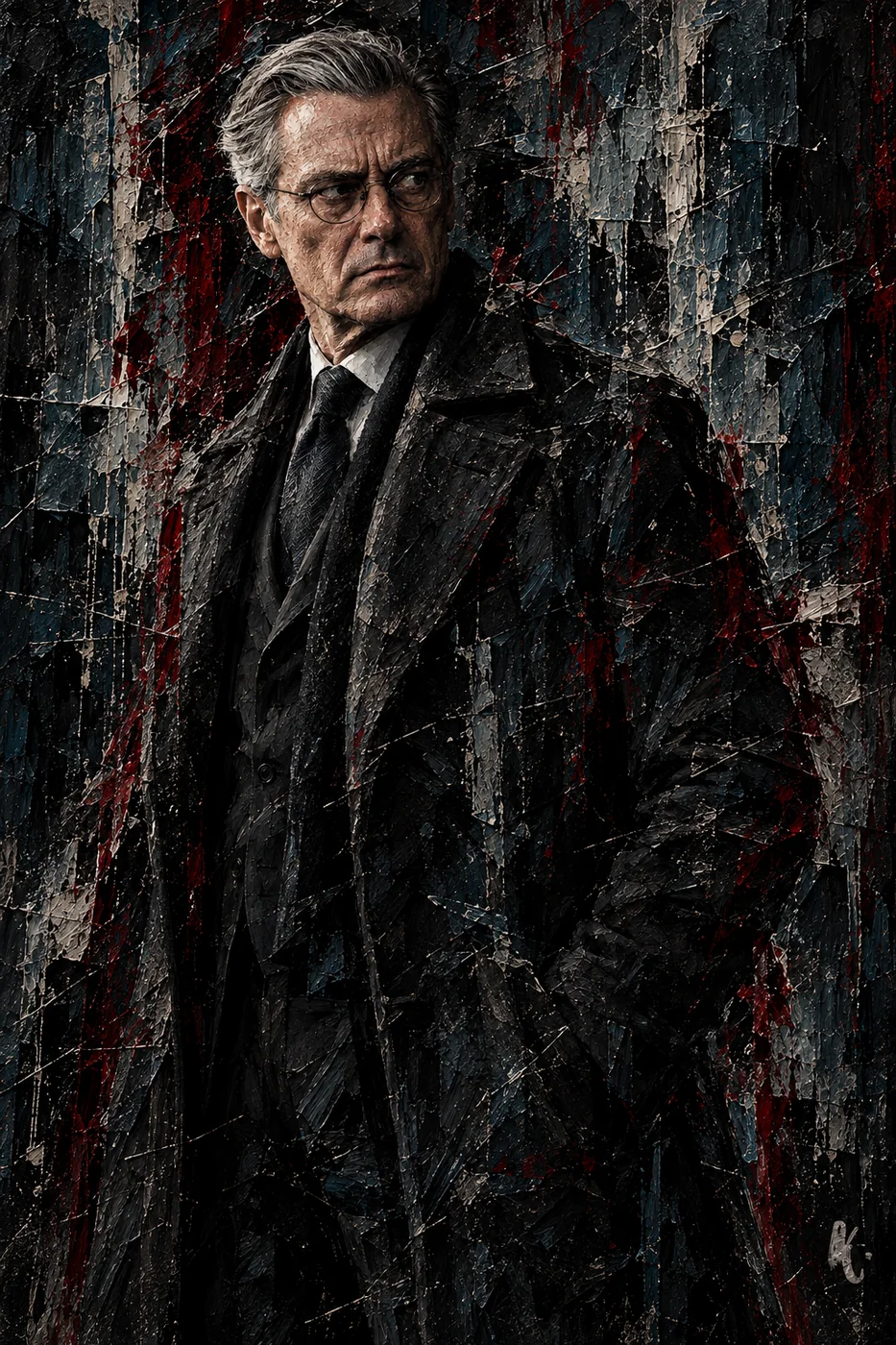
Ventrue
Emmanuel de Morlac
A former senior civil servant, Emmanuel knew how to make an institution work when no one wished to own its failure. He becomes indispensable as structures break down and believes imperfect order is better than a vacuum of power.
Active, administration
Explore the public record11 / Institutions and human systems
Institutions and human systems
Le Carrefour remains part of the Praxis. Lucien's office answers for the Bourg and its passages; Mina's for the Peace in the Elysiums she keeps. The Court is not physically present in every room where negotiations begin. Its political framework still matters when a visitor, neighbouring Bourgmestre or creditor asks who allowed a meeting. Institutions give guarantees a language; they do not replace the judgement of those present.
Transport, culture and hospitality supply the most visible human covers. They are not vampiric branches. A service disruption, safety rule or programme change can undo a meeting without an enemy's intervention. The Bourg's political neutrality then depends on practical skill: delaying a meeting or changing a route without passing the cost to workers who never consented to nocturnal risk.
12 / Traces left by passage
Traces left by passage
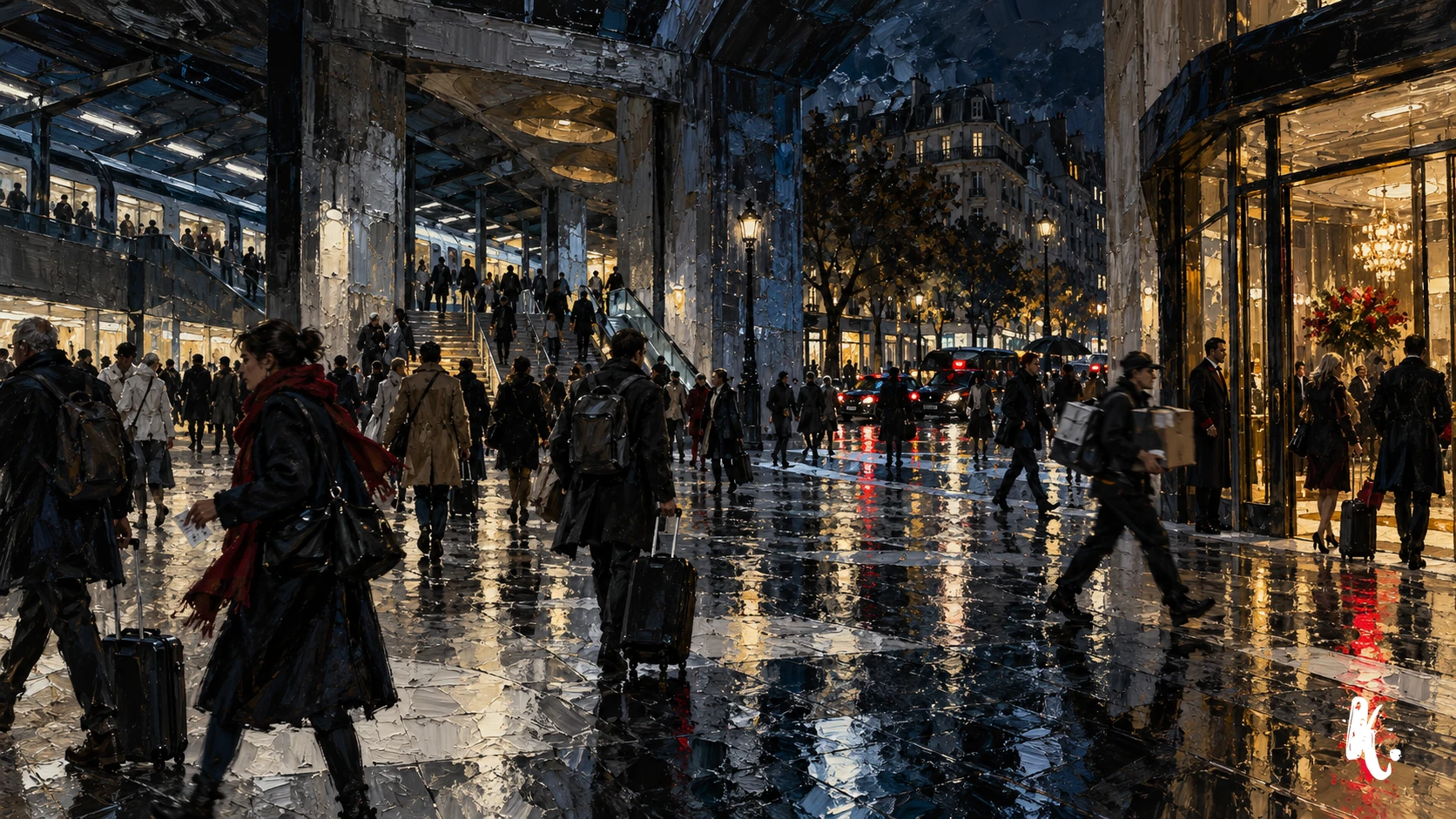
Le Carrefour leaves ordinary evidence: tickets, bookings, footage, driver calls, staff schedules and last-minute messages. None alone proves a supernatural secret. Together they can contradict the account two sides agreed to give of a meeting. The problem is not simply hiding a visitor; it is knowing how many people had to make their passage possible.
The published public Archives currently assign no dated clipping directly to Le Carrefour. This chapter does not turn general Parisian news into local evidence. Players may consult the Archives to place the game period, while the scenes proposed here remain possibilities.
No public Archive is directly assigned to Le Carrefour.
Explore the Archives14 / Playing Le Carrefour
Current tensions
A guarantee with two meanings
- Situation
- Two delegations use the same human host and each assumes Lucien guarantees its version of the meeting.
- Actors
- Lucien, the delegates, the host and reception staff.
- Why it persists
- Public clarification would suggest the Bourg has already chosen a side; silence lets incompatible expectations grow.
- What could worsen it
- One side incurs costs in the name of protection it was never granted.
- Player character involvement
- Player characters can establish what was said, secure shared terms or advise separate meetings.
Hospitality too convenient
- Situation
- An Anarch intermediary returns so often that a passing presence begins to look like settlement.
- Actors
- Lucien, the intermediary, political neighbours and successive guarantors.
- Why it persists
- Each visit on its own follows the rules; nobody wants to be first to withdraw useful hospitality.
- What could worsen it
- A minor incident prompts a neighbouring Bourgmestre to ask who answers for all the visits together.
- Player character involvement
- Player characters may set a limit, seek a stable guarantor or defend a right to visit without inventing a Domain.
The moved venue
- Situation
- Mina notices an anomaly around a venue planned for a meeting and considers moving it.
- Actors
- Mina, Lucien, the human organiser, guests and staff.
- Why it persists
- Staying may expose guests; leaving creates calls, cancellations and a new visible route.
- What could worsen it
- The anomaly proves to be an ordinary transport incident after the move has already alerted observers.
- Player character involvement
- Player characters investigate the cause, weigh both risks and own the consequences of their advice.
An agreement in transit
- Situation
- A negotiation concluded in Le Carrefour creates obligations in two other Bourgs.
- Actors
- Lucien, both sides' representatives and the authorities of the affected territories.
- Why it persists
- Each side claims the neutral venue legitimised its reading of the agreement.
- What could worsen it
- A human transport service is asked to carry out a disputed instruction before the parties agree.
- Player character involvement
- Player characters may pause execution, consult witnesses or propose a new guarantee controlled by neither side alone.
D10 / Rumours
- 01
Lucien supposedly refuses a visitor less for their allegiance than because nobody will answer for their departure.
- 02
Mina reportedly postponed a reception after a queue stopped moving, without ever learning why.
- 03
A delegate is said to have paid for a room for someone they deny receiving.
- 04
Mathurin Goyet is said to ask who made a promise before asking what was promised.
- 05
Emmanuel de Morlac supposedly knows who really controls a venue after three changes of management.
- 06
The same stranger is said to have arrived on different trains according to those who waited for them.
- 07
An evening in the eleventh was supposedly cancelled because a technician recognised every guest.
- 08
Oberkampf regulars allegedly know better than Mina when a street will empty; she is said to listen to them sometimes.
- 09
A guarantor reportedly left Paris before the delegation they introduced finished negotiating.
- 10
Hôtel Orphée supposedly keeps two lists for one reception; nobody has produced the second.
D10 / Incidents
- 01
A train moved to another platform scatters those meant to receive a delegation.
- 02
A hotel's access system rejects a name the organiser says was confirmed.
- 03
A concert runs late and its audience exit overlaps the hour planned for a discreet meeting.
- 04
A station closure redirects a crowd onto a street Mina expected to be quiet.
- 05
A studio technician asks who authorised an extra night session.
- 06
Two drivers arrive for the same person with incompatible instructions.
- 07
A demonstration changes access around République without targeting any nocturnal figure.
- 08
A theatre reception runs long because a human audience is in no hurry to leave.
- 09
An expected visitor arrives without the guarantor Lucien required.
- 10
A normally busy street empties after a transport failure, exposing those waiting there.
14 / Playing Le Carrefour
Story hooks
The ticket and the guarantee
A delegation expected in the tenth arrives with an extra member nobody agreed to receive.
- Problem
- The ticket proves the journey, not a right to join negotiations; turning this person away may end hospitality for all.
- Actors
- Lucien, the original guarantor, delegates, player characters and transfer staff.
- Complication
- The extra member paid for their own journey and can leave without revealing what they know.
- Open question
- Will the player characters seek a new guarantor, split the delegation or allow a limited meeting?
The price of neutrality
Mediation takes place under the cover of a hotel reception whose bill is disputed the next day.
- Problem
- Each side says the other was to pay, while the human hotel wants an immediate answer.
- Actors
- Lucien, mediators, the hotel manager and player characters.
- Complication
- The bill includes services separately requested by guests who signed nothing.
- Open question
- Who pays without turning payment into a political admission, and who repairs the agreement before another meeting?
The street that will not clear
Mina plans a small meeting after a venue closes, but a human event keeps the audience there.
- Problem
- Postponing protects the cover; proceeding honours a guarantee to a visitor who must leave soon.
- Actors
- Mina, Lucien, venue staff, the visitor and player characters.
- Complication
- The extra audience is not suspicious and merely wants the evening to continue.
- Open question
- Can the player characters find another credible setting, shorten the meeting or break the promise tonight?
Administration of the absent
An agreement for temporary use of a venue depends on an association whose leadership has just changed.
- Problem
- Emmanuel de Morlac can clarify actual authority, but both sides want him to endorse their interpretation before seeing the records.
- Actors
- Emmanuel, association representatives, Lucien, Mathurin and player characters.
- Complication
- A human employee arranged the venue in good faith under the old agreement.
- Open question
- Will the player characters protect her work, negotiate fresh authority or postpone the meeting despite its cost?
Two exits for one promise
Mathurin negotiates an end to a dispute, but each side insists on leaving the area without meeting the other.
- Problem
- Their routes depend on the same car and time slot; no agreement covers the transfer.
- Actors
- Mathurin, both representatives, Lucien, drivers and player characters.
- Complication
- A transport disruption narrows the routes and makes departures visible.
- Open question
- Can the player characters secure a departure order, or must they ask each side to surrender an incompatible demand?
One host too many
A stranger asks two Carrefour figures to vouch for them at once without telling either about the other promise.
- Problem
- Each guarantee seems limited alone; together they may bind the Bourg to cover acts nobody accepted.
- Actors
- The stranger, Lucien, both guarantors, Mina if a venue is needed, and player characters.
- Complication
- The stranger has not lied about their identity, only about the extent of their welcome.
- Open question
- Will the player characters expose the manoeuvre, rewrite the guarantees or refuse passage at the risk of conflict?