06 / Territory
La Forteresse
A dense territory where local networks matter more than titles.
01 / La Forteresse
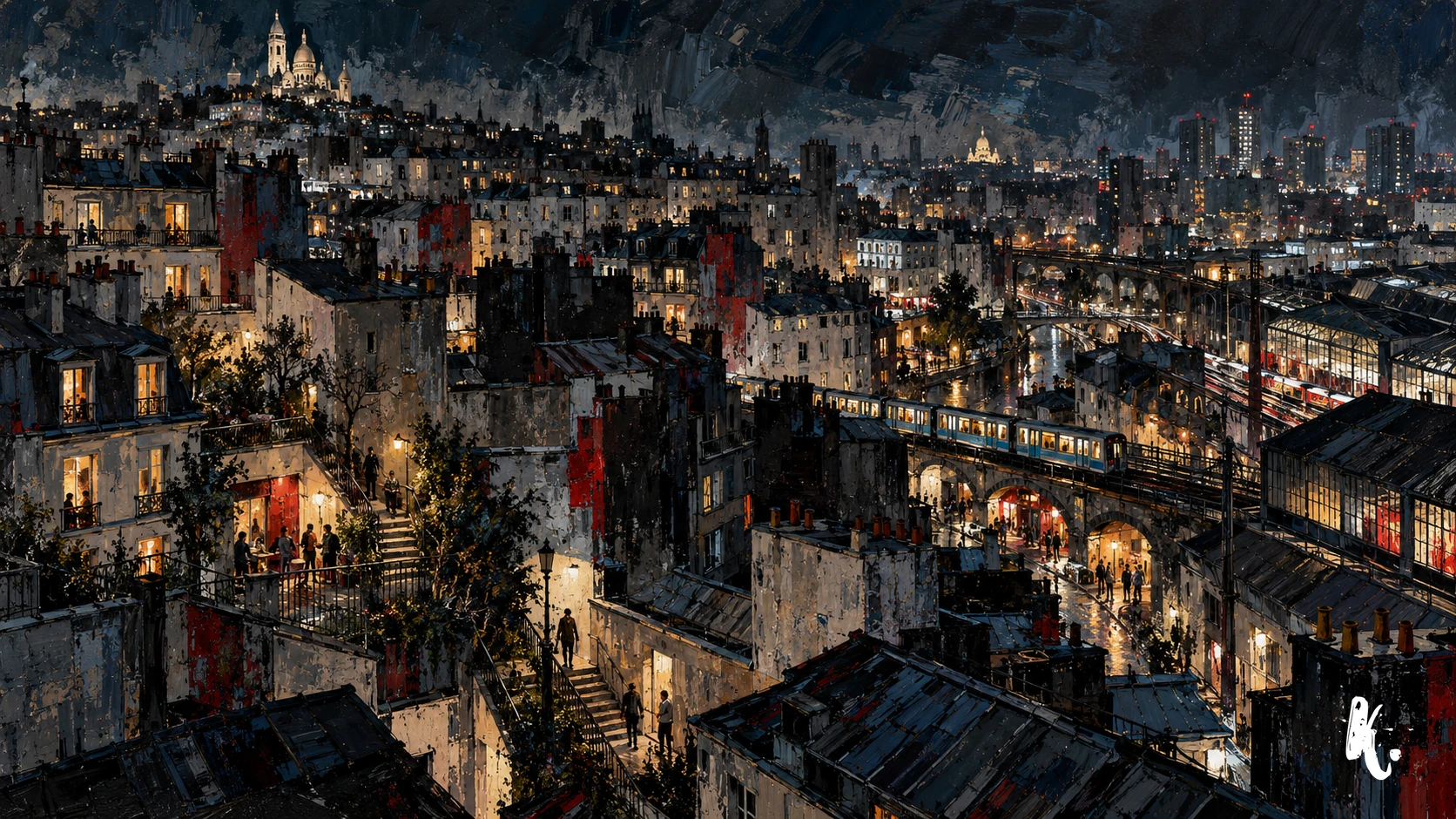
In northern Paris, a door may belong to a landlord, be maintained by a contractor and serve neighbours every evening although none has signed a contract. Anyone who closes it by invoking a title soon discovers how many people must agree for that decision to hold. La Forteresse covers the eighteenth and nineteenth arrondissements. Its name describes neither a continuous wall nor a citadel. It describes how difficult it is to seize at once a territory made of streets, courtyards, networks and overlapping rights.
Paolo Mercon represents this Bourg before the Parisian Praxis. He knows the limits of his authority and uses that knowledge as a method: bring together those who can actually open, repair, protect or prevent. Idriss Koné, Keeper of Elysium, supplies the other half of the work. Where Paolo asks whom a courtyard will listen to, Idriss asks who holds the key, who orders a lock changed and which contractor may enter unannounced. Their disagreement often prevents a mistaken reading from becoming a territorial war.
Hunting, negotiation and travel take place among human lives that are no accessories to vampiric politics. One neighbourhood may absorb a stranger's passage; another street nearby remembers their face. A venue may host the Peace of Paris for one occasion and then return to its residents, workers and users. La Forteresse endures because nobody owns it whole and because its inhabitants continue living there when the Kindred withdraw.
02 / Responsibility without sole control
Responsibility without sole control
A Bourg is a political responsibility, not a deed of ownership over every square metre. Paolo must answer for incidents on his territory without controlling every lock, employee or ally. That distinction makes him more demanding: before promising an outcome, he identifies who can act. The useful question is not who officially commands, but who can say yes or no here tonight and have that answer respected tomorrow.
An association may delay works without owning the building. A caretaker may know the spare keys better than the management company. A maintenance firm may interrupt a meeting without knowing what it has disturbed. An established Kindred may have a customary route that is neither ownership nor a recognised Domain. Each holds part of the situation. Bringing them into one decision does not require agreement about everything; it requires knowing which consequence each will bear.
The Praxis has not abandoned La Forteresse to competing local powers. It asks Paolo to make their relationships governable and to prevent disputes from spilling into neighbouring Bourgs. That requires compromises whose reasons the Court can understand. An arbitration decision that erases residents to simplify a map produces a peace on paper; one that forgets the Praxis lets local autonomy harden into another sovereignty. Paolo works between those failures.
Northern Paris has no single character. Relief, housing, transport, work, visitors and nocturnal habits change within a few streets. The administrative borders of the eighteenth and nineteenth give the Bourg its frame; they do not draw the loyalties or habits of each courtyard. A vampiric boundary may remain unchanged on a plan while a closed entrance, a new shopkeeper or a new security team alters what it means in practice.
03 / PARIS
Two distinct arrondissements
The eighteenth: from the hill to inhabited courtyards
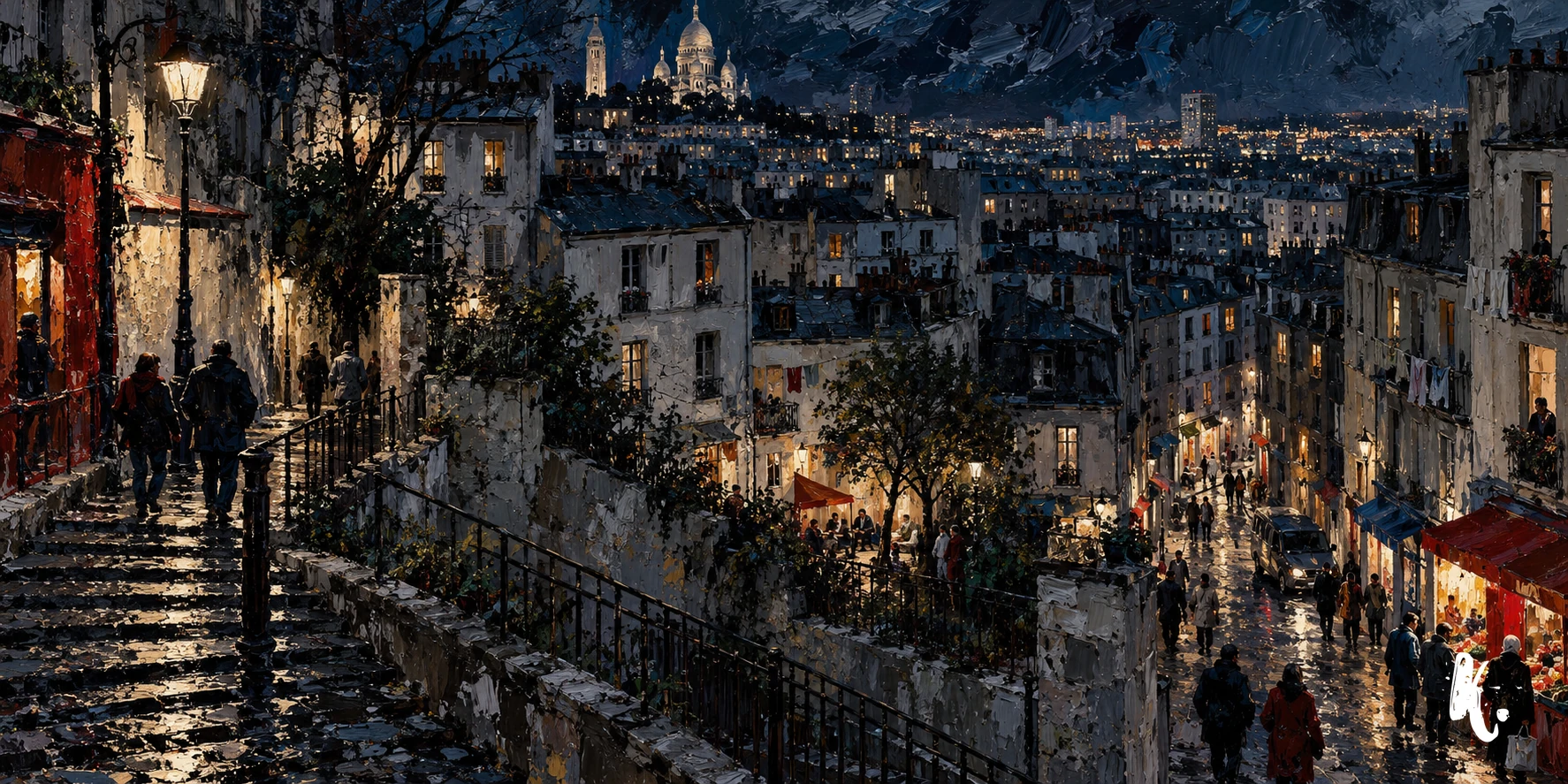
Montmartre can be seen from afar, yet its life is not reducible to the Sacré-Cœur or visitors' routes. The slope distributes streets where shops, homes, night venues and places of worship keep different hours. A tourist looking for a street is noticed differently from a familiar face suddenly changing route. In a courtyard, the person handling waste or deliveries may know better than anyone which door should remain closed.
The Goutte d'Or demands another scale of reading. Shops, associations, neighbours, movement and solidarities sustain relationships no Domain map can show. Density does not erase memory: residents know work hours, staff and absences. A Kindred may pass through a crowd; they cannot repeat the same routine forever on the assumption that nobody watches. The presence of several human communities entitles no one to treat them as a single faction or a stock of prey.
Ateliers du Nord, Résidence Chappe and Immeuble Delaunay are possible Elysium venues in the eighteenth. Their human covers differ: professional meeting, property viewing, pre-works audit. Each depends on people who may legitimately be present for another reason. A shared courtyard has neighbours, a residence has its co-owners, and an audit has contractors. Idriss must understand those rights before keeping the Peace; Paolo must weigh what the gathering costs the neighbourhood.
A dated public clipping reports night sounds on rue des Saules, a figure in black and a missing cook. It does not prove that these events share a supernatural cause. Neighbours still use the street and human authorities investigate. At the table that distinction matters: a rumour erases neither those who report it nor those whom an inquiry may trouble. Characters can ask what each person saw without turning uncertainty into established truth.
The nineteenth: rights follow infrastructure
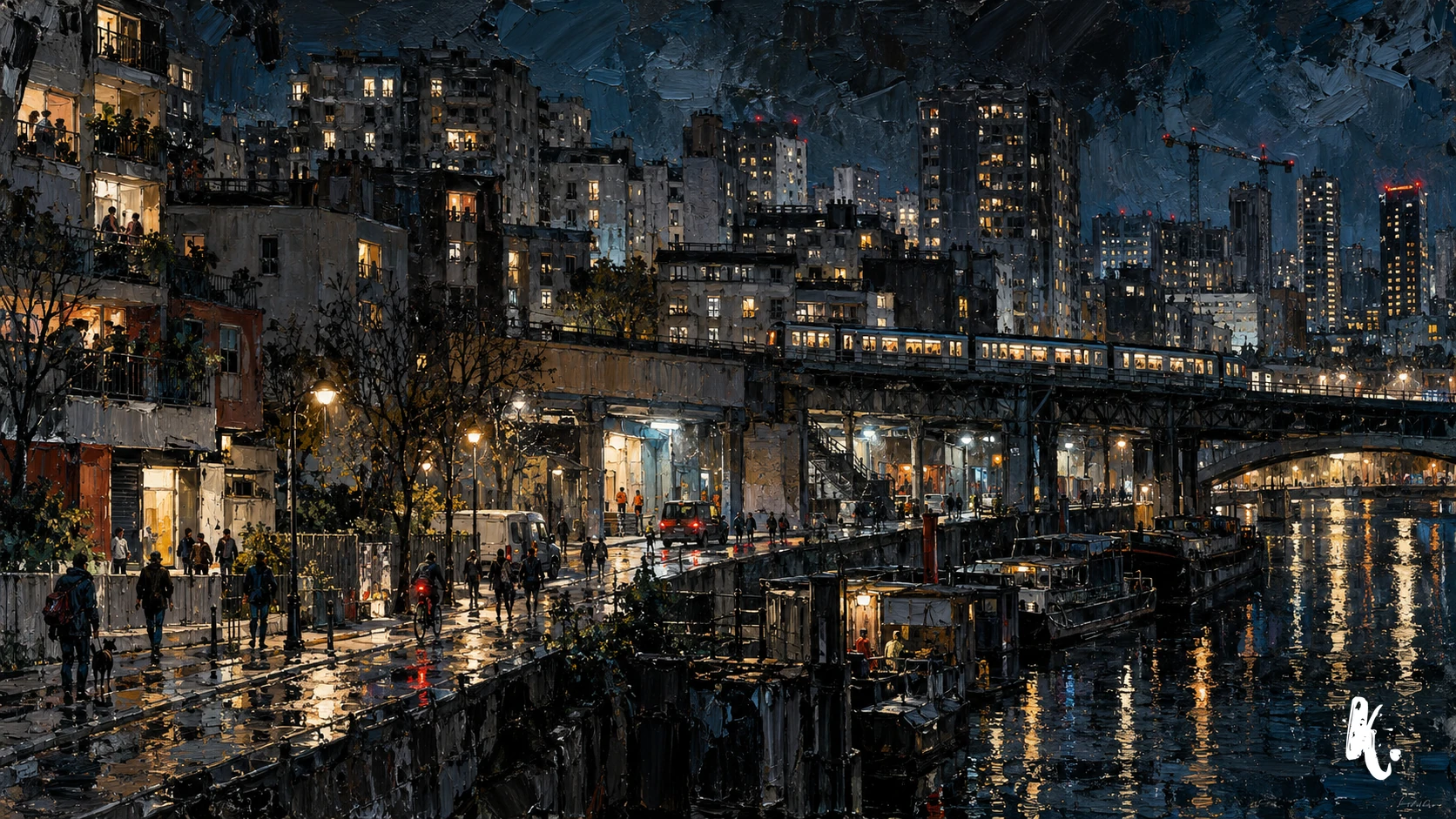
The nineteenth combines homes, facilities, travel routes, service sites and gathering places. Its blocks do not share one density or timetable. A residential entrance, loading bay and conference room answer to different human authorities. The Bourg gains routes and possible meeting places, but each possibility depends on logistics that continue to serve mortals.
Dépôt Villette appears among venues where an inventory could cover a meeting. An inventory leaves lists, staff, moving goods and logistical surveillance. An extra arrival has a precise weight there. At Maison des Architectes, a private conference or jury has a published schedule and attendees whose presence can be checked. Both venues might temporarily receive the Peace; neither becomes available merely because the Keeper decides so.
Infrastructure is not an empty corridor. Technicians maintain it, firms carry responsibility for it and users depend on its continuity. A service stoppage intended to protect a meeting may shift the problem onto an inhabited street. Paolo therefore asks who will bear the decision. Idriss asks who has the legal and material power to make it. Between them, plan and practice must remain compatible long enough to avoid a Masquerade crisis.
Urban change does not instantly erase habit. A moved door may retain its old users; a new manager may know nothing of customary access familiar to every neighbour. Conflict can arise from two accurate but incomplete descriptions of one place. The nineteenth offers characters arbitration scenes in which neither displaying a badge nor dismissing all rules will suffice.
04 / Human communities and local authority
Human communities and local authority
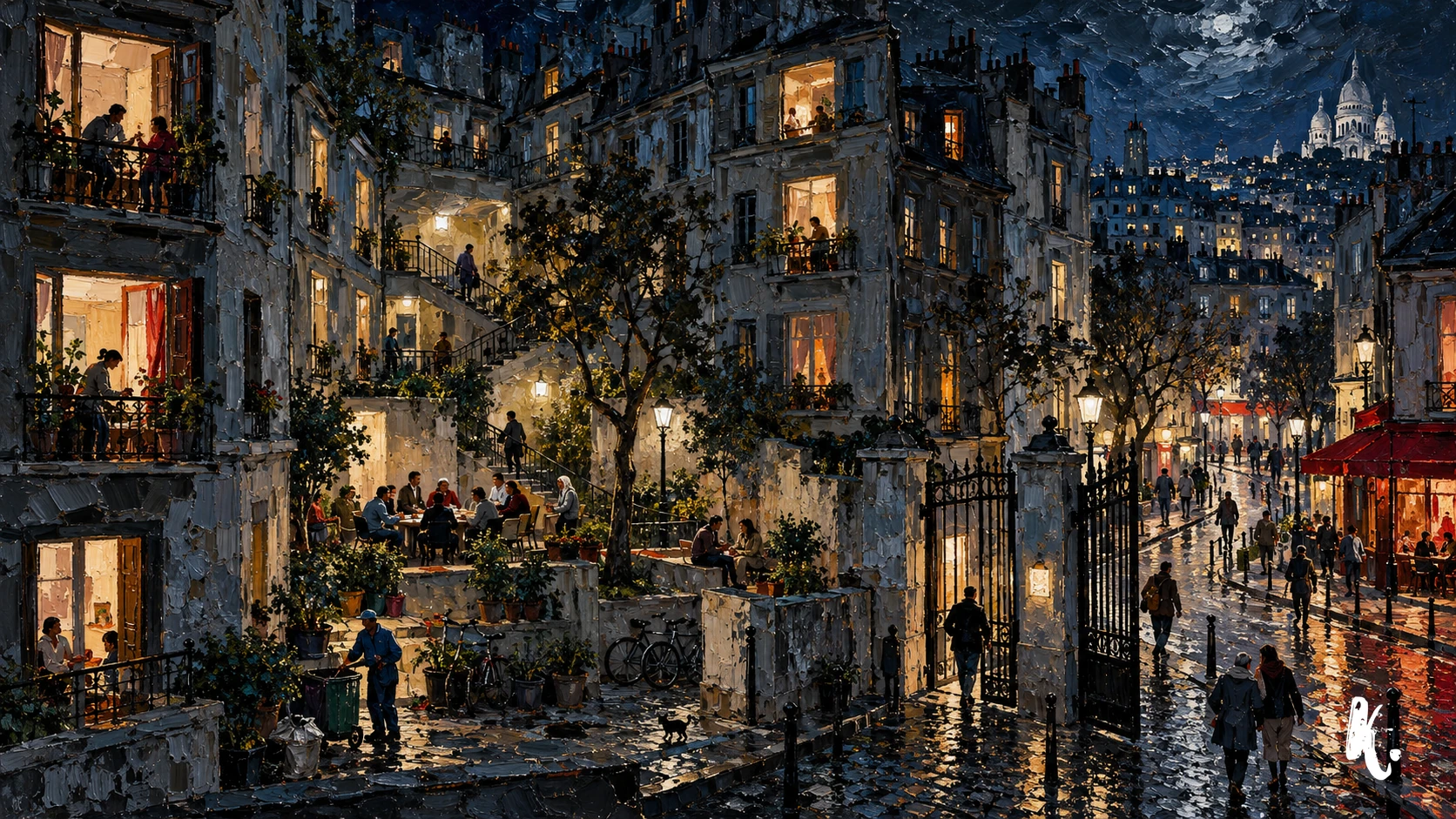
Residents need no place in a vampiric genealogy to matter to the Bourg. They organise access, request repairs, remember a use, contest a closure or simply avoid a place they know has become dangerous. An association is not a switch Paolo can throw: it has its own decisions, disagreements and responsibilities to members. The same holds for shopkeepers, co-owners and work teams.
Paolo may listen to a trusted interlocutor without pretending that person speaks for a whole neighbourhood. Yesterday's helper may have no mandate tomorrow. A solidarity network can protect someone from predation without knowing the Kindred; a neighbours' dispute may instead reveal a nocturnal passage long tolerated. Player characters should ask who consents, who takes a risk and who will be absent when the decision is made.
Human authorities are neither uniformly benevolent nor unanimously hostile to the Praxis. Their interests may conflict. Paolo's responsibility is to treat them as real actors, not assign them supernatural allegiance. A decision can be politically effective and humanly costly; players need not confuse those measures.
05 / Layers below ground
Layers below ground
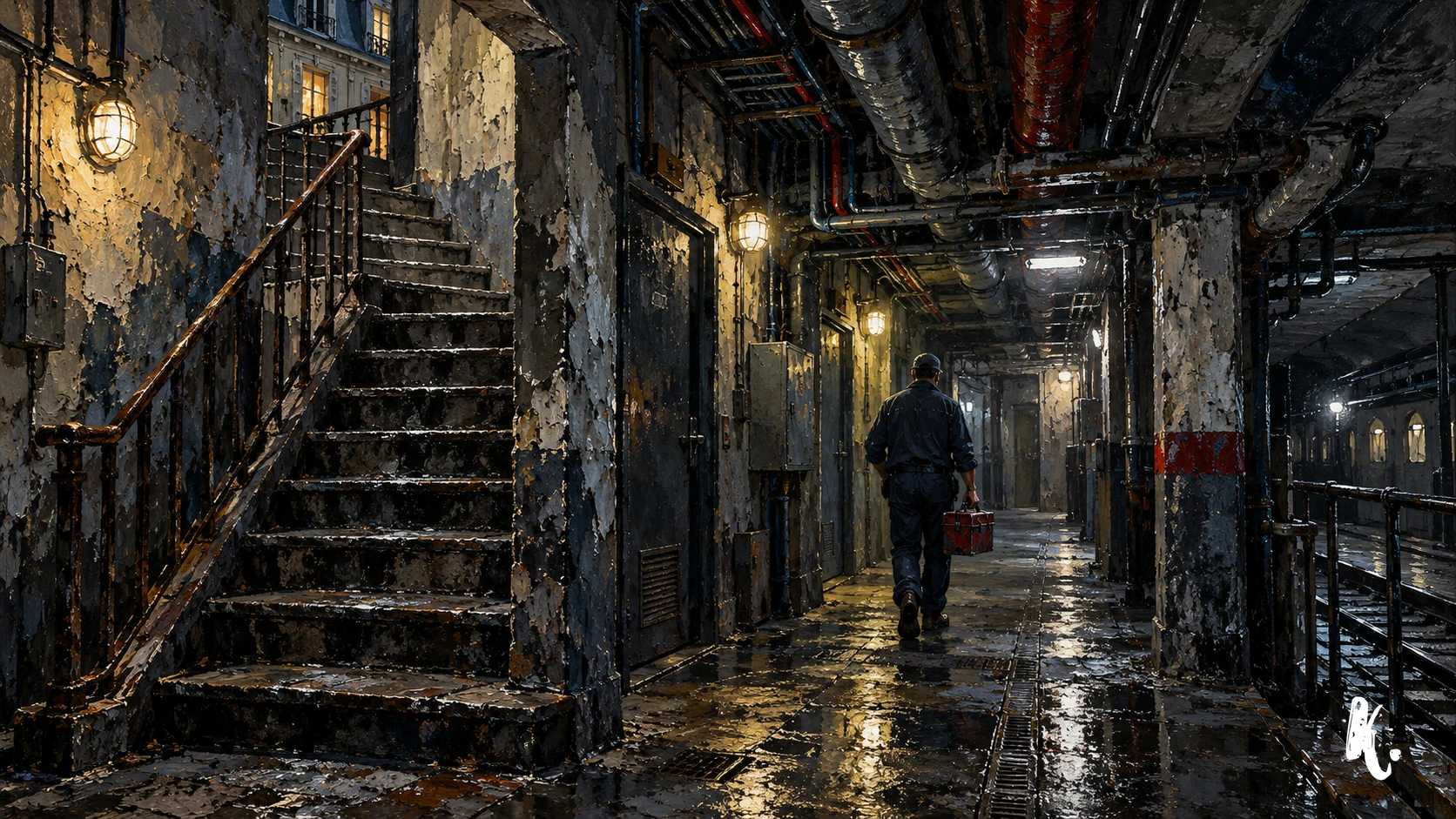
Below ground, cellars, metro levels, service rooms and older structures add layers of use and rights. A basement may serve several buildings without every occupant knowing it. Maintenance changes who can cross a door, when and under whose eyes. Depth therefore guarantees neither secrecy nor safety. It shifts Paolo's and Idriss's questions towards owners, operators and workers less visible from the street.
The public corpus mentions Nosferatu interests in underground layers. That grants the clan neither control of every cellar nor rights over each utility line. An interest may encounter works, a security contractor or the ordinary closing of an entrance without the reader needing a secret map to understand the stakes. Private routes, havens and operational procedures remain outside this chapter.
A surface dispute may begin below ground: water cut off to a building, an inspection scheduled, a room to which two crews think they have access. Before sending anyone in, Idriss checks the chain of authorisations. Paolo asks who must live with a locked door's consequences. Their readings meet on the threshold, where an administrative error quickly becomes a presence neighbours notice.
06 / Coordination and stewardship
Coordination and stewardship

Bourgmestre / Toréador
Paolo Mercon
Paolo Mercon, a Toreador, governs La Forteresse for the Praxis. He represents the Bourg before Villon and answers for its borders even when a street follows another authority in practice. His office requires him to distinguish influence, ownership and capacity to act. He cannot call a courtyard safe merely because a register supports him; he asks who opens the gate, who would report a change and whom residents would believe.
Compromise is not indecision for him. When two sides claim one entrance, he can limit hours, seek another door or impose explicit responsibility. Such solutions matter only if they remain workable for those who live and work there. Paolo does not grant general power to whoever won a meeting. He checks exactly what the decision permits and what remains to negotiate.
That method gives him a particular political strength. A local dispute becomes dangerous when a humiliated actor would rather display autonomy than solve it. Paolo sometimes leaves an honourable way out, while insisting that the Masquerade and territorial responsibility are not optional. He contains escalation without pretending disagreement has vanished. His limits are real: a local authority may withdraw support, a contractor may change and the Court may demand an answer faster than the ground permits.
Idriss is neither his mere agent nor a designated rival. The Keeper supplies a reading of deeds, easements and access that local alliances cannot replace. Paolo may show him that a permission valid on paper meets a practice everyone recognises. Their friction protects the Bourg provided neither turns a half-truth into an absolute verdict. For player characters, work with Paolo often begins with a concrete question: who will still be there to uphold an agreement after they leave?
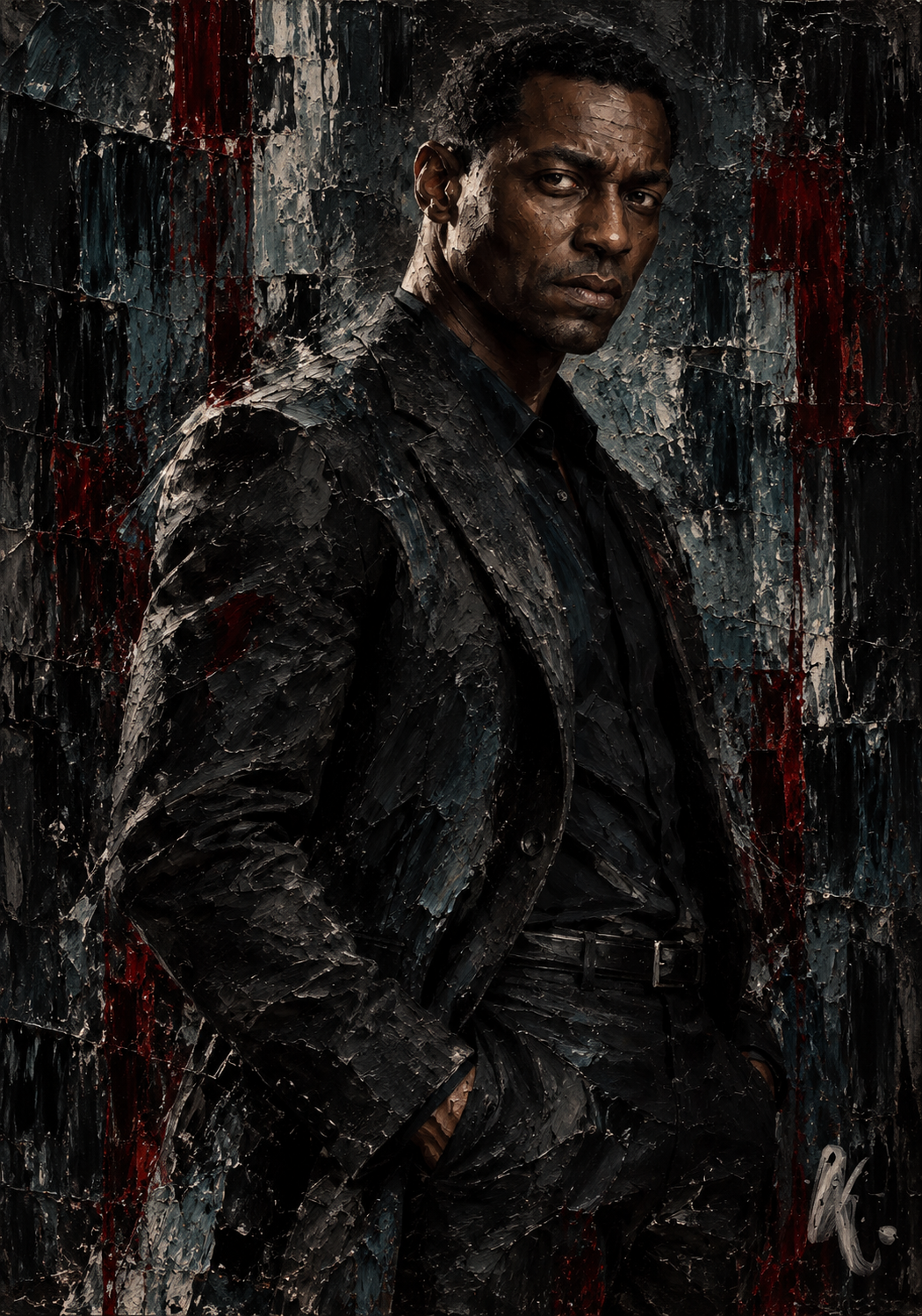
Guardian / Banu Haqim
Idriss Koné
Idriss Koné, a tenth-generation Banu Haqim Embraced in 1990, formerly worked in property law and urban planning. As Keeper of Elysium in La Forteresse, he studies less how a door appears than why someone may cross it. Owners, tenants, managers, contractors, cleaners and emergency services form a pattern of movement guests rarely see. His reflexive question remains: who can enter here, by what right and through what chain of authority?
A list of names is not enough. A valid badge may belong to someone whose assignment has changed. An old key may remain with a contractor who still works elsewhere in the building. Conversely, someone absent from the file may be accepted by every neighbour. Idriss examines maintenance, spares, shifts, instructions and exceptions. He asks who may open in an emergency; he never assumes a ban at reception reaches service rooms.
His public Marks use numbers, geometry, worksite references and fragments of information. This chapter gives neither a complete key nor an access procedure. What matters at the table is his discipline: a mark helps verify a relationship or a state; it cannot replace inquiry into people. Idriss knows a temporary venue is secure only while its access chain remains understood; the next day the same corridor may serve another event.
His weakness is the other side of an effective method. When records agree, he can trust their coherence too much and underestimate access that is illegitimate yet plausible, or a habit that has become permission in practice. Paolo returns his attention to those the neighbourhood listens to; Idriss reminds Paolo that local trust does not nullify a forgotten easement. Their dialogue does not remove every risk. It lets them name the risk they accept instead of letting an open door decide for them.
07 / Hunting in La Forteresse
Hunting in La Forteresse
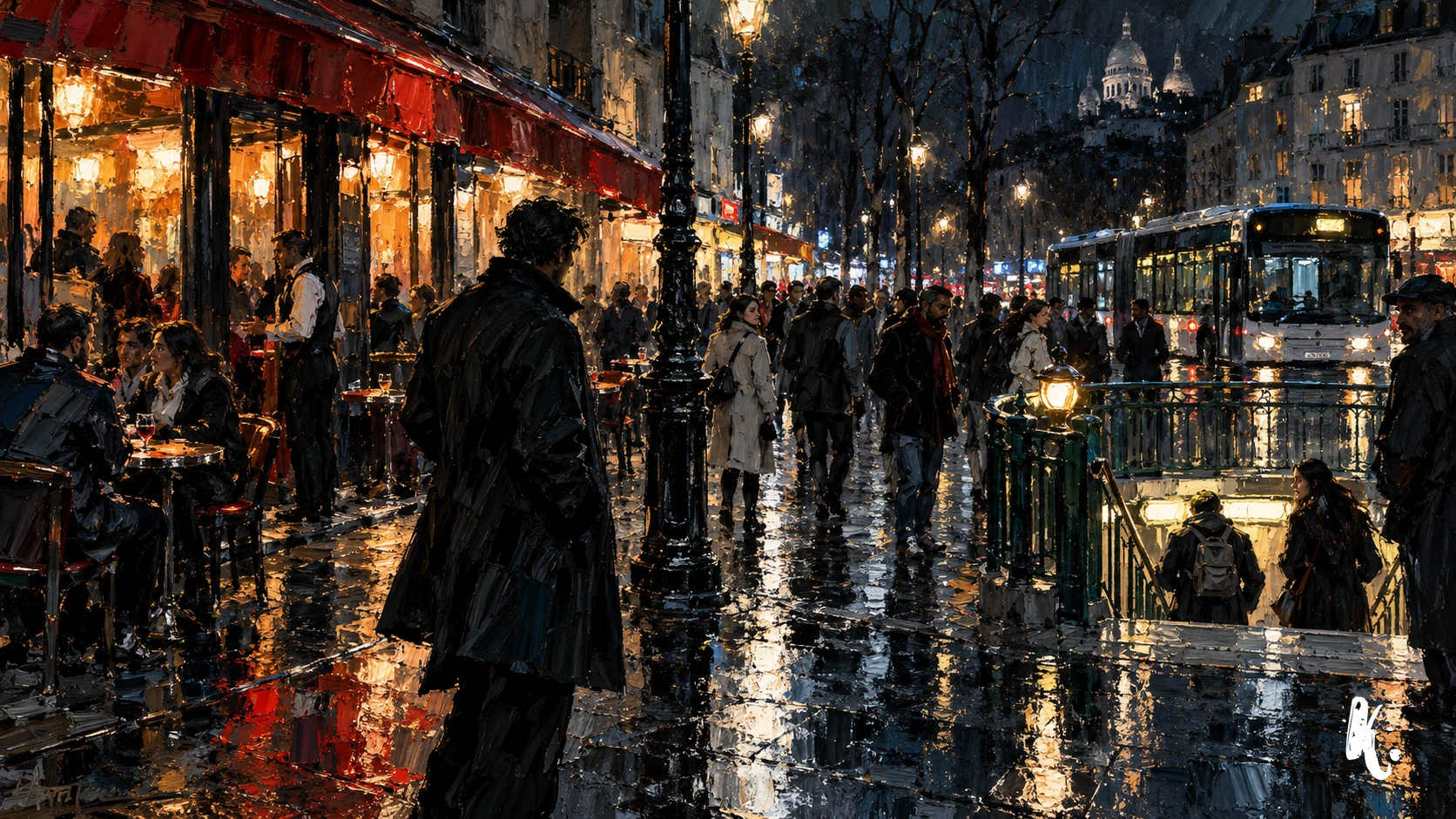
Hunting in La Forteresse begins with reading social visibility. A full street may absorb an unfamiliar face among a hundred others; the next courtyard remembers anyone who returns at the same hour. A group leaving a show may not know their neighbours, while shopkeepers know their regulars. A predator who mistakes density for anonymity discovers too late that a route has been noticed by people who talk to one another.
The Goutte d'Or does not offer easy prey. Shopkeepers, neighbours, relatives and solidarity networks notice absences and changed habits. Montmartre brings more unfamiliar visitors, but hotels, restaurants, transport and cameras keep other records. In the nineteenth, the distance from a broad road to a residential landing can change every condition of a hunt. None of these situations excuses forgetting that the person approached has others who will notice their absence.
Works and night services create plausible encounters: deliveries, cleaning, maintenance, bar closing and the journey home from a celebration. They also create schedules, rosters and colleagues. A credible human cover protects better than an alley assumed empty. Someone hunting as a crew member risks meeting the real supervisor; someone choosing a quiet threshold may meet the one person who holds its key.
Paolo must answer for the political consequences of predation that damages neighbourhood relationships. Idriss can identify a place's access and responsibilities without issuing a general hunting licence. A disappearance, repeated behaviour or complaint may bring humans into action without their knowing anything about the Masquerade. At the table the Bourg gains depth when such attention makes hunting a risky choice, never a list of safe districts from which one can take without witnesses.
D10 / Hunting circumstances
- 01A group leaves a neighbourhood celebration.
Opportunity : Their routes separate at the bus stop.
Complication : Two neighbours promised to wait for the last member.
- 02A visitor looks for their hotel in Montmartre.
Opportunity : They readily accept directions up the slope.
Complication : Reception expects their arrival and follows the booking.
- 03A late delivery stops outside a courtyard.
Opportunity : The driver steps out alone to check the gate.
Complication : The shop awaits the goods before closing.
- 04A resident returns after a long shift.
Opportunity : The landing seems empty for a moment.
Complication : A neighbour knows her schedule and keeps a light on.
- 05A worksite releases crews at different hours.
Opportunity : One worker waits for a connection.
Complication : The foreman checks departures on a phone.
- 06Customers leave a small bar in the nineteenth.
Opportunity : One heads away alone.
Complication : The owner recognises every regular.
- 07Someone waits outside a closed metro station.
Opportunity : They need another route.
Complication : A relative already shares their location.
- 08A property viewing runs past its planned end.
Opportunity : A visitor remains in the courtyard.
Complication : The caretaker arrives to return the keys.
- 09A volunteer finishes tidying after a meeting.
Opportunity : The rest of the group has left.
Complication : Others expect them to lock the shared room.
- 10A tourist route enters a quiet residential street.
Opportunity : The crowd has thinned.
Complication : Windows remain open and faces are noticed.
08 / PARIS
Places and landmarks
18e
Montmartre
Slopes, courtyards and visitors produce different rhythms by street and hour. Residents remember them.
Local importance : In Montmartre, tourism meets a tenacious local memory, nocturnal venues and close neighbourhood networks.
Explore the placeView the territorial map18e
Sacré-Cœur
A visible landmark in the eighteenth, the Sacré-Cœur shapes human routes without becoming vampiric property.
Explore the placeView the territorial map18e
Goutte d'Or
Shops, associations and neighbours make local authority tangible. A crowd dissolves neither ties nor attention.
Local importance : In the Goutte d'Or, local power rests on use, trust and practical knowledge of the ground.
Explore the placeView the territorial map09 / Possible mobile Elysiums
Possible mobile Elysiums
Five possibilities from the public register, not five active venues, a fixed rotation or a selection for this date.
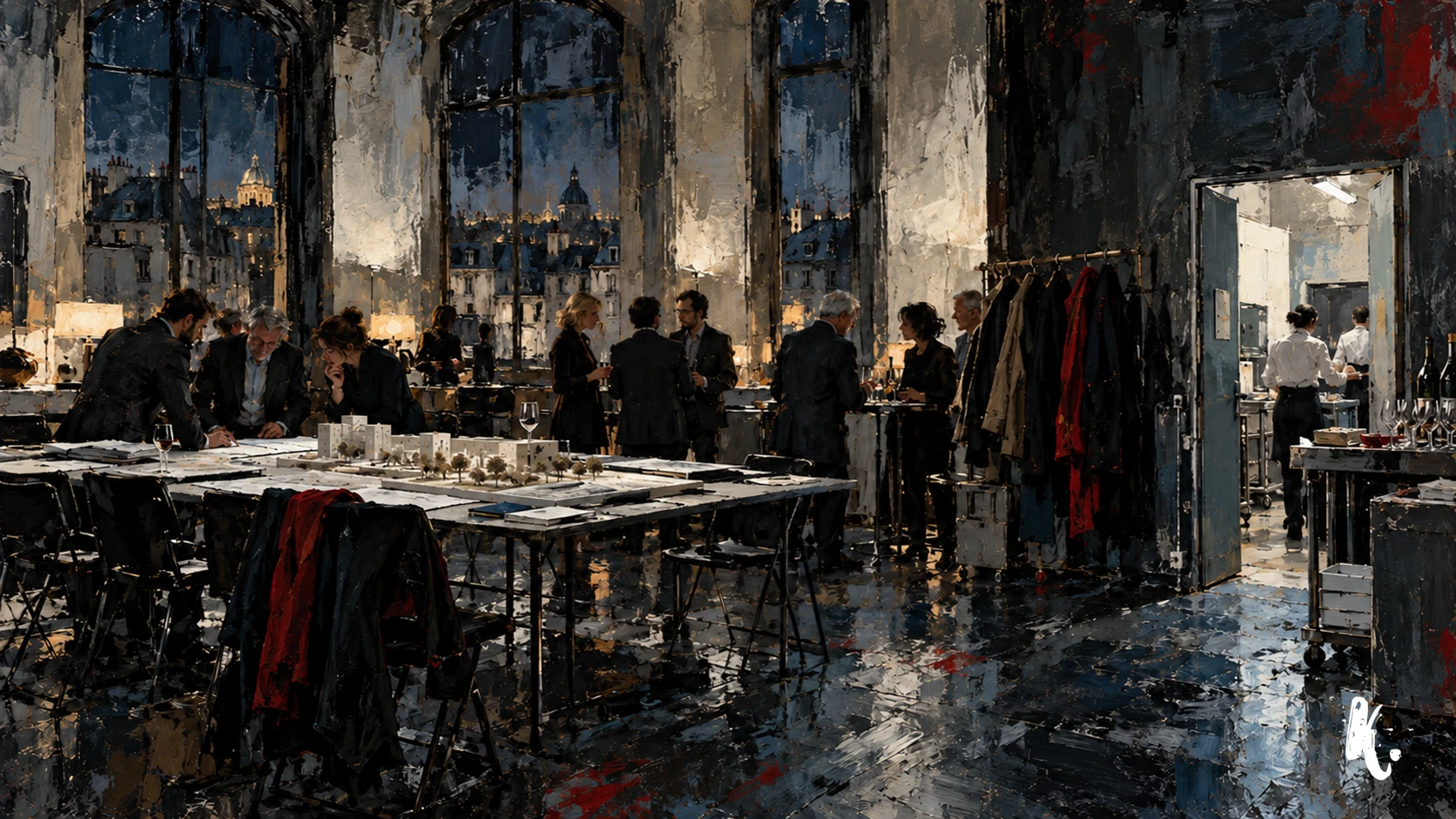
18e / Human cover : Professional meeting
Ateliers du Nord
- Atmosphere
- Shared courtyards and work still visible.
- Possible use
- Receive several parties under a checkable professional reason.
- Constraint
- Neighbours use the courtyards; indicative capacity is 70.
- Why this venue
- Idriss must distinguish guests, workers and people already entitled to pass.
18e / Human cover : Property viewing
Résidence Chappe
- Atmosphere
- A temporarily opened apartment in an inhabited building.
- Possible use
- A small group can have a plain reason for a late visit.
- Constraint
- Residents and co-owners retain their rights; indicative capacity is 25.
- Why this venue
- Security depends on consent and building practice as much as on paperwork.
19e / Human cover : Inventory
Dépôt Villette
- Atmosphere
- Moving goods, crews and recorded schedules.
- Possible use
- A larger meeting may fit a real logistical operation.
- Constraint
- Surveillance and logs make every addition visible; indicative capacity is 120.
- Why this venue
- A badge says nothing about why its holder returns after finishing a task.
19e / Human cover : Jury or private conference
Maison des Architectes
- Atmosphere
- Scheduled presentations, named guests and reception staff.
- Possible use
- An institutional discussion may provide a human frame for a political meeting.
- Constraint
- The official calendar can be checked; indicative capacity is 50.
- Why this venue
- Idriss must reconcile booking, access and the advertised event.
18e / Human cover : Pre-works audit
Immeuble Delaunay
- Atmosphere
- Renovation plans, technicians moving and rooms under inspection.
- Possible use
- A small delegation may move through the building without staging a gala.
- Constraint
- Contractors may arrive without notice; indicative capacity is 80.
- Why this venue
- The right to open a door may belong to someone missing from the guest list.
10 / Kindred linked to the Bourg
Kindred linked to the Bourg
The public corpus ties six Kindred on clan records to La Forteresse, besides Paolo and Idriss. Viktor Heinemann, an eleventh-generation Brujah Embraced in 2006, works in security without confusing control of a threat with enjoyment of violence. Nicolas Serreval, of the same clan and generation and Embraced in 1999, understands infrastructure and the territorial consequences of works. Their presence in the Bourg proves neither a personal alliance nor a shared command.
Four Tremere are also anchored here. Lorenzo Bellandi, tenth generation and Embraced in 1927, came from pharmaceutical chemistry and guards his documents as a chain of evidence. Rowena Salvatierra, twelfth generation and Embraced in 2019, understands systems quickly without always measuring the emotional cost of debts. Sernine Bellejoue, eleventh generation and Embraced in 1990, assembles dossier fragments within the Pourpre network. Théodore de Vassy, ninth generation and Embraced in 1881, works on ritual memory and transmission. Their skills make neither the Bourg a public laboratory nor any human address clan property.
Public clan records give their individual profiles; the Court records introduce the two office holders. This chapter links them to one territory without assigning any new mission. Player characters may seek a specialist when circumstances justify it, but still need that person's agreement and must account for their political position.
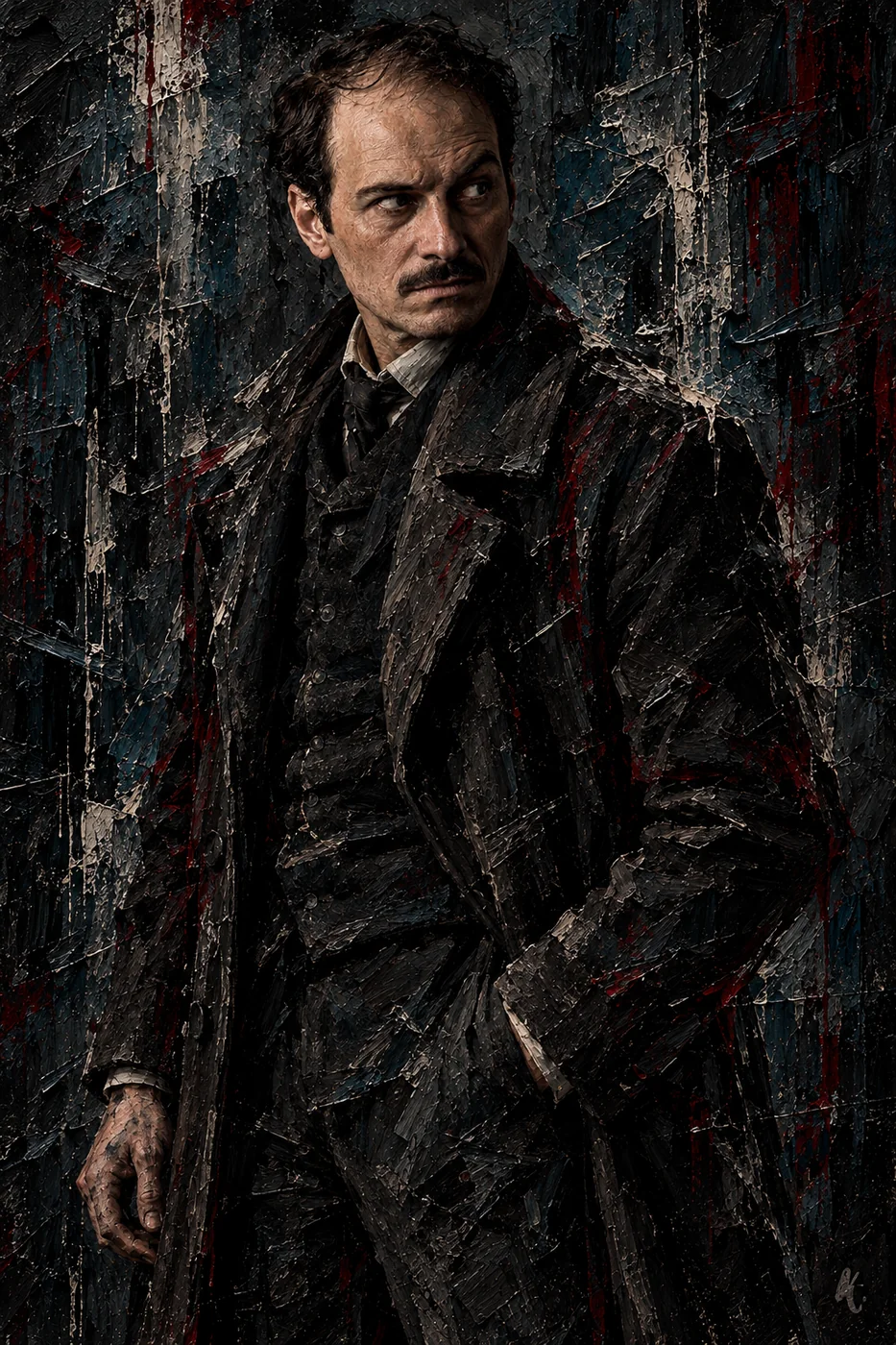
Brujah
Nicolas Serreval
A former public networks engineer, Nicolas knows that every urban transformation also redraws Kindred territory. He understands worksites, permits and flows. His anger is directed at needless destruction and those who never bear its consequences.
Active, infrastructure
Explore the public record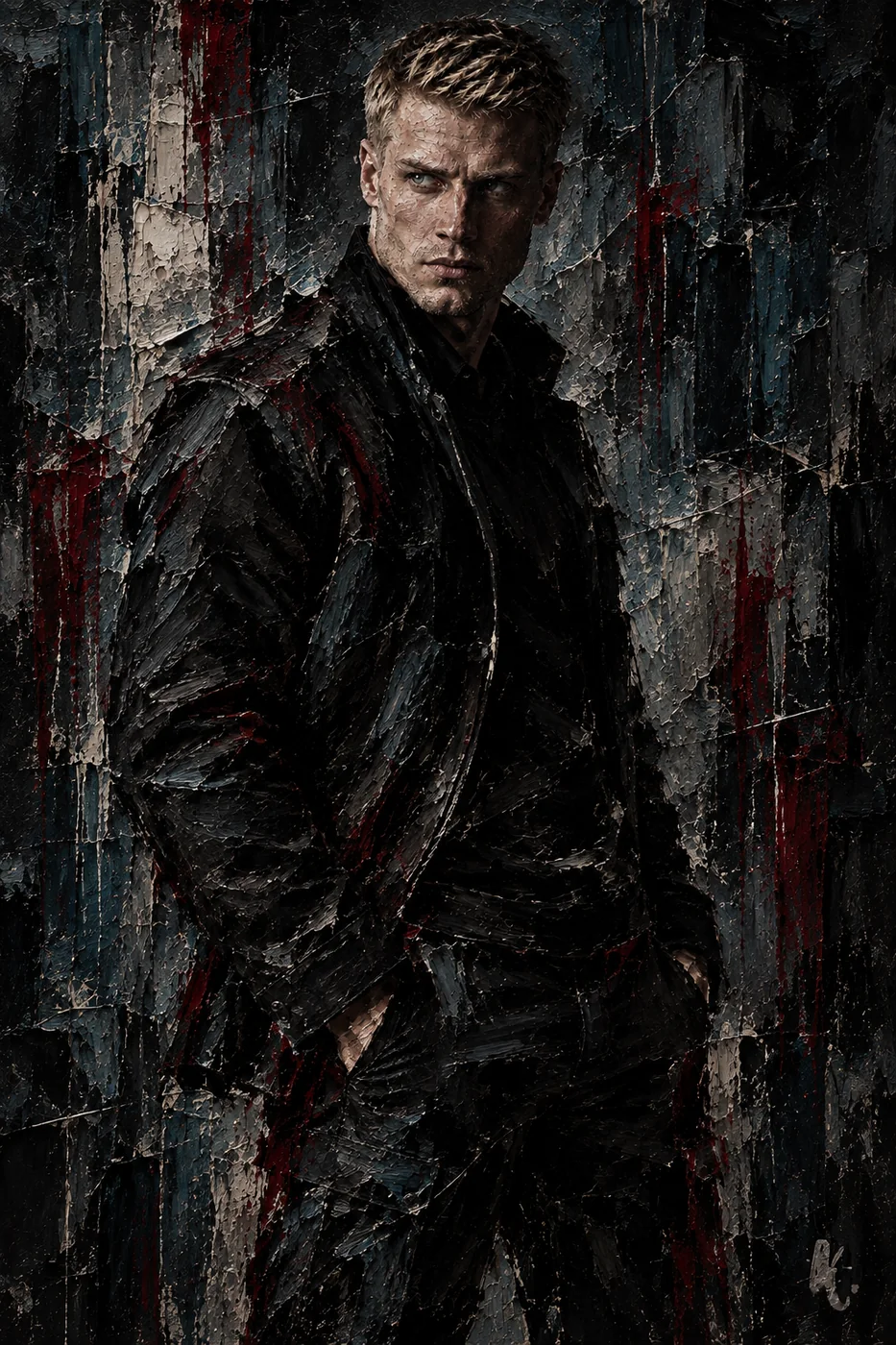
Brujah
Viktor Heinemann
A former security officer, Viktor was chosen for his command of danger rather than a taste for violence. He remains calm until action becomes necessary. His weakness is no longer always knowing who had the right to begin the violence.
Active, security
Explore the public record
Tremere
Lorenzo Bellandi
A former Italian pharmaceutical chemist, Lorenzo replaced absolute promises with an almost religious faith in experimentation. He protects his documents as a chain of evidence and regards magic as a discipline that punishes moral negligence first.
Active, laboratory work
Explore the public record
Tremere
Rowena Salvatierra
Rowena followed a brilliant academic path interrupted by a long and poorly understood illness. She understands systems quickly but underestimates the emotional cost of debts. She must grow politically without losing her resistance to imposed roles.
Active, apprentice
Explore the public record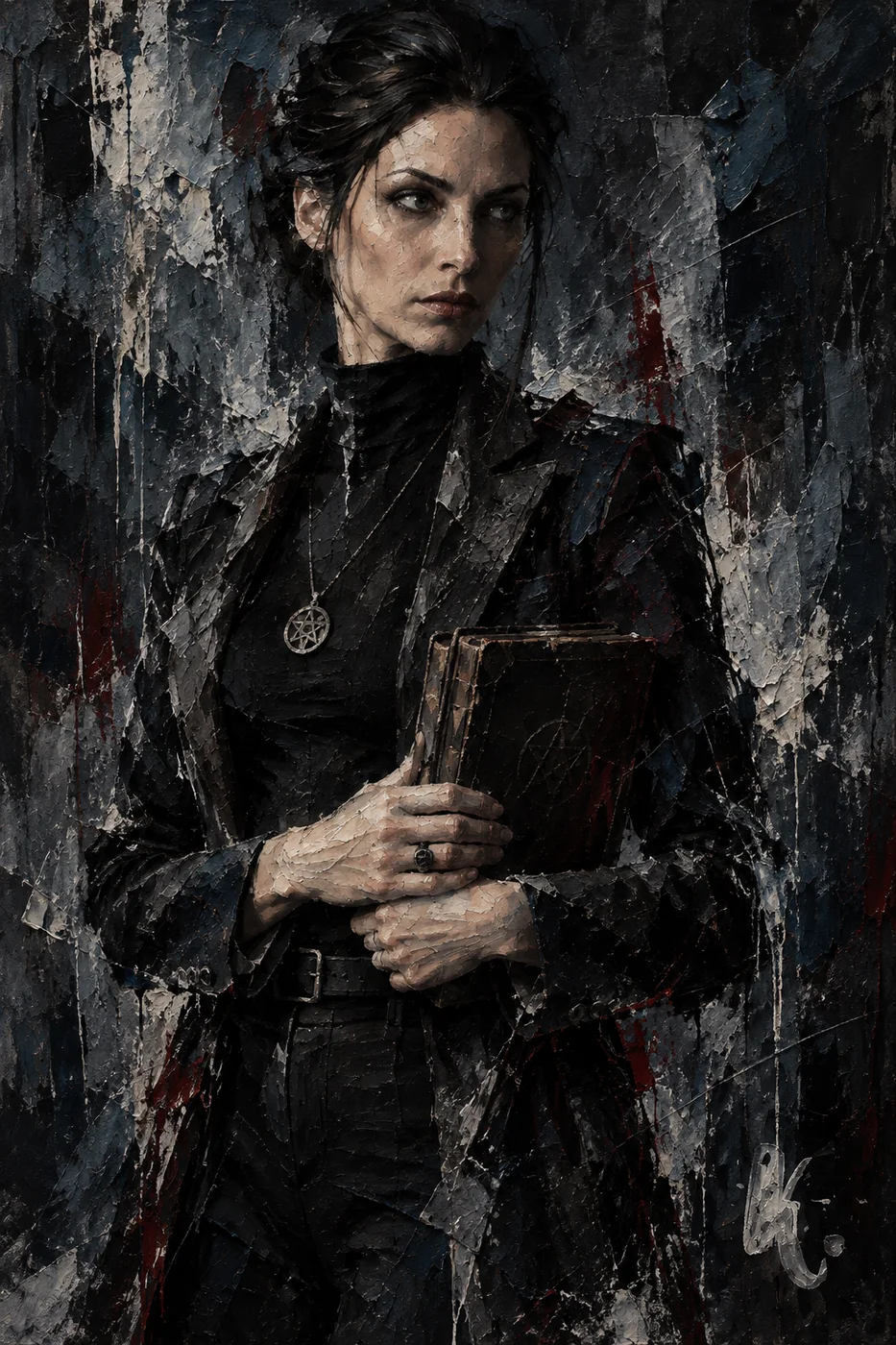
Tremere
Sernine Bellejoue
Sernine thinks in terms of consequences, traces and leverage. She keeps file fragments others consider too incomplete to use alone and knows how to place them within a larger whole, without turning the Pourpre into an institution of the Praxis.
Active, Pourpre network
Explore the public record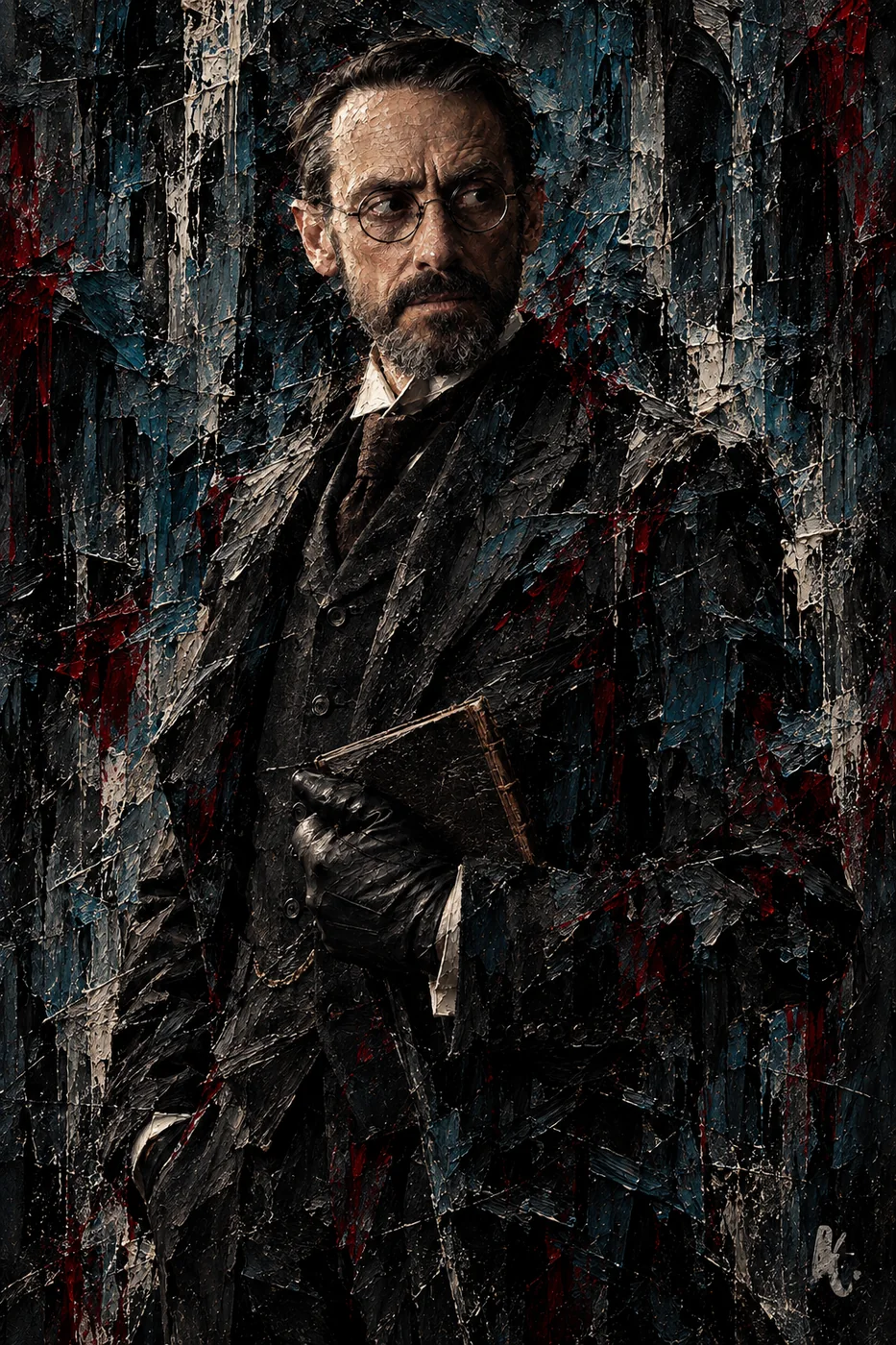
Tremere
Théodore de Vassy
Trained in canon law and ancient languages, Théodore specialised in archiving and transmitting Tremere secrets. The fall of Vienna broke his automatic obedience, not his method. He now seeks legitimacy grounded in precision.
Active, ritual archivist
Explore the public record11 / Institutions and responsibilities
Institutions and responsibilities
The Praxis gives Paolo territorial responsibility; it replaces neither city government, landlords, transport operators nor building workers. Idriss keeps the Peace of Paris when a place becomes Elysium without turning that office into permanent power over the building. The separation gives scenes traction: a political agreement can be valid yet impossible to carry out until an access right, safety rule or human practice has been resolved.
Villon expects a Bourgmestre to contain the consequences of decisions. La Forteresse makes that expectation demanding: promising an entrance may involve co-owners, contractors and neighbours who were never consulted. Paolo can explain his arbitration decision; Idriss can show the formal chain he checked. Neither can guarantee that everyone with valid access acts in good faith.
12 / Public traces
Public traces
The public Archive associated with Montmartre reports a disappearance and neighbourhood accounts on rue des Saules. The dated document records witnesses and an investigation; it establishes no supernatural cause. Treating it as complete proof would lose what it offers players: incomplete accounts that humans must still compare. The other scenes in this chapter are playable possibilities, with no date added to the chronology.
La Forteresse also preserves less dramatic traces: work orders, co-owners' meetings, bookings, delivery logs, complaints and staff changes. None is a secret map. Together they say who could have been present and who will answer if a meeting leaves damage, an absence or a blocked entrance.
13 / Playing La Forteresse
Current tensions
Title and use
- Situation
- An entrance the owner wants closed has long served several residents.
- Actors
- Paolo, the owner, neighbours and the caretaker.
- Why it persists
- Each holds part of the facts and fears losing more than a passage.
- What could worsen it
- A changed lock sends users towards a less visible entrance.
- Player character involvement
- Player characters may check rights, convene users or negotiate new hours.
Scheduled maintenance
- Situation
- A lawful maintenance visit coincides with a venue that might host the Peace.
- Actors
- Idriss, technicians, organiser and prospective guests.
- Why it persists
- Cancellation is costly; forbidding the work creates a visible anomaly.
- What could worsen it
- A replacement contractor holds an authorisation the first lacked.
- Player character involvement
- Player characters can move the meeting, manage access or find another venue.
Two incompatible protections
- Situation
- An association protects a space Kindred consider a customary route.
- Actors
- Paolo, association members and nocturnal users.
- Why it persists
- Nobody can publicly explain the supernatural reasons for the dispute.
- What could worsen it
- A temporary closure becomes a lasting political symbol.
- Player character involvement
- Player characters can argue for a detour, repair harm or abandon the route.
A border below ground
- Situation
- Service works change practical access between two parts of the Bourg.
- Actors
- Nicolas Serreval may be consulted; Paolo, Idriss and human managers remain decision-makers.
- Why it persists
- The political map has not changed, but real routes have.
- What could worsen it
- An incident is assigned to the wrong territorial authority.
- Player character involvement
- Player characters can establish facts without publishing private routes or imposing general control.
D10 / Rumours
- 01
Paolo supposedly knows whom to call in every courtyard; residents say he is still learning their names.
- 02
Idriss is said to have rejected a hall because three contractors held perfectly valid keys.
- 03
A neighbour reportedly cancelled a reception without knowing it concerned the Peace of Paris.
- 04
An old works plan is said to circulate with a door that no longer exists.
- 05
Viktor Heinemann would supposedly surrender an entrance rather than hurt someone to keep it.
- 06
Nicolas Serreval supposedly knows which worksite will change the next route before signs appear.
- 07
A co-owners' meeting allegedly shaped a nocturnal bargain more than an order from the Court.
- 08
Sernine Bellejoue supposedly keeps dossier fragments nobody dares present alone.
- 09
On rue des Saules some link a disappearance to a man in black; the public article does not establish it.
- 10
Ateliers du Nord are said to be easier to rent than to hand back without a neighbour's complaint.
D10 / Incidents
- 01
A manager changes a courtyard lock before authorised users are informed.
- 02
A night contractor arrives with a valid badge under the name of a recently replaced firm.
- 03
Two groups produce written permission for the same room at the same hour.
- 04
A water leak forces entry to a basement nobody planned to inspect.
- 05
Residents ask why a pre-works audit begins after the worksite has closed.
- 06
An inventory finds missing equipment and holds everyone on site.
- 07
A neighbourhood celebration temporarily blocks the discreet access Idriss planned.
- 08
An association demands the reopening of a passage Paolo thought abandoned.
- 09
A security team changes without passing on instructions about that evening's guests.
- 10
A neighbour posts footage of unusual entry, believing it shows only a property dispute.
14 / Playing La Forteresse
Story hooks
The key that remains
A proposed reception at Résidence Chappe depends on an entrance several people still use.
- Problem
- The official list omits some key holders.
- Actors
- Idriss, the manager, residents and potential guests.
- Complication
- One uses the entrance to help a vulnerable person who needs it.
- Open question
- Move the reception, negotiate a human presence or abandon the venue?
A worksite without a border
Works make unusable a route two groups in the Bourg considered settled.
- Problem
- Each side says the other must bear the detour.
- Actors
- Paolo, Nicolas Serreval, work crews and users.
- Complication
- The technical schedule cannot move without harming residents.
- Open question
- Negotiate a route, compensate a loss or accept a border that no longer works?
The neighbours' word
An association asks Paolo why a courtyard receives late visitors.
- Problem
- Too little an answer breeds distrust; too precise an answer endangers the Masquerade.
- Actors
- Paolo, the association, the owner and visitors.
- Complication
- Association members do not all agree.
- Open question
- Set a use rule, change venue or rebuild trust before returning?
The interrupted inventory
Dépôt Villette might host a meeting, but an inventory discrepancy triggers a check.
- Problem
- The announced cover is real and may still expose the visitors.
- Actors
- Idriss, the depot manager, staff and guests.
- Complication
- Postponement changes another logistical operation.
- Open question
- Assist the check, reduce attendance or choose another venue?
What the Archive shows
Someone cites the rue des Saules clipping as proof of a specific threat.
- Problem
- The document reports testimony without establishing causation.
- Actors
- Player characters, the missing person's relatives and human investigators.
- Complication
- Hasty action could obstruct the inquiry and expose the Bourg.
- Open question
- Gather more facts, support the relatives or contest the public accusation?
Permission in practice
A service door supports a long-tolerated use the new manager wants to end.
- Problem
- Custom is not written law, yet its loss harms real people.
- Actors
- Paolo, Idriss, the manager, workers and local users.
- Complication
- One person exploits the route without authority, as Idriss discovers late.
- Open question
- Create authorisation, close gradually or build another entrance?