02 / Territory
La Torche
The intellectual and scholarly heart of nocturnal Paris.
01 / La Torche
La Torche is not a library after dark. Study rooms, restaurant streets, bookshops, gardens and places of worship make the fifth and sixth arrondissements a territory of unlike uses. At night, students, staff, researchers, residents, visitors and service workers do not use the same doors or keep the same hours. Kindred may move between these worlds; they cannot pretend there are no witnesses.
The Bourg's motto, “La Torche thinks”, describes a method, not intellectual superiority. Information carries weight only when its provenance, accountable witnesses and political use can be established. Naïma Bensaïd arbitrates the territory without turning her clan into a local court. Samir Ouali checks whether a venue chosen for the Peace of Paris can genuinely receive guests and then return to ordinary life. Their offices cooperate; neither replaces the other.
This chapter brings together public landmarks, people associated with the Bourg and situations that may be used at the table. A link with La Torche proves neither residence, allegiance nor presence tonight. A human venue does not become vampiric property because a Kindred received an invitation there. The distinction matters in a territory where a mistaken reading can outlast an encounter.
02 / A territory of evidence
A territory of evidence
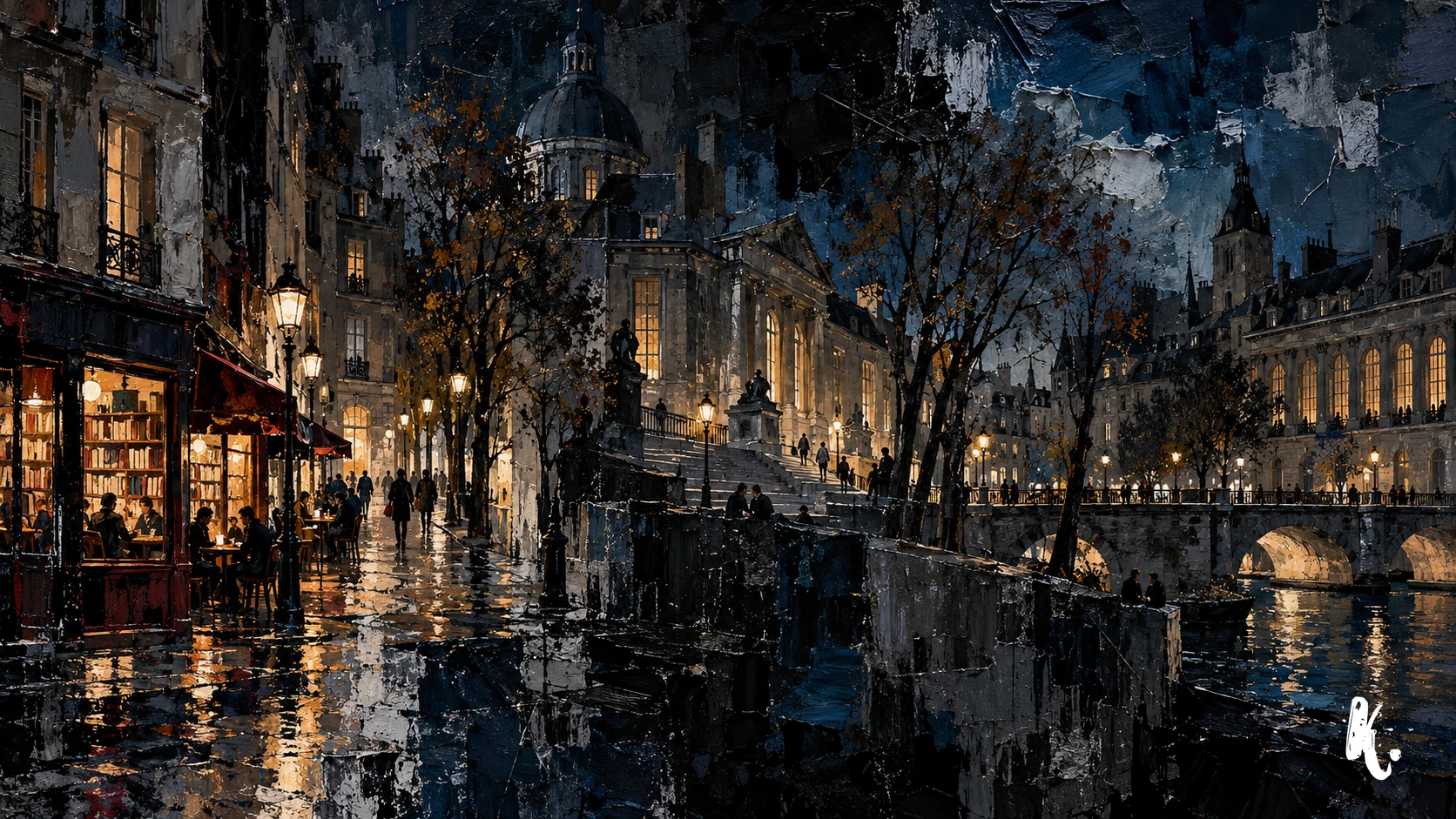
Knowledge here is not a treasure stored behind a single door. The Sorbonne contains teaching rooms, services and libraries; the Quartier latin extends beyond its institutions; Saint-Germain-des-Prés mixes publishing, galleries, cafés, residents and visitors. A catalogue reference, a seminar invitation or a bookseller's introduction may open a route. None of those forms of access removes the need to respect the people who run the place.
La Torche differs from La Cour, where an appearance immediately makes a reputation. Here the challenge is to sustain a claim when several people each hold part of a file. It differs from Le Havre, whose discreet continuity offers protection: in La Torche, versions circulate and contradict one another. It has neither the wealth of Les Hautes Terres, the crowds of Le Carrefour, the solidarities of La Forteresse nor the rapid change of Les Tours. It can make their conflicts legible, though it may also make them worse.
The Bourg's name does not, by itself, establish an official origin for the Torch. The sources establish its territory, motto and relationship to knowledge; they do not reveal a secret foundation or a universally accepted emblem. At the table, a character may offer a personal explanation of the name. That remains their interpretation, not a fact imposed by this chapter.
Naïma must keep knowledge moving without promising universal access. Some archives are protected, some debates are not public, and some beliefs carry their own human authority. The political question begins when a Kindred demands a document, orders a specialist to be silent or insists on a conclusion before the evidence is examined. The Bourgmestre may arbitrate consequences within the Praxis; she does not command a university or a religious community.
03 / PARIS
Two arrondissements, distinct uses
The fifth: establishing provenance
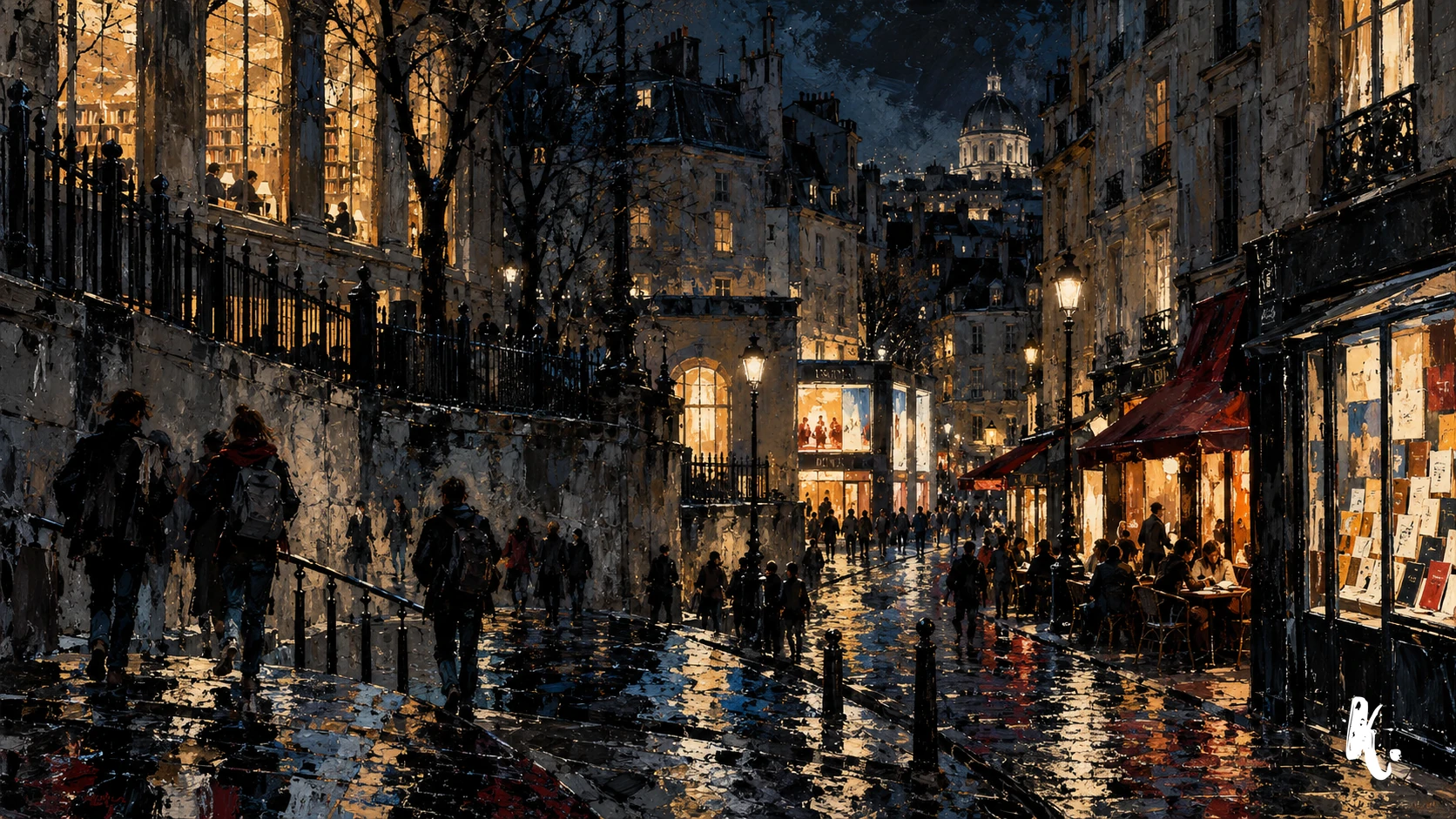
Around the Sorbonne, buildings house classes, administrations, research and distinct collections. The rules for one corridor may change with the service, the hour and the person expected. A Kindred who knows a room's history does not necessarily know today's keyholders. The district's prestige is no badge, appointment or permission to consult a collection.
The Quartier latin is not empty when classrooms close. Students leave cinemas or restaurants; others head home, to a night shift or to transport. Bookshops, hotels and businesses close at different times. These overlapping rhythms make an encounter plausible, but each encounter belongs to a human journey. Someone waits, a booking remains, a phone receives a message asking where its owner has gone.
Archives and collections offer sharper rivalries than a simple hunt for a mysterious manuscript. A document may be genuine but misdated; an accurate copy may have left its repository without permission; a catalogue may name an object no longer accessible. For Kindred, the difference between owning, consulting and proving becomes a matter of debts. For the human custodians, it remains a professional duty.
The Grande Mosquée belongs to the human religious and cultural life of the fifth. Its presence is a reminder that not every tradition in the area is part of a Kindred dispute. One may cross nearby streets, seek a contact or observe the district without assigning the institution a supernatural role. An intrusion or manipulation there would first cause harm to people and create very real public consequences.
The sixth: circulating an account
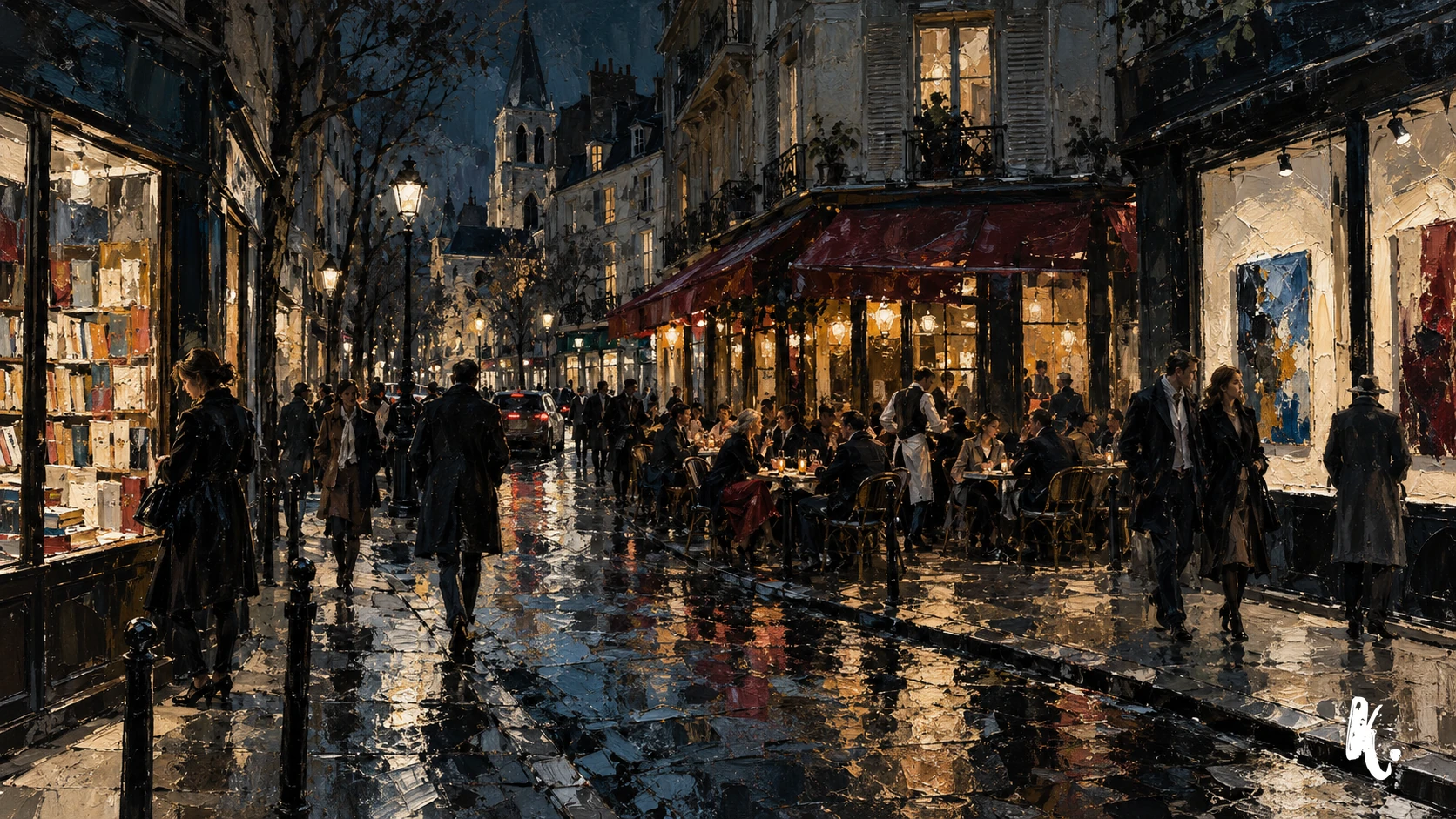
Saint-Germain-des-Prés still has bookshops, galleries and places where people discuss works and reputations. It does not live solely on the memory of past writers. A shopfront changes, a business closes, a hotel receives visitors who leave the next day. A nocturnal meeting may blend into that cultural life, yet a regular, waiter or gallery owner may notice who was absent the previous week.
Access in the sixth is often relational. An introduction may secure a meeting with a publisher, collector or event organiser; it does not grant the right to direct their work. Galleries keep calendars, hotels employ staff and publishing houses answer to readers and economic pressures. Kindred politics moves through intermediaries: who introduces whom, who guarantees discretion and who pays when the human cover becomes expensive.
The Jardin du Luxembourg is a landmark, not a refuge available at will. Its access and uses follow human rules; its apparent quiet should not be mistaken for an absence of witnesses. Routes around it connect establishments, homes and institutions of the Bourg. Treating it as a hunting ground or unofficial property of La Torche would be a claim, not an established fact.
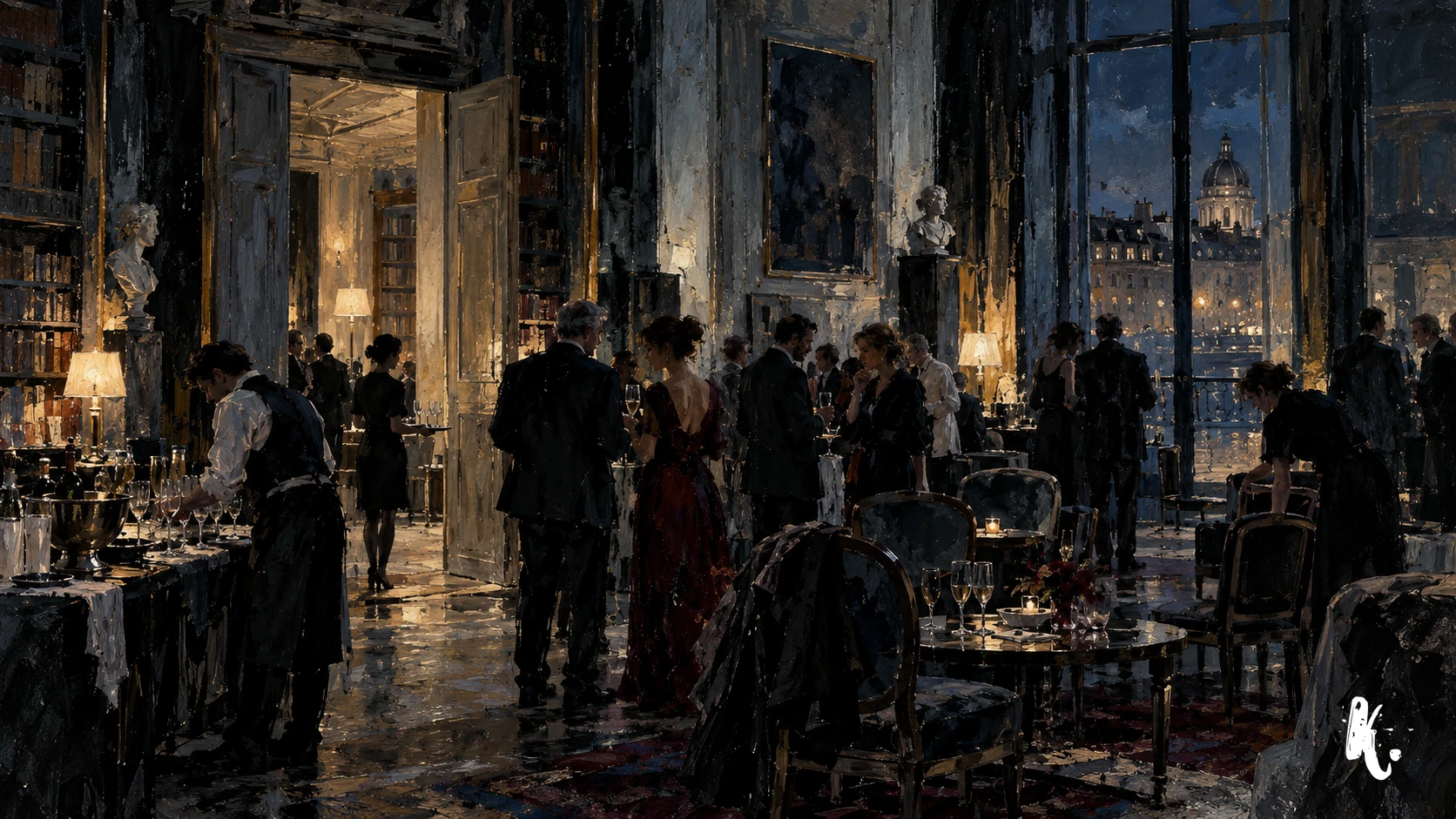
Hôtel de Mirepoix and Institut Saint-Anselme illustrate possible covers for a temporary gathering: a foundation council, research centre or scholarly reception. The setting appears legitimate only while hours, staff and guests agree. A discreet conversation in a memorable venue may prove easier to reconstruct than a meeting in an ordinary street. Samir asks what the building can actually support, not what its name promises.
04 / Authority and stewardship
Authority and stewardship
Bourgmestre / Banu Haqim
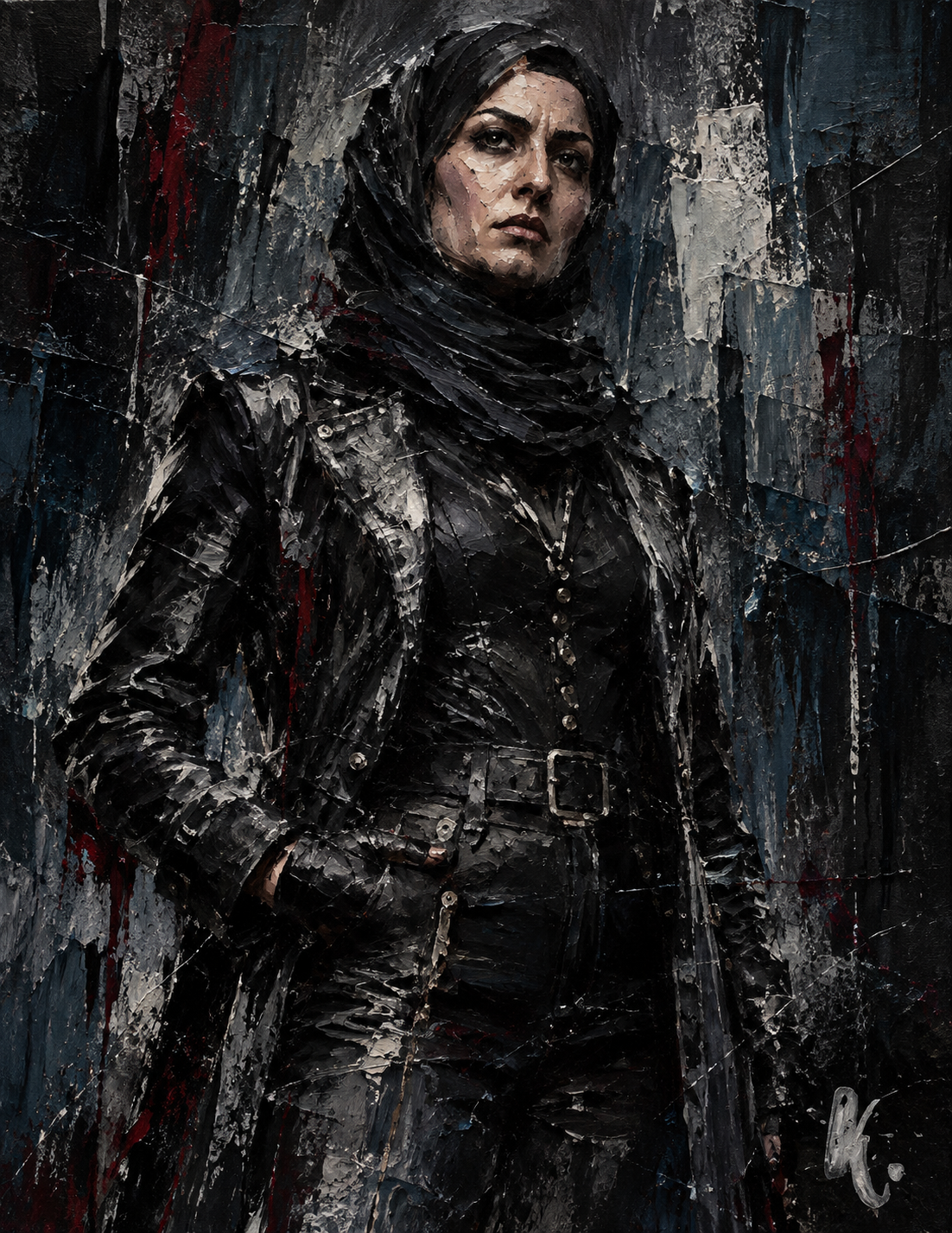
Naïma Bensaïd
Naïma Bensaïd governs the two arrondissements as a Banu Haqim Bourgmestre. Her office is territorial, not inherently judicial. She hears those seeking access, recognition of a provenance or suppression of a document. Her public method separates a claim, a verified fact, usable evidence and the speaker's interest. It may delay a decision; it also keeps a forceful conviction from being mistaken for a document.
A discovery can cause a struggle before anyone knows its contents. That does not make Naïma the owner of every collection in the Bourg. She asks who can answer for the document, who had the right to move it and what its disclosure would do. Her decisions are political because knowledge creates debts and vulnerabilities. They remain limited by human institutions, the Masquerade and the Praxis's authority.
Her relationship with Samir is no simple division between theory and practice. Naïma may find a meeting politically necessary; Samir may conclude that no plausible cover can support it tonight. Conversely, a controllable room can be disastrous if it makes clear who met there. Their disagreement informs a shared decision without merging their responsibilities.
Guardian / Tremere
Samir Ouali
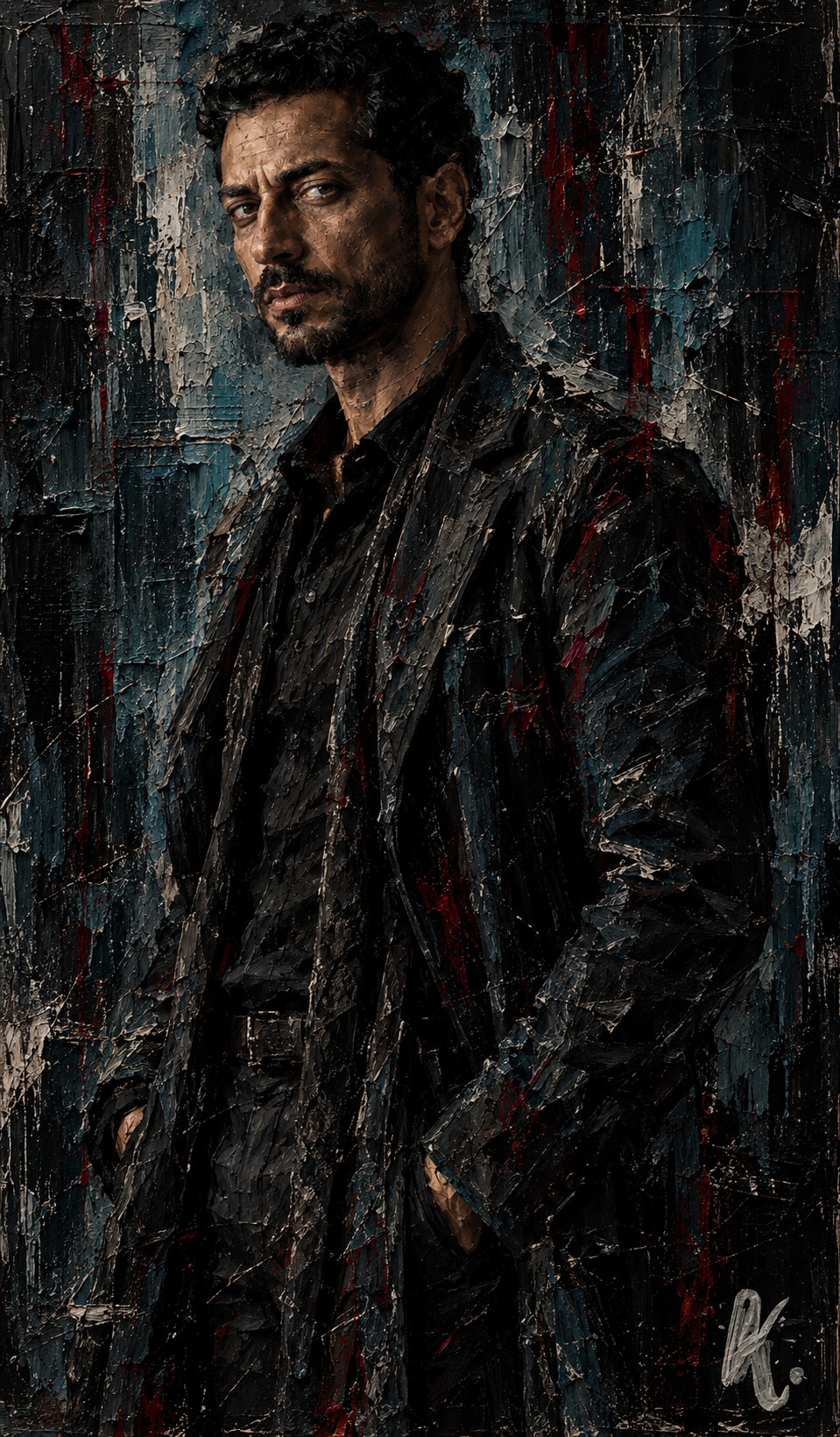
Samir Ouali is La Torche's Tremere Keeper. His experience in academic research and documentary conservation informs his attention to plans, circulation and successive uses of buildings. He does not mistake a door on a plan for a usable exit, or a prestigious room for a safe one. Cellars, service access, contractors and altered masonry can entirely change how a group may be received.
The Peace of Paris applies to the venue chosen for the evening; it creates no permanent headquarters there. Samir asks which staff will be present, why guests arrive, how equipment enters and leaves, and what the booking record will say the next day. He plans the end as well: a mobile Elysium must cease to be one without leaving a building inexplicable to its ordinary users.
His thoroughness has a visible weakness: extra safeguards may leave as many traces as the event he hoped to protect. Another checkpoint needs a person, an instruction and perhaps a form. Naïma may remind him that material security cannot be separated from the political impression it creates. None of those disagreements proves a hidden rivalry between them.
05 / Life after dark
Life after dark
Names associated with La Torche do not form a local council or a confirmed residential population. The public register links artists, negotiators and members of other networks with it. Nicolas Veyrat is active in the Sous-Sol; Élise and Damien Marval work as an artistic pair; Jeanne Ostel works with performance; Nina Soler knows nocturnal hospitality. These roles may cross the Bourg's streets without giving anyone an established studio, stage or Domain here.
Ludiwine Mihalle and Antoine Delacourt are linked to the Pourpre. Their appearance in a file establishes neither a base for the network in the fifth or sixth nor a standing agreement with the Bourgmestre. A relationship between people may be useful, strained or broken off. The Bourg is more credible when each link remains at that scale: a contact, service, debt and their consequences, not a faction map the sources do not provide.
A conference may bring opponents who share a vocabulary but not a view of the facts. An exhibition may carry a name into circles it had never reached. Research may cite a document its holder wanted unseen. La Torche is dangerous because consequences pass through human institutions that keep working after a Kindred scene ends. Mortals have a next morning, with emails, files and requests for explanations.
06 / Hunting in La Torche
Hunting in La Torche
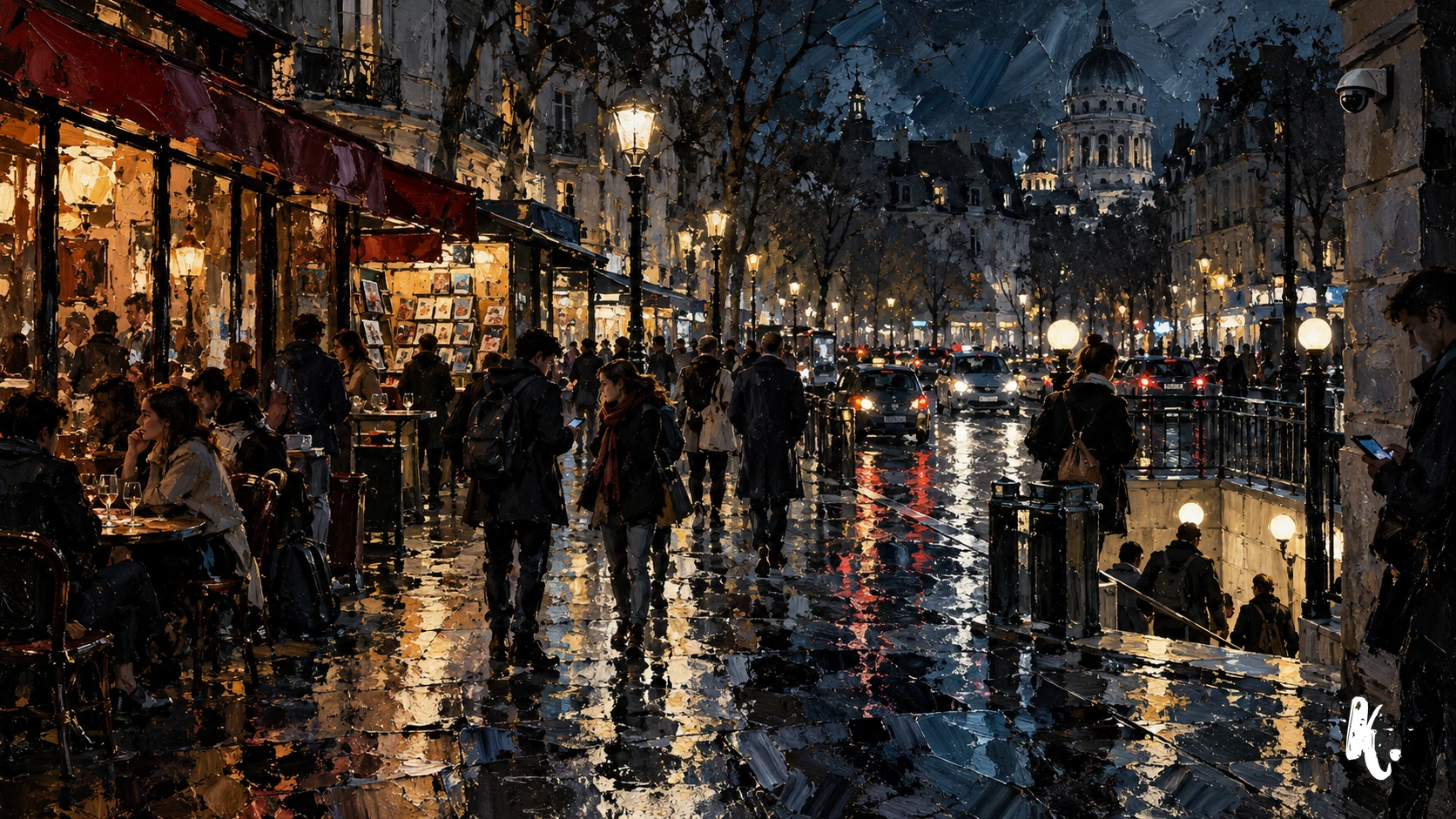
Hunting in La Torche begins with a social relationship, never a category of prey. A student may be heading home with friends; a researcher may need to finish a report; restaurant staff close the till before leaving. Their tiredness, obligations and loved ones belong to their lives, not to the hunter's scenery. Anyone who mistakes availability for isolation often makes the first Masquerade error.
The fifth offers overlapping movements. A seminar ends, a film releases its audience, a dinner continues. Each can explain a late presence, but not every repeated return to the same door. Attendance lists, group messages, transit records and ordinary cameras connect moments the predator thought separate. Changing streets is not enough when the same person appears in several accounts of the same place.
In the sixth, cafés, hotels, galleries and bookshops offer conversational settings that may seem discreet. They have employees and regulars. A guest demanding service outside normal hours creates an exception; a room paid for by someone else creates a record; a whispered conversation beneath a camera is not private. An elegant venue guarantees neither silence nor indifference from those who work there.
The proximity of institutions creates opportunities while leaving less room to improvise. A borrowed badge, forgotten access card or unannounced visit can be checked against a schedule. A hunter can pass as a lecturer, guest or contractor only when that role has actually been arranged. Exploiting an employee obliged to stay late is not a neutral cover: they may seek help, draw colleagues' concern or report the pressure.
Information moves readily here, giving every relationship a longer life. An innocent photograph may confirm two presences; a booking may recover a time; a cultural publication fixes a list of names. The cautious Kindred do not treat these traces as a problem a Discipline can automatically erase. They find a coherent human reason for their presence and take seriously what the person they approached may say afterwards.
Hunting rights still depend on the Praxis and recognised arrangements, not a claim founded on an article, patronage or a university network. The public register does not divide the fifth and sixth into private grounds for every Kindred associated with La Torche. If someone claims a monopoly over a street, that claim may become a political scene. It does not establish a Domain.
Near a temporary Elysium, the Peace of Paris forbids treating the mortals who make the evening possible as hunting opportunities. A scholarly reception needs hosts, technicians and sometimes security staff. Their work continues after guests leave. An incident may return as a missing badge, a complaint or a question put to Samir by a human manager.
D10 / Hunting circumstances
- 01
A conference ends later than planned; the people approached leave together.
- 02
The library reports that a visitor badge is missing when keys are returned.
- 03
An old classmate recognises the person approached and joins the conversation.
- 04
The restaurant closes its till; the staff wait together for the last departure.
- 05
A group photograph is posted before the evening is over.
- 06
Consulting a collection requires an identity the cover cannot support.
- 07
The quietest route crosses an area that has just been closed.
- 08
A visitor waits for a friend who has stopped replying.
- 09
An employee remembers the same excuse from the previous week.
- 10
The person approached works for a nearby venue and knows everyone's shifts.
07 / INDEX
Places and landmarks
5e
Sorbonne
An institution of teaching, research and libraries. A reference in its collections is not permission to enter.
Read the place profileView on the map5e / 6e
Quartier latin
A district of movement, study and nightlife that cannot be reduced to its students.
Read the place profileView on the map6e
Saint-Germain-des-Prés
Bookshops, galleries and cultural circles carry reputations along with people.
Read the place profile11 January 2025 / Adrian d’Ashbourne presents new work on rue de SeineView on the map6e
Jardin du Luxembourg
A landmark of routes and neighbourhood life, governed by human uses that limit nocturnal claims.
Read the place profileView on the map5e
Grande Mosquée de Paris
A human religious and cultural institution of the fifth, never a backdrop at the Praxis's disposal.
Read the place profileView on the map08 / Possible mobile Elysiums
Possible mobile Elysiums
Examples from the public map, not exhaustive and never all active at once.
5e / Human cover: University seminar
Bibliothèque Saint-Hilaire
- Atmosphere
- Reading tables and staff accustomed to scholarly guests.
- Possible use
- A small meeting under the cover of a scheduled seminar.
- Constraint
- Room bookings, readers moving through and attentive staff.
6e / Human cover: Research centre
Institut Saint-Anselme
- Atmosphere
- An old building whose access must be understood before hosting.
- Possible use
- A time-limited meeting of specialists.
- Constraint
- Complex circulation and maintenance teams.
5e / Human cover: Documentary audit
Archives Delmas
- Atmosphere
- A consultation room well suited to comparing records.
- Possible use
- A protected discussion under the cover of inventory work.
- Constraint
- Traceable access and document movements.
6e / Human cover: Foundation council
Hôtel de Mirepoix
- Atmosphere
- A polished setting whose guests are easy to remember.
- Possible use
- A one-night reception for political counterparts.
- Constraint
- Too memorable a venue for repeated meetings.
5e / Human cover: Night inventory
Musée des Instruments
- Atmosphere
- Collections and logistics visible even in closed rooms.
- Possible use
- A temporary meeting covered by an authorised inventory.
- Constraint
- Collection alarms and a record of interventions.
09 / Kindred associated with the Bourg
Kindred associated with the Bourg
The profiles linked below establish an association in the public register, not simultaneous presence in a room or confirmed residence. Artists, members of the Pourpre and the Sous-Sol networks may frequent different places or act far from the territory. Their documentary proximity offers possible encounters; it does not make them a collective alliance.
The Bourgmestre and Keeper appear in separate registers of office. Their roles do not oblige every other Kindred associated with the Bourg to follow them. A character may consult a profile, seek an introduction or challenge an association; the scene determines who is actually present.
Nosferatu
Nicolas Veyrat
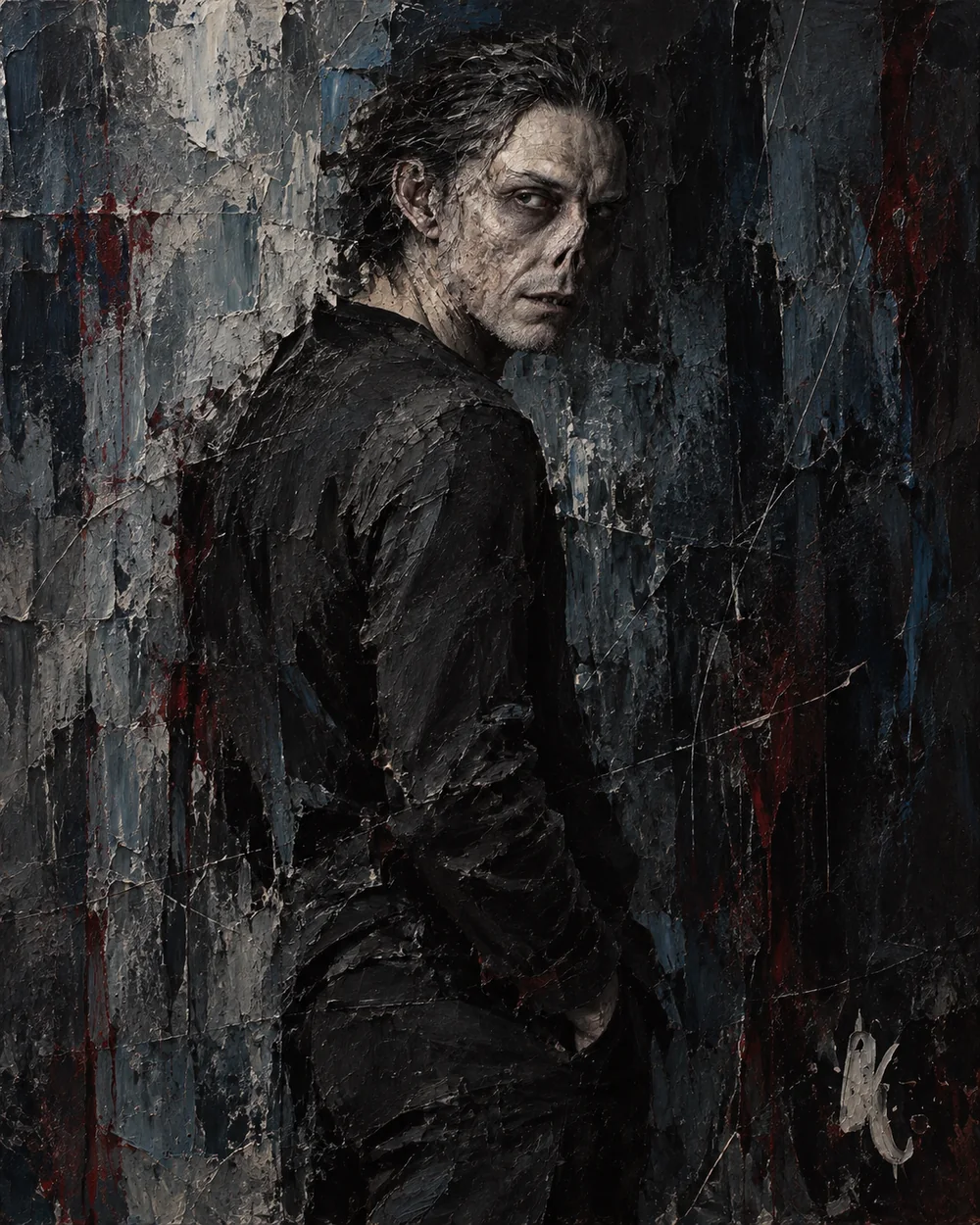
Nicolas built his reputation in underground venues, artistic squats and clubs frequented by those who reject official salons. Around him, the Sous-Sol connects performers, technicians, Thin-Bloods, ghouls and nocturnal artists.
Active in the Sous-Sol networks
View public record
Toréador
Damien Marval
Embraced alongside Élise after years of working together, Damien leans towards audiences and improvisation. His accessibility serves as protection, yet he refuses to remain merely the agreeable half of a performing pair.
Active, artistic duo
View public record
Toréador
Jeanne Ostel
A dancer, stage technician and costume designer, Jeanne was Embraced after an illicit performance in an abandoned venue. She treats beauty as an action upon bodies. Her aesthetic freedom hides a fear of vanishing from other people’s memories.
Active, performance
View public record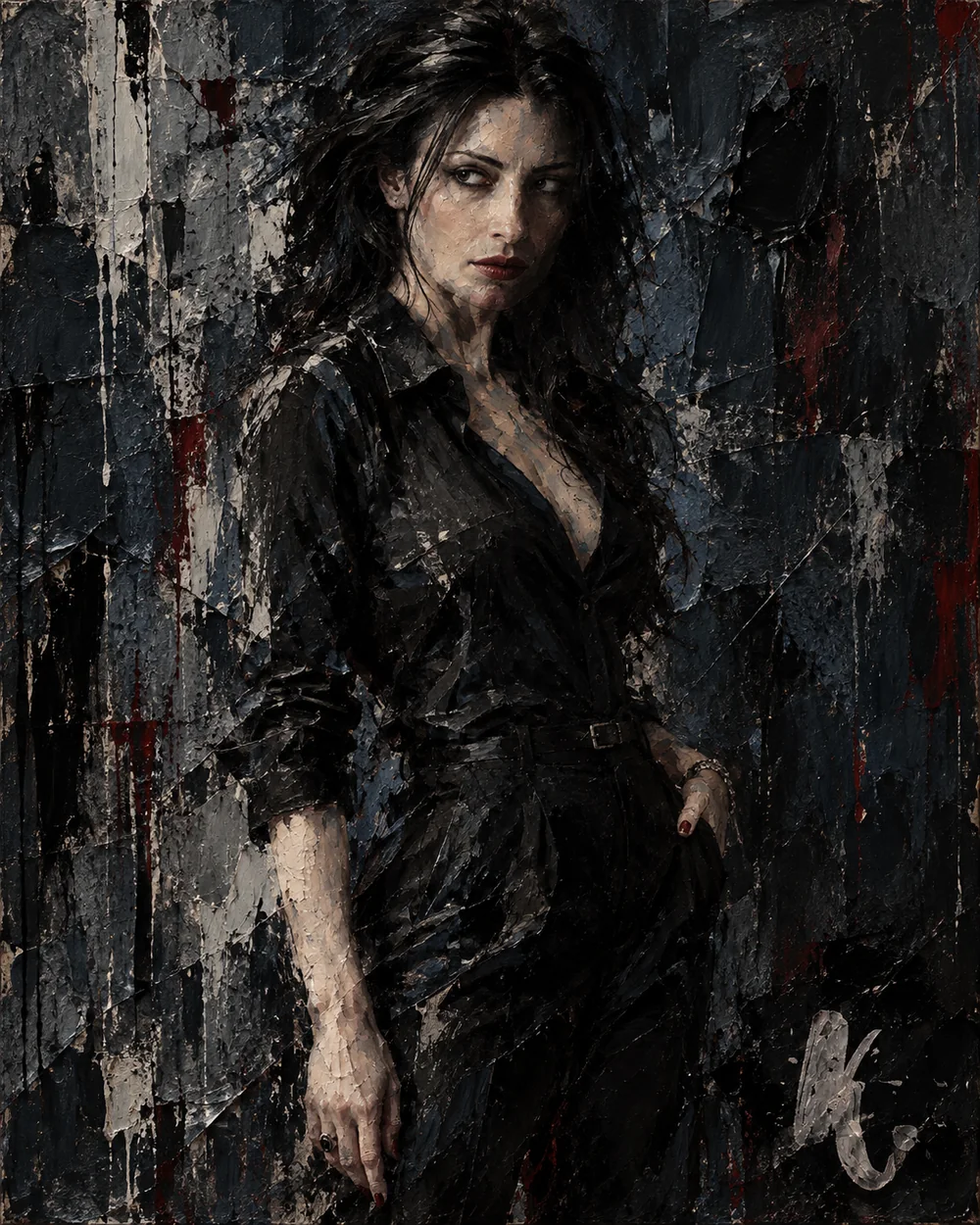
Toréador
Ludiwine Mihalle
Ludiwine knows the salons where possession is presented as patronage. Within the Pourpre network, she opposes those who turn people into accessories and subordinate their choices to a supposedly superior aesthetic.
Active, Pourpre network
View public record
Toréador
Nina Soler
A former stage performer, Nina understands audiences better than works of art and has built a nocturnal hospitality network. Her apparent humanity is a technique. She despises elders who treat young artists as a reservoir of sensations.
Active, live performance
View public record
Toréador
Élise Marval
Embraced alongside Damien after years in a performing company, Élise wants to preserve the precision of their duo. Their resemblance comes from a shared artistic education. She fears, however, that this discipline may become a perfect dependency.
Active, artistic duo
View public record
Ventrue
Antoine Delacourt
Antoine negotiates for the Pourpre and maintains discreet influence in the nights of the U-Bahn. He prefers incomplete files, useful witnesses and agreements that leave everyone a way out.
Active, Pourpre network
View public record10 / Institutions and networks
Institutions and networks
The Praxis is represented by a territorial authority and a Keeper of the Peace of Paris. The Camarilla provides their political framework; it does not own the Sorbonne or the Bourg's establishments. A human institution may refuse a booking, change a calendar, impose a safety rule or report an anomaly. La Torche is shaped by friction between nocturnal decisions and the responsibilities of those who open the doors by day.
Kindred associated with the Bourg also belong to other networks, including the Pourpre and the Sous-Sol. A personal connection does not document a local headquarters. Public sources establish no Second Inquisition cell, Anarch domain, Venator or Familia base here. Naming one in a rumour or threat remains a character's claim unless a public fact supports it.
11 / Traces of the night
Traces of the night
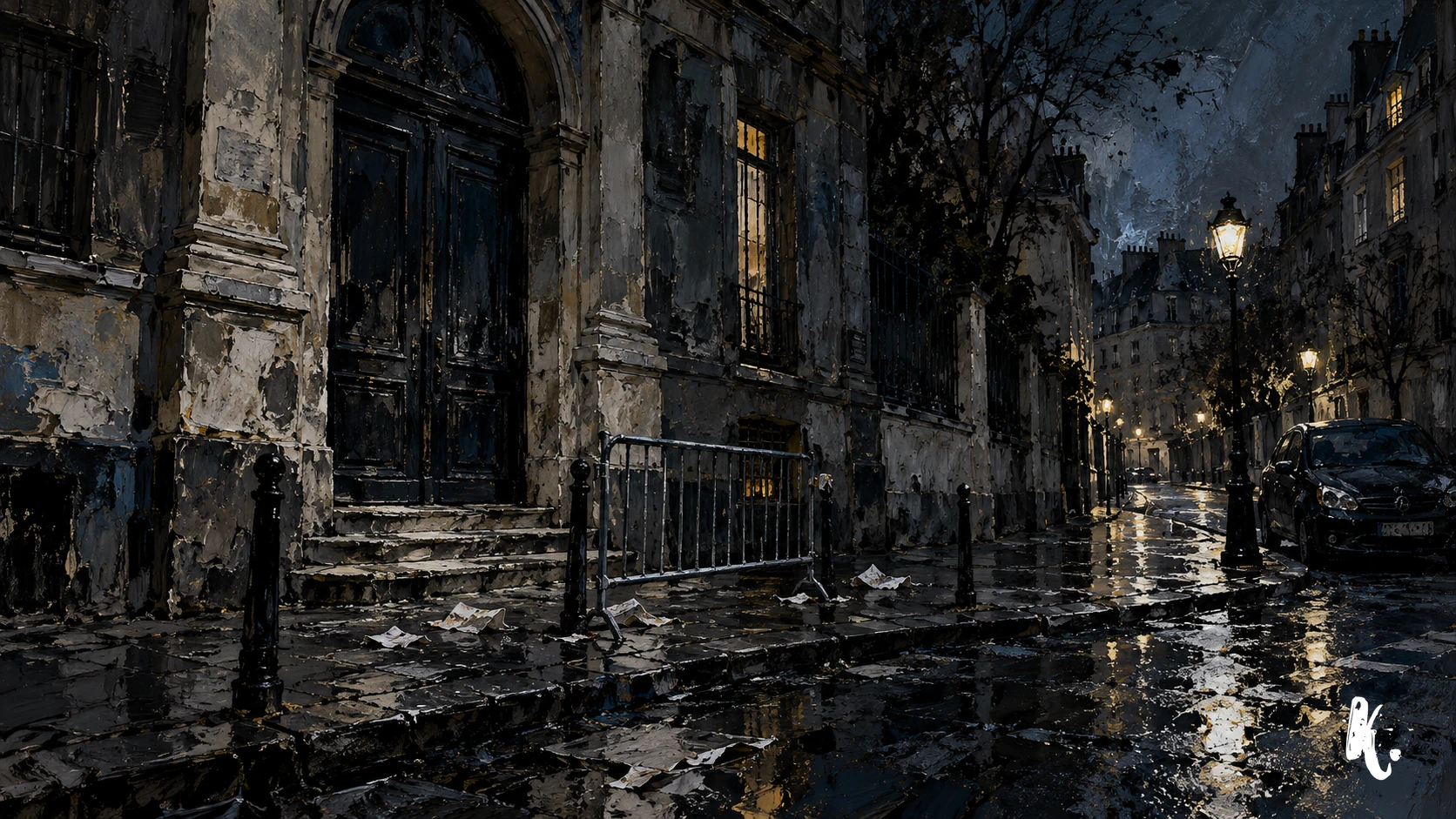
One public Archive directly concerns La Torche: Adrian d'Ashbourne's opening on rue de Seine in the sixth arrondissement. The article dates an evening, locates a venue and describes its expected audience. It proves no Kindred meeting, no attendance by the Bourg's Kindred and no Elysium. The link matters precisely because it preserves a human trace without settling its meaning.
In this territory, a conference programme, exhibition notice, loan register or published correction can turn an old conversation into a present question. An incomplete file should not be filled with invented certainty. A Storyteller may use it as a starting point: who seeks the missing item, who knows it never existed, and who benefits from others continuing the search?
12 / Playing La Torche
Current tensions
A disputed reference
- Situation
- Two Kindred rely on different copies of a document mentioned in a negotiation.
- Actors
- Naïma, the claimants and the human custodians of the collection.
- Why it persists
- They dispute the right of access as much as the text itself.
- What may worsen it
- Pressure on staff makes the dispute public before any ruling.
- Player character involvement
- Player characters may verify provenance, protect a witness or refuse to certify a copy.
A room made too secure
- Situation
- Samir proposes extra checks for a temporary reception.
- Actors
- Samir, Naïma, the organiser and the venue's staff.
- Why it persists
- Each measure reduces a material risk but adds an instruction that needs explaining.
- What may worsen it
- Staff become concerned about an event supposedly ordinary.
- Player character involvement
- Player characters may test the route, negotiate a cover or recommend another venue.
The rue de Seine invitation
- Situation
- An Archive about an opening prompts conflicting accounts of its guests.
- Actors
- Gallery staff, visitors, Bourg contacts and a possible claimant.
- Why it persists
- The article dates the event but confirms none of the nocturnal assumptions.
- What may worsen it
- Wrongly placing a name at the event damages a real relationship.
- Player character involvement
- Player characters may reconstruct attendance without inventing missing evidence.
A connection mistaken for a base
- Situation
- A visitor claims a Kindred network maintains a base in La Torche.
- Actors
- The visitor, the named people, Naïma and humans connected with the address.
- Why it persists
- Documented personal contacts make the rumour plausible without proving it.
- What may worsen it
- Action based solely on the rumour creates the very incident it claims to prevent.
- Player character involvement
- Player characters choose what they can establish before seeking a decision.
D10 / Rumours
- 01
A catalogue reference supposedly changed after a very late visit.
- 02
Naïma reportedly refused to settle a matter everyone thought closed.
- 03
Samir is said to keep plans with doors missing from the official version.
- 04
A sixth-arrondissement bookshop supposedly met the same buyer under three names.
- 05
A seminar report is said to name someone who never registered.
- 06
A reception in the fifth supposedly changed venues after the caterer arrived.
- 07
Someone is reportedly demanding a document they know only by its cover.
- 08
The rue de Seine opening article allegedly omits a guest several people remember.
- 09
A translation error is said to have created a debt no one dares challenge.
- 10
A room Samir rejected has supposedly hosted an entirely ordinary event since.
D10 / Incidents
- 01
An archive box meant for another room arrives during a meeting.
- 02
A film ends and suddenly fills the street where the player characters were waiting.
- 03
A room booking appears under the name of someone absent.
- 04
Closing staff ask who should sign the evening inventory.
- 05
A forgotten phone keeps receiving calls visible on its screen.
- 06
A speaker changes the programme and brings together two guests avoiding one another.
- 07
A collection alarm forces the evacuation of an otherwise quiet room.
- 08
Someone waits for a colleague outside a venue that has already closed.
- 09
A manager asks for a written explanation of a door left open.
- 10
A cultural article published too early places someone at the wrong venue.
13 / Playing La Torche
Story hooks
One register too many
A scholarly gathering is approaching, and two guest lists disagree.
- Problem
- Correcting the list may expose a guest; leaving it unchanged creates an access problem.
- Actors
- Samir, the human organiser and the expected guests.
- Complication
- A copy has already reached the reception staff.
- Open question
- Who can own the correction publicly without exposing the event?
Two provenances
Two parties ask Naïma to recognise the same object under incompatible histories.
- Problem
- Neither can provide a complete chain of custody.
- Actors
- Naïma, the claimants and the collection's human custodian.
- Complication
- The collection will soon be consulted publicly.
- Open question
- Should they rule, delay or disclose the limits of both accounts?
The opening's witness
Someone rereads the rue de Seine Archive and claims to spot a significant absence.
- Problem
- Their memory may be accurate without confirming the story they draw from it.
- Actors
- The witness, visitors, a gallery owner and the player characters.
- Complication
- A cropped photograph is already circulating.
- Open question
- Who gains by turning an absence into an accusation?
Emergency exit
Samir discovers a planned route for a temporary Elysium is no longer usable.
- Problem
- The alternative crosses a human activity still under way.
- Actors
- Samir, Naïma, venue staff and guests.
- Complication
- Changing venues would cancel a much-needed mediation.
- Open question
- How much of the risk can be disclosed without revealing the meeting?
A name in another column
A Kindred associated with La Torche appears in a file concerning another Bourg.
- Problem
- Territorial association is mistaken for proof of an assignment.
- Actors
- The named person, two Bourg authorities and the player characters.
- Complication
- A filing error may be deliberate, but nothing yet proves it.
- Open question
- Who answers for a file whose author no one acknowledges?
The missing expert
A human specialist expected to authenticate an item misses the appointment.
- Problem
- A political decision now depends on expertise no one can honestly replace.
- Actors
- Naïma, the specialist, the claimant and the player characters.
- Complication
- Another party offers an immediate opinion in exchange for a favour.
- Open question
- Does delaying the matter protect the evidence or serve an interest?