07 / Territory
Les Tours
The Paris that changes, rebuilds itself and produces new balances.
01 / Les Tours
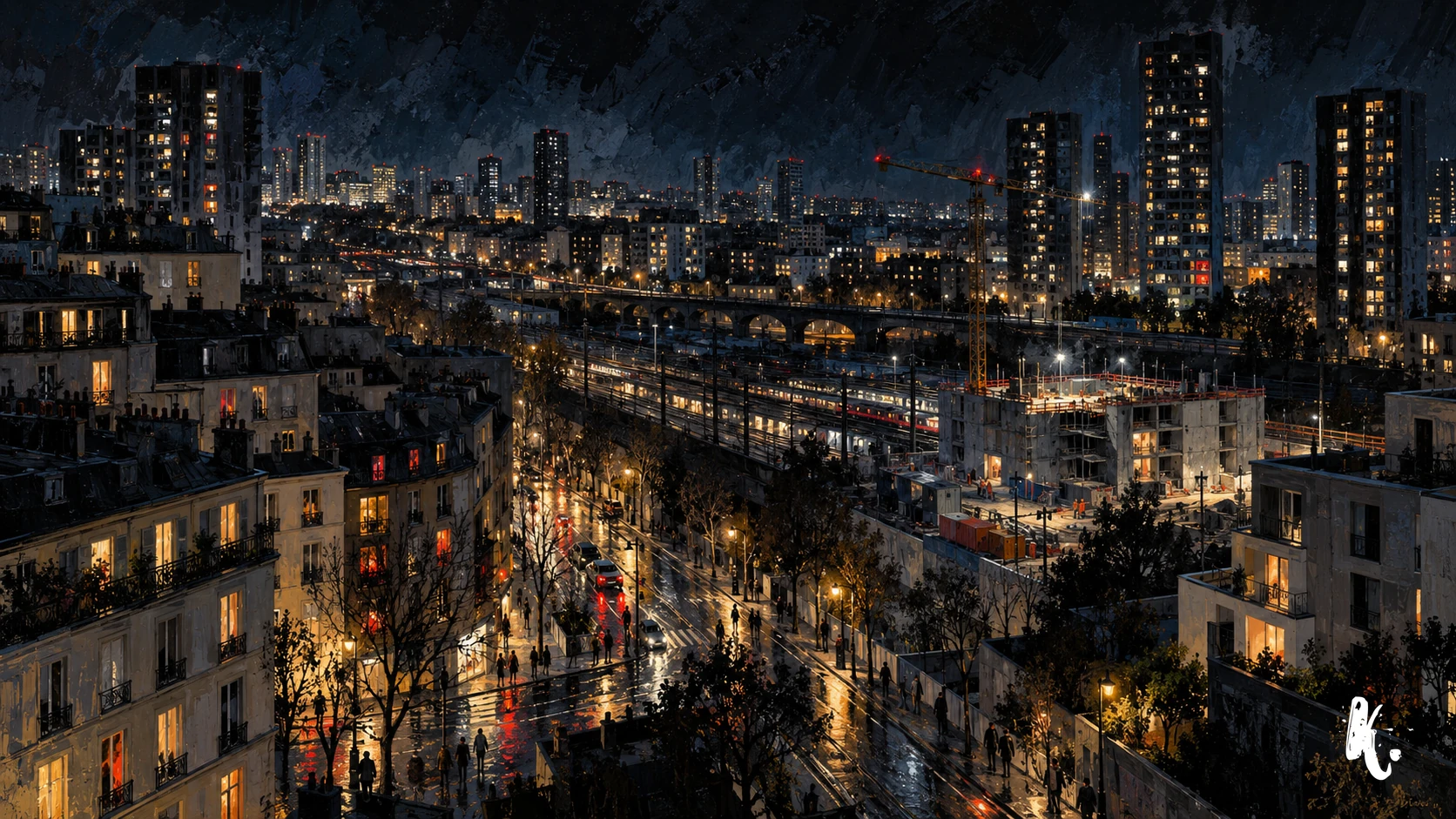
In Les Tours, a haven can be lost without an enemy learning its address. A co-owners' meeting votes for repairs, a contractor moves a fence, and the door that once opened onto a courtyard opens onto nothing useful. Residents argue about the work; the Kindred discover that an old right of passage was never written down. The Bourg covers the twelfth, thirteenth and twentieth arrondissements. Its identity lies in this continuing movement, not in the height of its buildings.
Satomé answers for this territory within the Parisian Praxis. She does not claim she can stop the city to protect a nocturnal map. She asks what changed, who decided, who bears the consequences and what agreement remains possible. Nora Kessler, Keeper of Elysium, asks a related question at the scale of a door or an access badge. A room may work this week and be unusable the next. Their responsibilities meet without becoming the same office.
Les Tours accommodates counter-powers and forms a significant interface with the Anarchs. It is neither an independent state nor a clan Domain. Around Père-Lachaise, Hecata interests carry weight without becoming sovereignty. On an ordinary street, owning a building does not grant authority over everyone living there. Four words run through this chapter and must not become synonyms: presence, influence, property and sovereignty.
02 / A territory in motion
A territory in motion
A Domain is never finished. In Les Tours, Satomé's maxim is not a celebration of disorder. It reminds everyone that territorial decisions rest on human uses that may disappear. A station changes its exits; a community room closes; a shop begins opening late; a company takes over a lease. Each change redistributes witnesses, routes and opportunities to meet. The official map keeps its outline, but a night of hunting or a gathering must now be prepared differently.
Presence says who is there. Influence says who can alter a decision. Property names formal rights, often shared or contested. Sovereignty is recognised political authority over the Bourg. A coterie may own an apartment and gain no right over the street. An Anarch network may mobilise residents without governing an arrondissement. A Hecata family may know the cemetery approaches without deciding in Satomé's place. Confusing these levels creates conflicts people might otherwise avoid.
The same distinction applies to hunting. A busy route is not free territory; derelict land has owners; a worksite is not open merely because it looks empty. Security staff, couriers, neighbours, night shifts, insurers and cameras give such places a material memory. A capable predator does not simply vanish into a crowd. They understand why a presence seemed ordinary at one hour and why it will no longer seem so tomorrow.
03 / PARIS
Three distinct arrondissements
The twelfth: overlapping uses
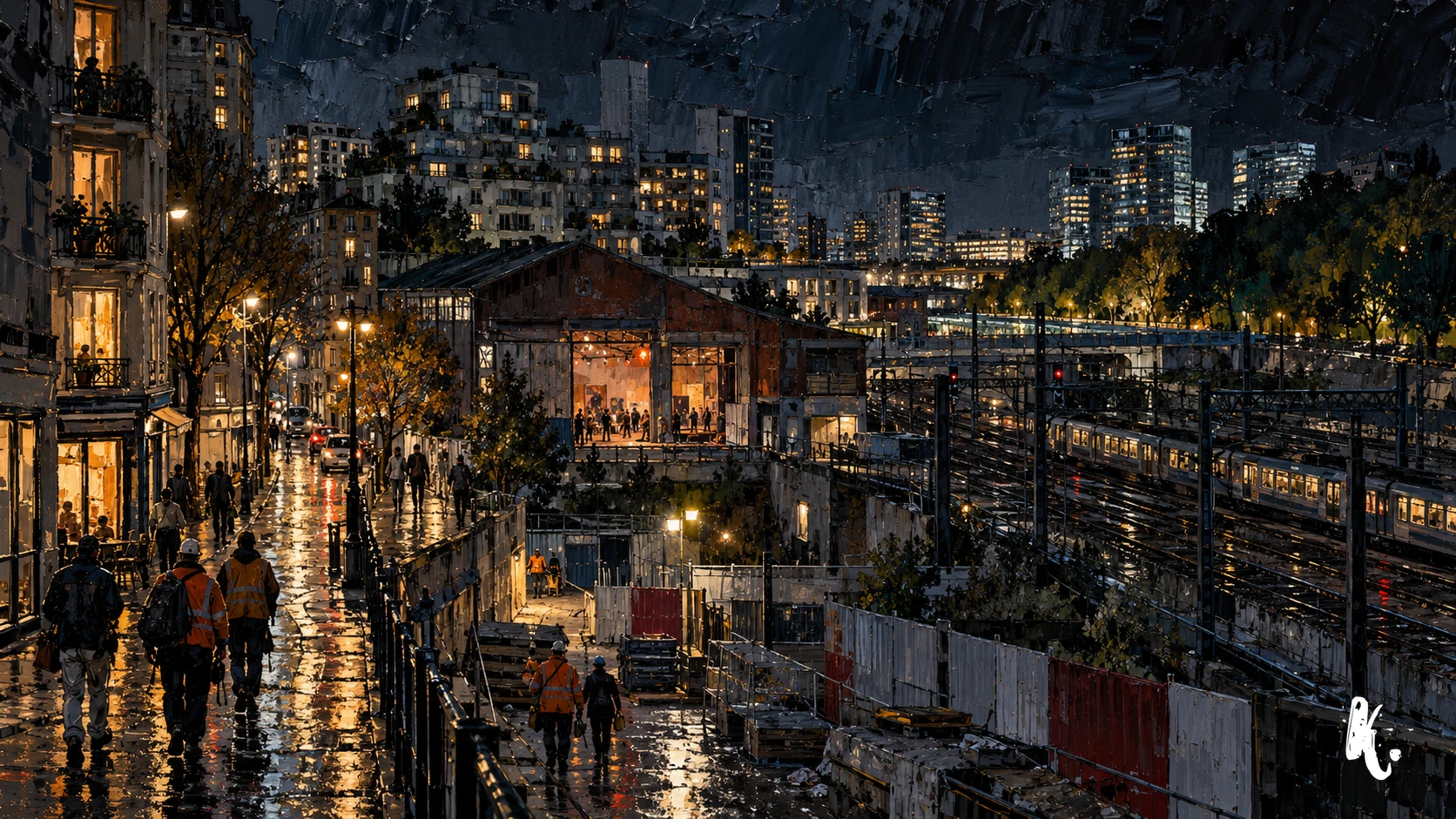
The twelfth neither begins nor ends at Bercy. Railway corridors, residential areas, service sites, facilities and the Bois de Vincennes have rhythms that touch without matching. One street empties after work while another still receives travellers. A former industrial site may change purpose without losing its technical staff. Vampiric night does not own a parallel geography; it must cross these human timetables and their interruptions.
Bercy combines offices, events, shops, quays and travel. A public April 2025 Archive reports that footage shot near pont de Bercy went viral and was then treated as an edit. It establishes the circulation of the video, not the identities of the figures. For Satomé, its value also lies in the speed with which altered copies displaced the original. A Masquerade inquiry may need to decide what it truly knows before the rumour decides for it.
The Bois de Vincennes has other uses: walking, sport, maintenance work and daily travel. It is neither an empty night space nor a Gangrel preserve. At its edges, altered lighting or a closed entrance can move a meeting into a more visible place. Sofia “Sève” Marek may read parks and temporary shelters, but that expertise makes her neither owner of the wood nor master of every entrance.
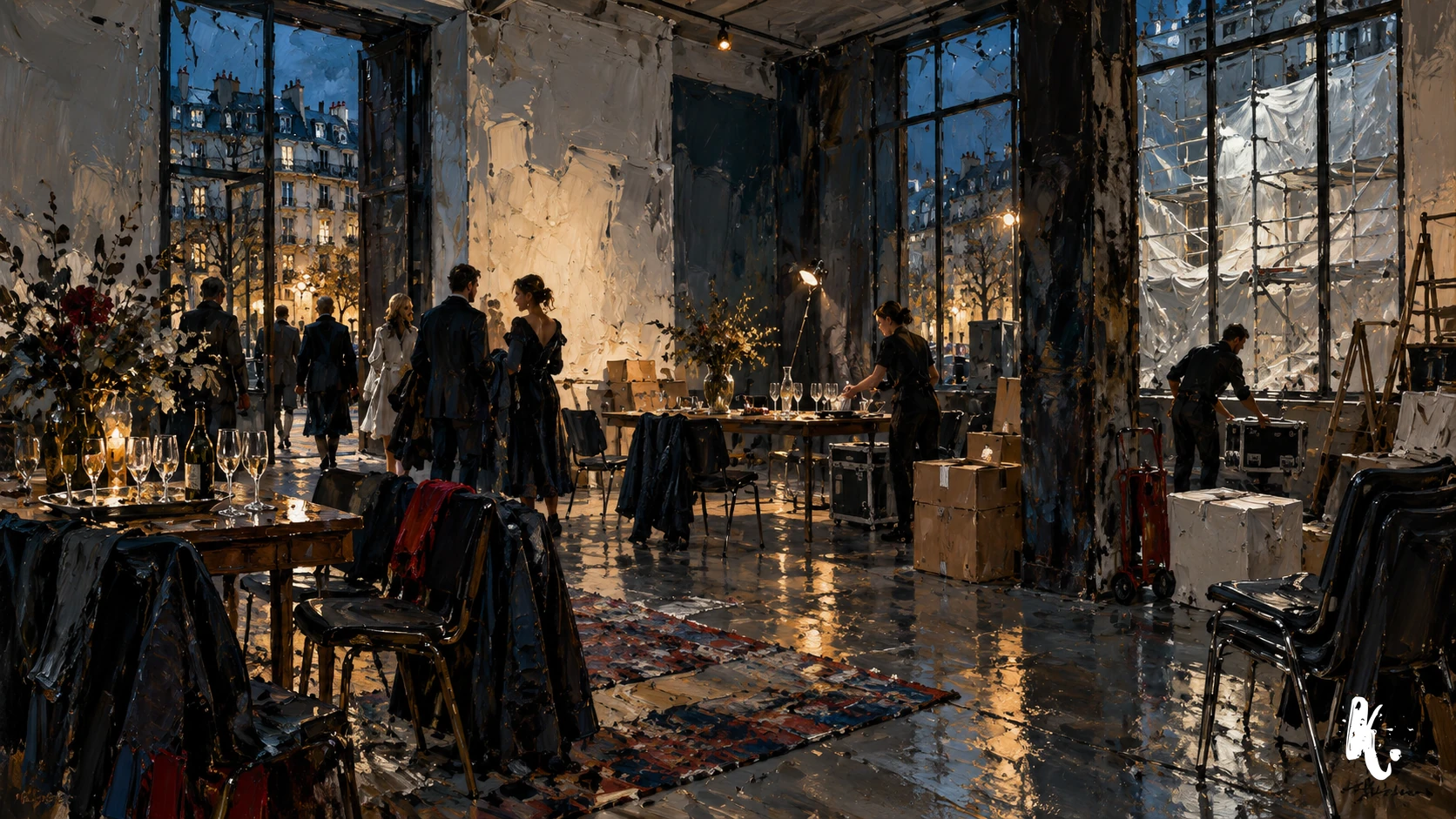
Fabrique Bel-Air is one of five possible Elysium venues in Les Tours, under cover of an artistic residency and with an indicative capacity of seventy. A residency has artists, hours, managers and a potential audience. The Peace of Paris can be held there only within those constraints. Nora would examine less the venue's beauty than the reason its human team would let it function that way on that night.
The thirteenth: several cities at once
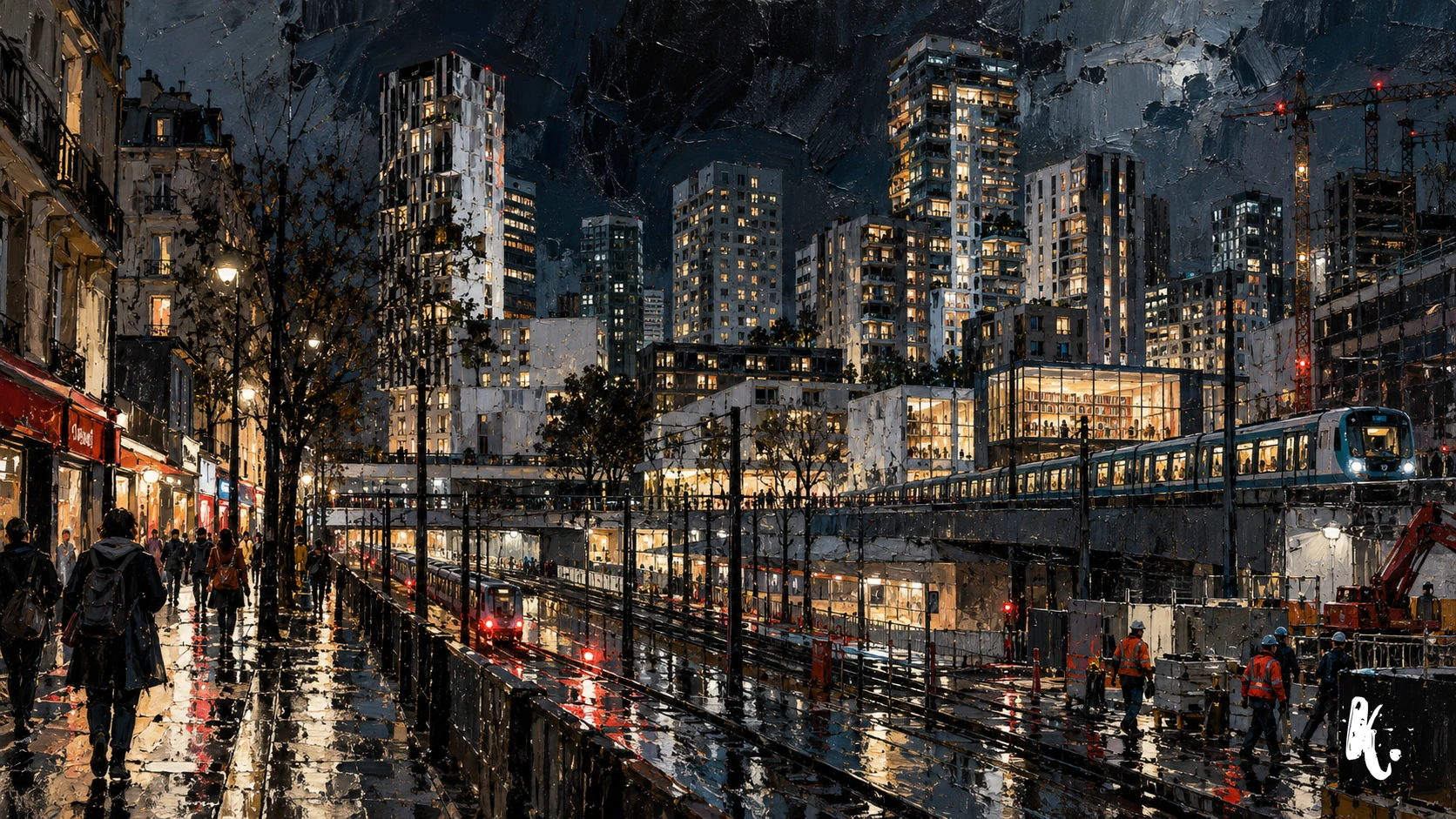
The thirteenth displays some large-scale change openly: recent buildings, reorganised routes and development schemes. It also retains older streets, shops, homes and habits that a new plan cannot erase at a stroke. The Bourg's name is not a literal description of this district's height. A tower may dominate the view without being politically decisive; a small room awaiting another use may alter more nocturnal relationships.
Paris Rive Gauche and the area around the Bibliothèque François-Mitterrand bring worksites, offices, housing, public space and an institution dedicated to preserving records face to face. The same pavement serves someone going to work, to read, to a home or to an unadvertised meeting. Checks apply differently to different users and hours. The Library's documentary continuity contrasts with routes that may change within weeks.
The Olympiades remind us that large housing complexes are places where people live before they are shapes on a map. Residents, shopkeepers, visitors, maintenance staff and co-owners have rights and expectations there. A deck or gallery may offer several routes, but none is neutral to those who work there. For Kindred, density increases both plausible cover and the number of people able to recognise a routine.
Ateliers Masséna and Tour Mercure offer very different covers: a worksite visit and a property audit. The first depends on a changing configuration; the second on cameras and badges. Their indicative capacities are one hundred and fifty and one hundred and twenty, not attendance targets. Nora does not select them automatically. She asks whether the declared use, access rights and safety still hold on the night in question.
The twentieth: local memory and new thresholds
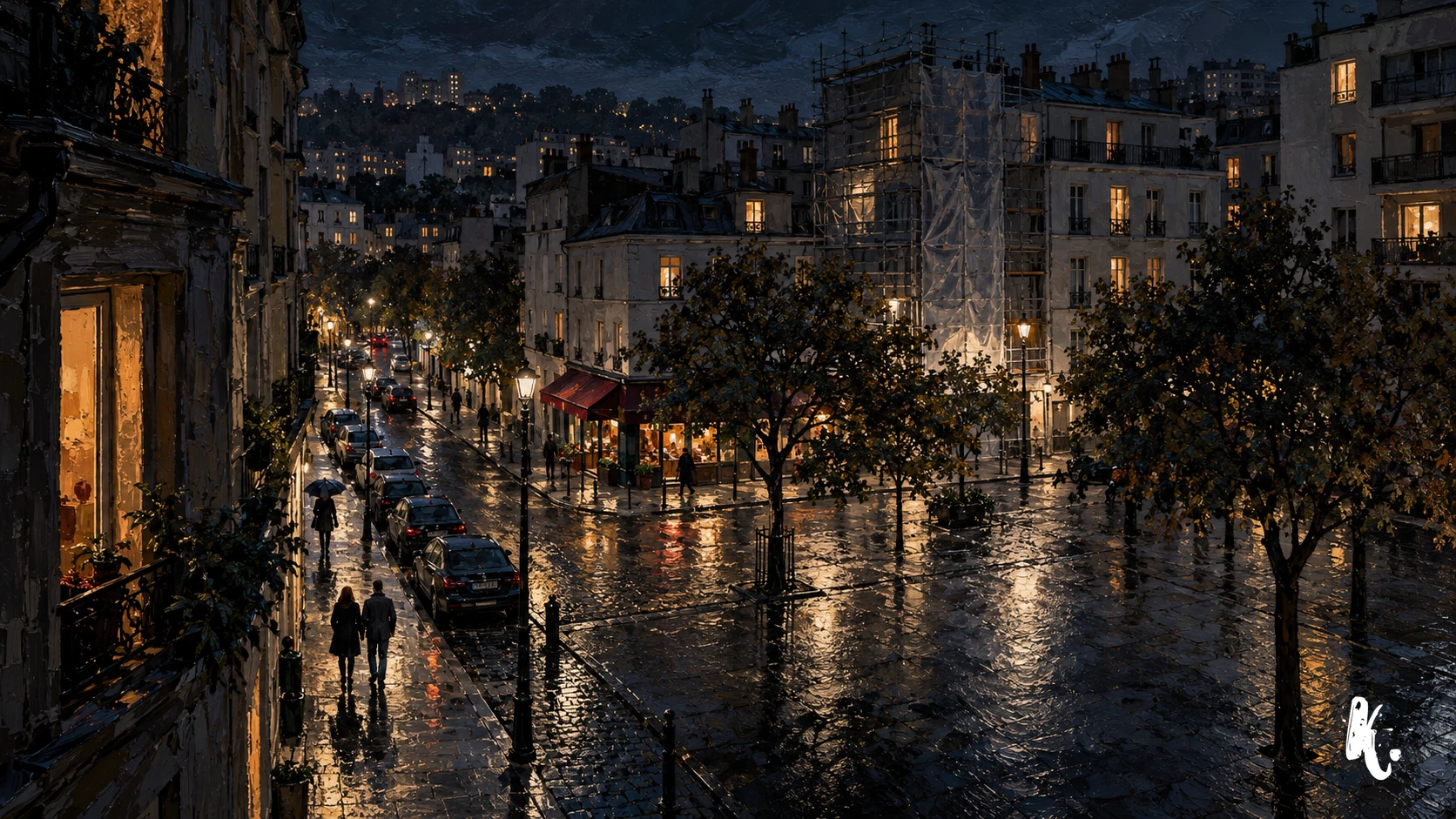
The twentieth is not reducible to Père-Lachaise. Belleville and Ménilmontant combine housing, shops, associations, movement and neighbourhood memory. The same works may promise an improvement and threaten a valued use. A new facade alone says nothing about the people who lived behind the old one. Vampires invoking an abstract population to justify a route or a hunt soon meet real residents who can name the changes and those responsible.
Satomé must listen to local autonomy without pretending one voice represents the whole arrondissement. An Anarch group may know an association or defend a venue; the association does not thereby belong to it, nor does it govern the street. Yanis Benamar, known as Gengis, can turn a local injustice into a public issue. That gives him influence, not the Bourgmestre's title. Disagreement with Satomé may be political without becoming secession.
École Diderot and Dépôt Gambetta appear in the catalogue of possible Elysiums. The school might support a pre-renovation audit for roughly one hundred guests; neighbours remain a constraint. The depot might support a municipal inventory, with an indicative capacity of one hundred and thirty; local surveillance does not disappear merely because an inventory sounds plausible. Neither venue becomes available simply because a building appears vacant.
04 / Anarch interface
Anarch interface
Les Tours is an interface, not an Anarch state. The Parisian Anarch network is not one organisation: activists, mediators, venue caretakers and challengers may share criticism of the Court without using the same tactics. Some cooperate with Satomé temporarily; others contest the very idea of Praxis arbitration. A sincere claim to practical autonomy does not amount to recognised sovereignty.
Yanis Benamar, known as Gengis, acts as an Anarch voice and can make a local injustice public. Malik “Malko” Benacer negotiates among groups, independents, Caitiffs, thin-bloods and Camarilla intermediaries. Étienne Ravel prefers turning anger into method and teaching. Their approaches are not interchangeable, and none is a second Bourgmestre. An agreement with one need not resolve another's objection.
Solidarity is not a licence to prey. A human association may defend access for its members and refuse to be used by a vampire making a similar promise. An Anarch group may denounce an unjust decision while taking action so visible that residents pay its price. Satomé can agree with the criticism and stop the action. That disagreement is more useful than a convenient image of rebellion as always righteous or always dangerous.
05 / Père-Lachaise and the Hecata
Père-Lachaise and the Hecata
Père-Lachaise draws visitors, families, workers, ceremonies and practices of remembrance. Its graves and paths are not empty squares on a supernatural board. The Hecata and the Familia have interests around the cemetery, giving them presence and at times influence. Nothing in the public corpus turns those interests into sovereignty over the site or the twentieth arrondissement. Satomé remains responsible for the Bourg and must maintain that distinction before those who find it inconvenient.
The presence of the dead invites occult readings, but this chapter reveals no secret network, hidden entrance or covert operation. At the table, a conflict may begin with a human ceremony moved, work authorised or a route several parties assumed was theirs. Each may have a reason to care without that reason proving political ownership. Player characters will do more by checking the concrete decision than by searching for an imaginary title over the entire cemetery.
Mathilda Giovanni or other Hecata figures must not be presented as rulers of Les Tours through symbolic proximity. Negotiation with them may concern a favour, limited access or the preservation of a relationship; it does not transfer the city's institutions. If a rumour speaks of a “domain of the dead,” ask who phrased it and what they hope to gain. The phrase may pressure Satomé; repetition does not make it true.
05B / A city under construction
A city under construction
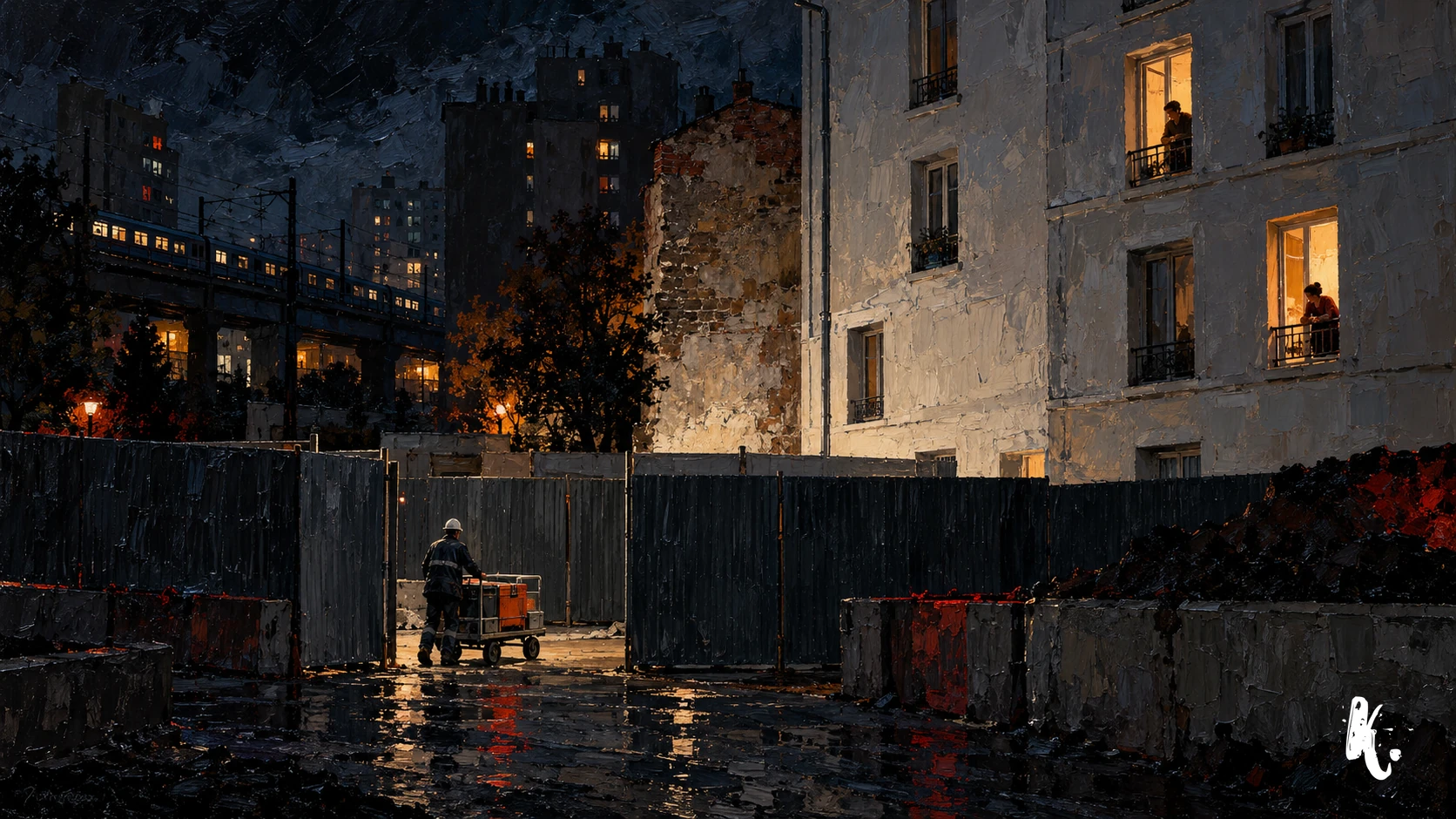
A permit, works contract and delivery schedule can matter more than a threat uttered at Elysium. The permit authorises; the contractor organises; subcontracting often determines who actually appears at the door. Kindred see the fence at night, after the decisions that moved it have been made. Satomé therefore wants to understand human responsibility before a Domain dispute begins over an entrance that no longer works.
A new building owner does not own the habits of its occupants. A management company may change a lock, but must answer for safety rules and residents' rights. A community association may have a tolerated use without title to the land. A Kindred network may have built a customary route on that tolerance. None of these facts alone settles the dispute. The useful scene begins when they are all true and one door can no longer serve everyone.
In the thirteenth, change is visible in building volumes. In the twelfth, it also moves through infrastructure and successive uses of buildings. In the twentieth, it crosses housing, shops, associations and local memory. No arrondissement changes at one pace in every street. A price increase, a new transport line and the replacement of a shop do not have identical consequences. Les Tours forces vampires to say which change they mean.
06 / Satomé and Nora Kessler
Satomé and Nora Kessler
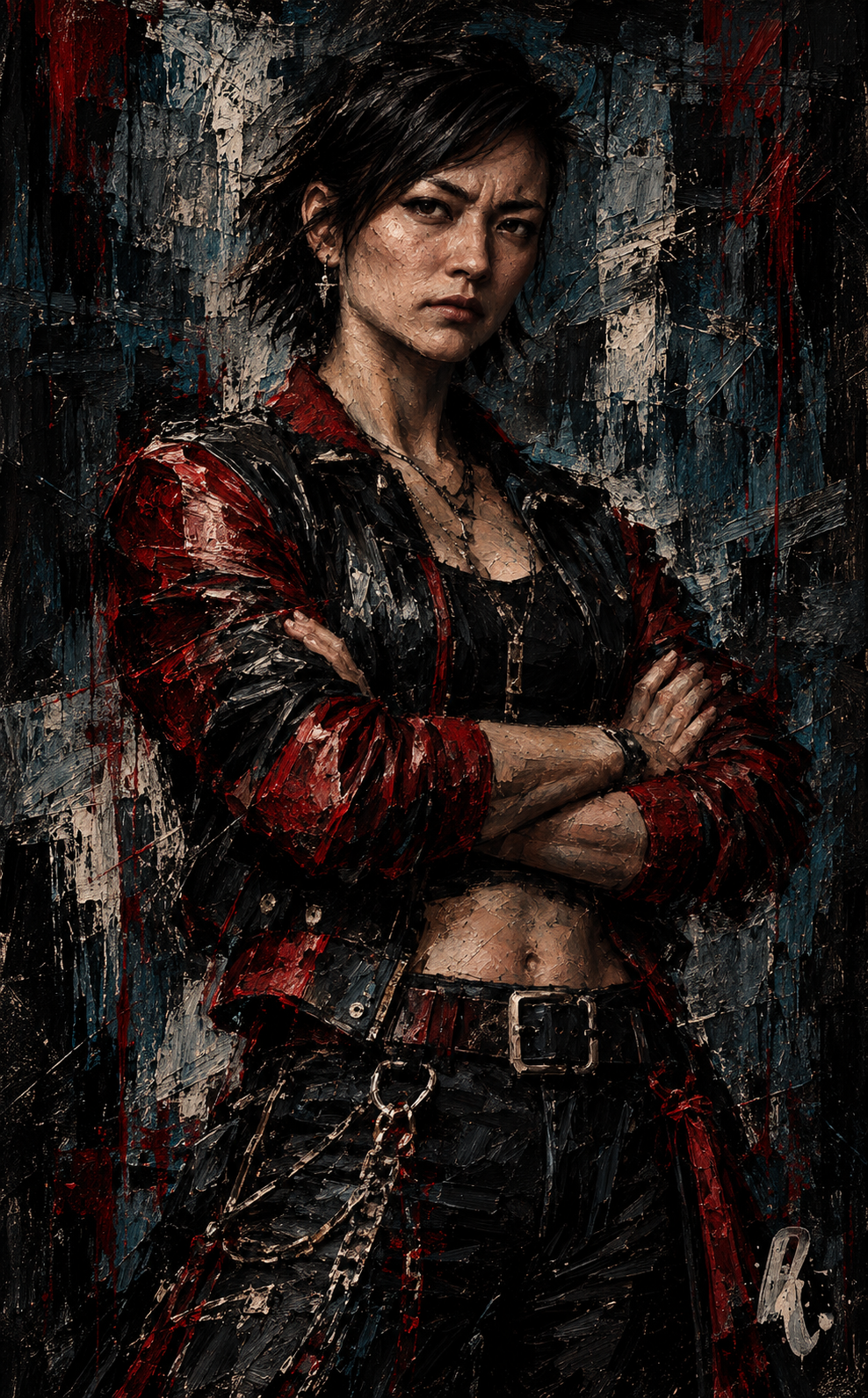
Bourgmestre / Brujah
Satomé
Satomé is a Brujah and Bourgmestre of Les Tours. Her office belongs to the Parisian Praxis; she is neither an independent Baron nor the automatic representative of every Brujah. She governs territory where counter-powers have room and agreements may expire sooner than their signatories. Her first instinct is not to demand stillness but to ask: what has the city just changed? The answer may be a route, an occupation, a price or an authorisation.
Satomé is the Praxis's most credible interface with the Anarchs within Paris. She can recognise the problem they raise and reject a method that would expose residents or the Masquerade. That double capacity earns both trust and suspicion. An Anarch can negotiate with her without surrendering autonomy; a courtier can demand an account without treating the whole Bourg as hostile ground. Negotiation erases neither position.
Adaptation is her strength; territorial conflict is her risk. An obsolete border can become a pretext for someone seeking more than an adjustment. Satomé then distinguishes a coterie's presence, its influence over local actors, ownership of a building and recognised sovereignty. She can permit a limited use without yielding the Bourg. She can withdraw protection if a practical agreement becomes a political proclamation. What she defends is not a perfect map but responsibility for answering for it.
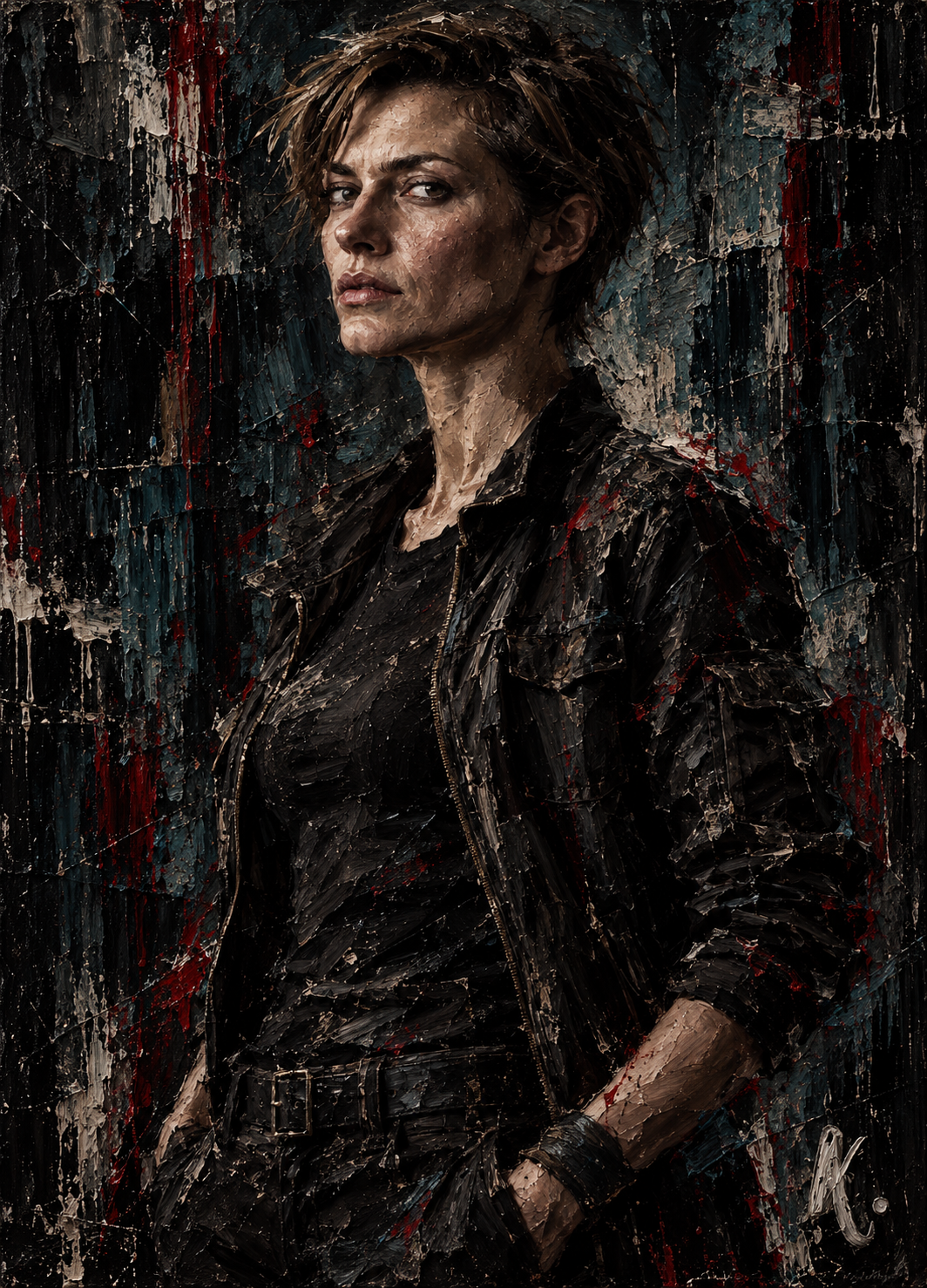
Guardian / Brujah
Nora Kessler
Nora Kessler, an eleventh-generation Brujah Embraced in 2005, previously worked in urban planning and mobility. She keeps Elysium in Les Tours. Her doctrine uses Paris's constant transformation as cover: a school before renovation, emptied offices, a depot awaiting new use or a building between purposes may support a meeting mortals can understand. Those examples give her no automatic right to the venues. They show where her method begins.
Her reflex question is: what has changed since the last check? An evacuation plan may be a month old and already wrong. A security team has changed; a landing is sealed; a contractor holds a duplicate badge; a floor has new tenants. Nora checks such details before guaranteeing the Peace of Paris. Change makes credible cover precisely because it produces real employees, real deadlines and real inspections. Ignoring them would turn the city into scenery.
Her Marks may resemble graffiti, stencils, technical arrows, worksite paint or survey markers. This public chapter does not give their operational key. The method works by using visual language already present in the city, not because a magical sign makes guests invisible. A neighbour may take a Mark for ordinary worksite notation; the same neighbour may ask why it was not there yesterday.
Nora knows her weakness, although she does not always avoid it: mobility can become constant agitation. Changing routes, contacts or procedures too often creates its own errors. A familiar, properly checked room may be safer than a new address chosen only for the sake of movement. Her maxim, “A place that stays the same for too long always ends up belonging to someone,” warns against routine; it does not require abandoning all memory of a place.
Satomé thinks in solidarities, borders and political consequences; Nora reads buildings, access and temporary uses. The Bourgmestre answers for the Bourg. The Keeper answers for the Peace when a particular venue hosts it. Their shared belief that Les Tours must not harden into a fixed shape does not prevent disagreement. A technically safe venue may cost its neighbours too much; a territorial compromise may be impossible to secure for a reception.
07 / Hunting in Les Tours
Hunting in Les Tours
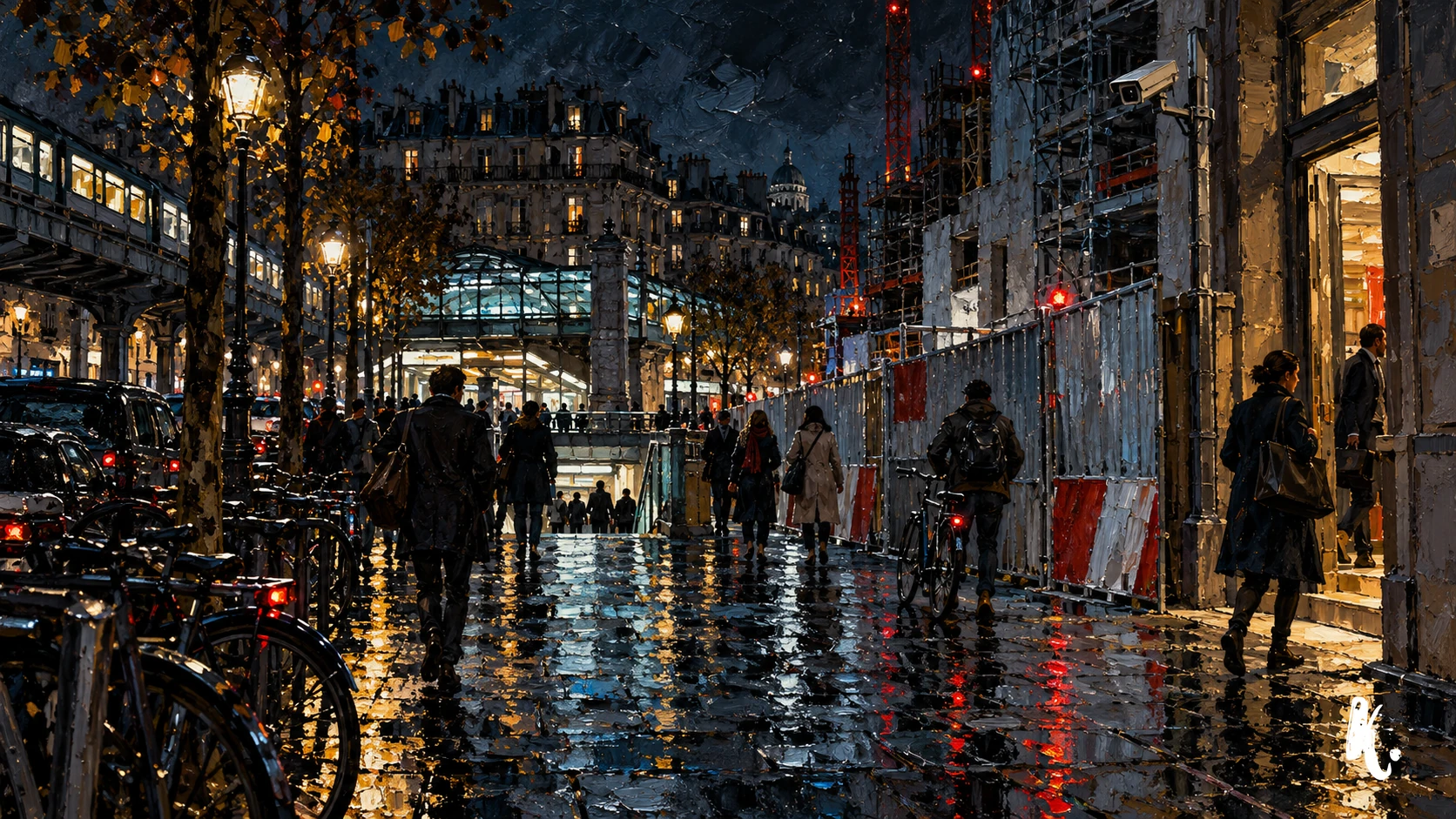
Hunting in Les Tours requires reading ground that is being revised. A transport exit, a shop's hours, a construction shift or residents returning home give a street its nocturnal uses. A meeting that seemed discreet last week may now be filmed by a new camera or interrupted by a delivery. Change offers more than openings: it destroys predatory habits that thought themselves invisible.
Social margins are not witness-free zones. People living precariously have relatives, colleagues, associations, routes and reasons to be cautious. Calling them easy prey confuses vulnerability with lack of consequences. A hunter may find that neighbours watch over a person more closely than a private security service would. The moral question is practical: what harm does hunting leave in human relationships already under pressure?
Worksite cover works only for someone who could plausibly be employed or expected there. Helmets, badges and fences do not replace registers or shifts. A cultural evening has volunteers, ticketing and guests; a park has uses even when it seems deserted. Kindred must adapt their method to these constraints or withdraw. Immediate predatory success may cost an address, trust or the Masquerade several nights later.
D10 / Hunting circumstances
- 01A team leaves a worksite at staggered times.
Opportunity : Routes split near the transport stop.
Complication : The supervisor is still counting colleagues.
- 02A visitor looks for an entrance at Bercy.
Opportunity : She accepts directions.
Complication : Her host follows her arrival by phone.
- 03A courier waits below the Olympiades.
Opportunity : The lobby offers a changing route.
Complication : The delivery is logged.
- 04Friends leave a cultural event.
Opportunity : The group separates.
Complication : They share their journey home.
- 05A resident returns after her shift.
Opportunity : The courtyard seems quiet.
Complication : A neighbour waits to lock up.
- 06A contractor checks a worksite fence.
Opportunity : He works alone for a moment.
Complication : His photos are sent immediately.
- 07A community meeting ends.
Opportunity : Some attendees take different routes.
Complication : The group checks everyone gets home.
- 08A walker follows the Bois de Vincennes.
Opportunity : Lighting changes at the edge.
Complication : A worker knows the path schedule.
- 09Someone seeks a taxi in Belleville.
Opportunity : They wait beyond the crowd.
Complication : An open shop recognises its regulars.
- 10A worker finishes a late inventory.
Opportunity : A secondary exit remains usable.
Complication : The log must be signed before departure.
08 / PARIS
Places and landmarks
12e
Bercy
Offices, quays, events and transport create flows that differ from night to night. The archived April 2025 video shows how fast a rumour travels; it does not solve the incident it claims to show.
Explore the placeView the territorial map12e
Bois de Vincennes
A public green space has hours, maintenance staff and users. The wood's edge may change a route or a haven; it becomes neither free territory nor clan property.
Explore the placeView the territorial map13e
Bibliothèque François-Mitterrand
The Library preserves records while the surrounding streets change. Its documentary work measures time differently from a worksite; no nocturnal meeting erases its staff and rules.
Local importance : The Bibliothèque François-Mitterrand connects documentary memory with the large public flows of a changing neighbourhood.
Explore the placeView the territorial map13e
Paris Rive Gauche
Development, housing, offices and public space meet here. The routes they open still depend on verifiable human decisions and uses that may change again.
Local importance : At Paris Rive Gauche, urban planning shifts political balances without waiting for the agreement of those already on the ground.
Explore the placeView the territorial map13e
Olympiades
Built volumes hold lives, shops and shared responsibilities. A gallery is not mere concrete scenery; someone maintains and recognises its thresholds.
Explore the placeView the territorial map20e
Cimetière du Père-Lachaise
The cemetery's memory reveals the gap between Hecata interest and territorial authority. Visitors, families and human staff remain actors in the place.
Local importance : Hecata influence is strong at the Cimetière du Père-Lachaise. It amounts to neither ownership nor sovereignty over the place.
Explore the placeView the territorial map20e
Belleville
A neighbourhood cannot be reduced to one political network. Living, trading, travelling and defending a local facility produce interests that sometimes align and sometimes compete.
Local importance : In Belleville, counter-powers and local networks often adapt faster than central institutions.
Explore the placeView the territorial map09 / Possible mobile Elysiums
Possible mobile Elysiums
Five possibilities from the public register, not five active venues, a fixed rotation or a selection for this date.
20e / Human cover : Pre-renovation audit
École Diderot
- Atmosphere
- Rooms being relocated, work plans and attentive neighbours. A school remains more than an abstract building even when its classrooms are empty.
- Possible use
- An authorised audit could provide cover for a gathering.
- Constraint
- Neighbours and renovation timetable; indicative capacity of 100.
- Why this venue
- Nora must know who enters for the works and who answers for the school before inviting anyone.
13e / Human cover : Worksite visit
Ateliers Masséna
- Atmosphere
- Spaces being refitted and technical circulation that may change during the day.
- Possible use
- An escorted visit can account for an unusual group presence.
- Constraint
- Changing layout; indicative capacity of 150.
- Why this venue
- Yesterday's checked route is no guarantee for tonight.
12e / Human cover : Artistic residency
Fabrique Bel-Air
- Atmosphere
- Studios, shared equipment and cultural staff present beyond office hours.
- Possible use
- A limited reception may fit a credible cultural activity.
- Constraint
- Cultural audience and booking schedule; indicative capacity of 70.
- Why this venue
- Cover holds only if artists and human staff retain their real place.
13e / Human cover : Property audit
Tour Mercure
- Atmosphere
- Office floors, controlled arrivals and careful building management.
- Possible use
- An audit may explain a delegation, not an unrecorded arrival.
- Constraint
- Cameras and badges; indicative capacity of 120.
- Why this venue
- Nora checks actual access rights rather than trusting an apparently available facade.
20e / Human cover : Municipal inventory
Dépôt Gambetta
- Atmosphere
- Equipment, lists, staff and movements whose timing does not belong to the guests.
- Possible use
- An authorised inventory may support a discreet meeting if the mortal activity remains plausible.
- Constraint
- Local surveillance; indicative capacity of 130.
- Why this venue
- An apparently empty depot may still have staff, keys and an accountable manager.
10 / Kindred linked to the Bourg
Kindred linked to the Bourg
The published corpus associates twelve figures with Les Tours, including the office holders Satomé and Nora Kessler. The list records ties to a place, not a permanent assembly or common allegiance. Brujah are numerous without holding a clan Domain: Clodion de Meaux, a traveller since the revolutionary years; Étienne Ravel, teacher and mediator; Jeanne “Nine” Morel, attentive to media traces; Malik “Malko” Benacer, negotiator; Théodore Malet, protector; and Yanis Benamar, known as Gengis, an Anarch voice. Each brings a different method.
Victoire Langlois, a Caitiff, belongs to this web of territorial ties, but her current situation prevents her from appearing as a free actor in the Bourg: she has been staked and remains detained pending judgement. Detention does not erase her connection; the consequences of her case may still concern Les Tours. Having her walk through present-day scenes as though nothing happened would alter canon. A rumour about her does not replace her established status.
Sofia “Sève” Marek, a Gangrel, reads parks, derelict plots, railways, gardens and useful routes. Her knowledge may help the Anarch network without giving her every haven in the Bourg. Mirela “Nox” Drăgan, a Ravnos, works with credible covers, identities and social access. Elias “Père Zéro” Khoury, of the Sacerdoce, acts through mediation, recruitment and ideology. Their presence shows how much the territory exceeds its Brujah connections. None of these skills establishes clan sovereignty.
Brujah
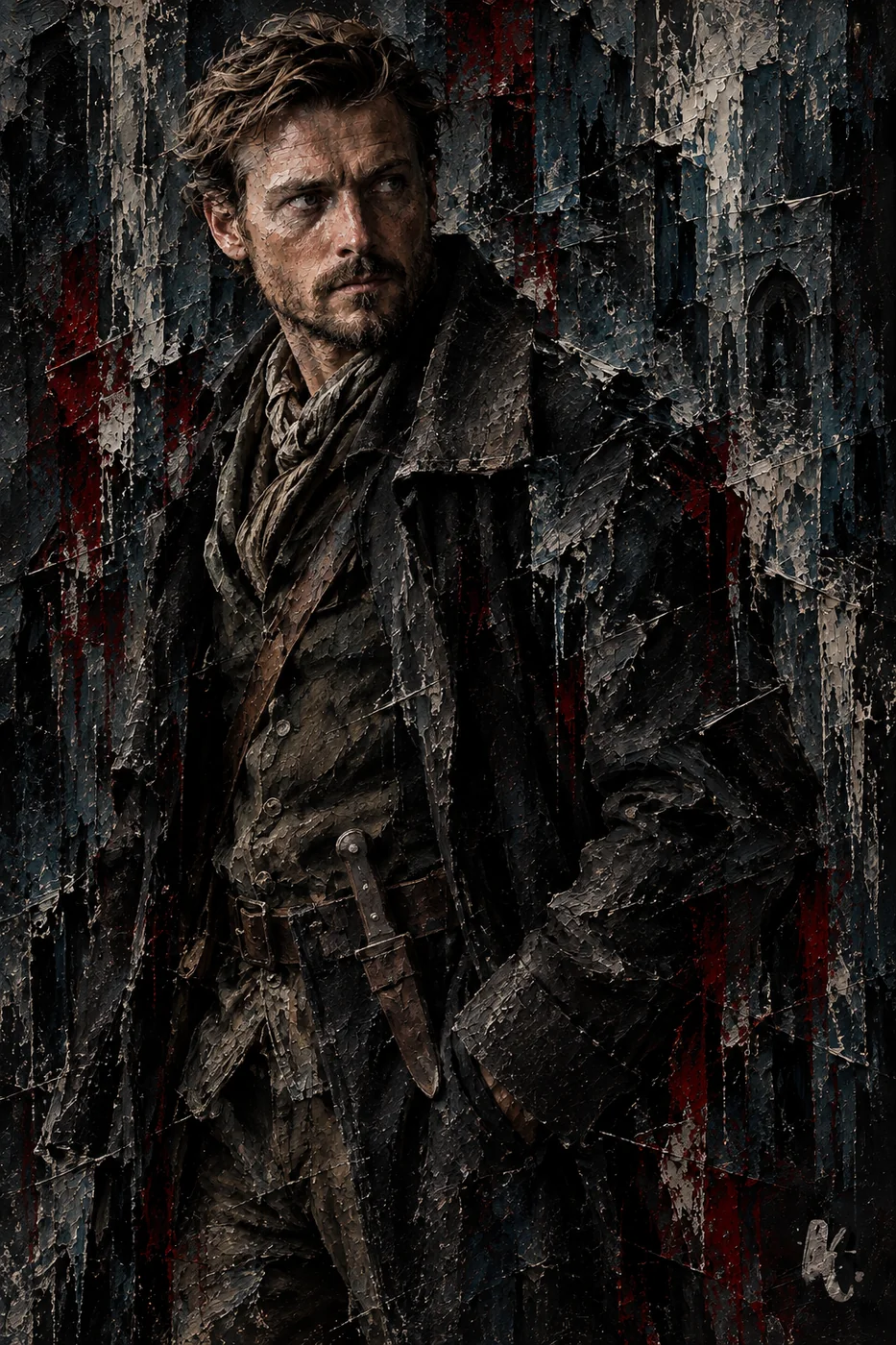
Clodion de Meaux
Embraced during the revolutionary years while serving as a messenger between distrustful groups, Clodion distrusts grand historical narratives. He favours verifiable local action and carries a practical knife that recalls a life without prestige.
Active, traveller
Explore the public record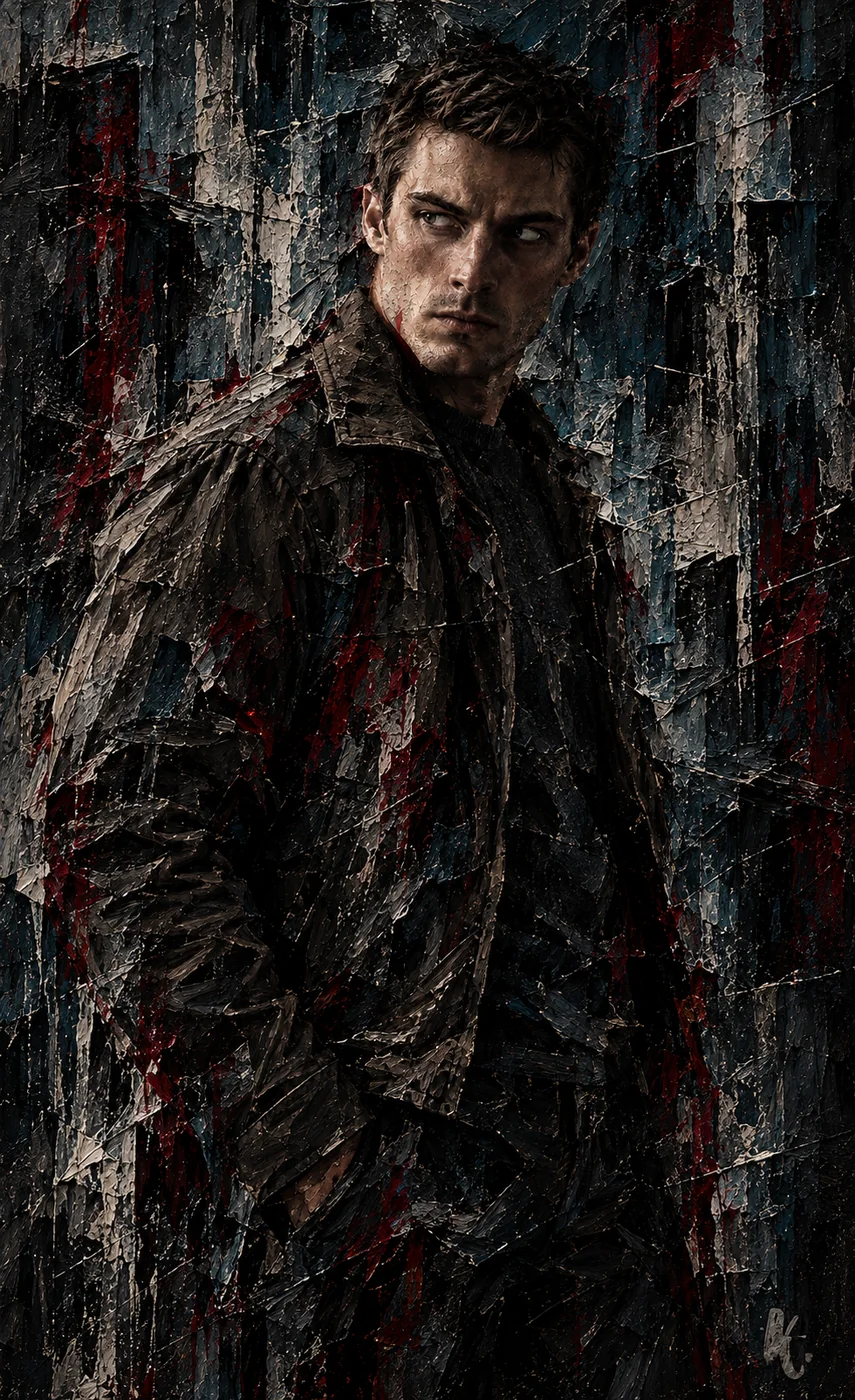
Brujah
Théodore Malet
A former manual labourer and combat sports practitioner, Théodore was Embraced after helping survivors during the chaos of 2010. He protects without enjoying command and is learning that the desire to save others can become another form of control.
Active, protection
Explore the public record
Brujah
Yanis Benamar, dit Gengis
Known as Gengis, Yanis grew up among activist networks and neighbourhood solidarity groups. He knows how to turn a local injustice into a public event before the authorities can reduce it to a mere incident.
Active in Anarch networks
Explore the public record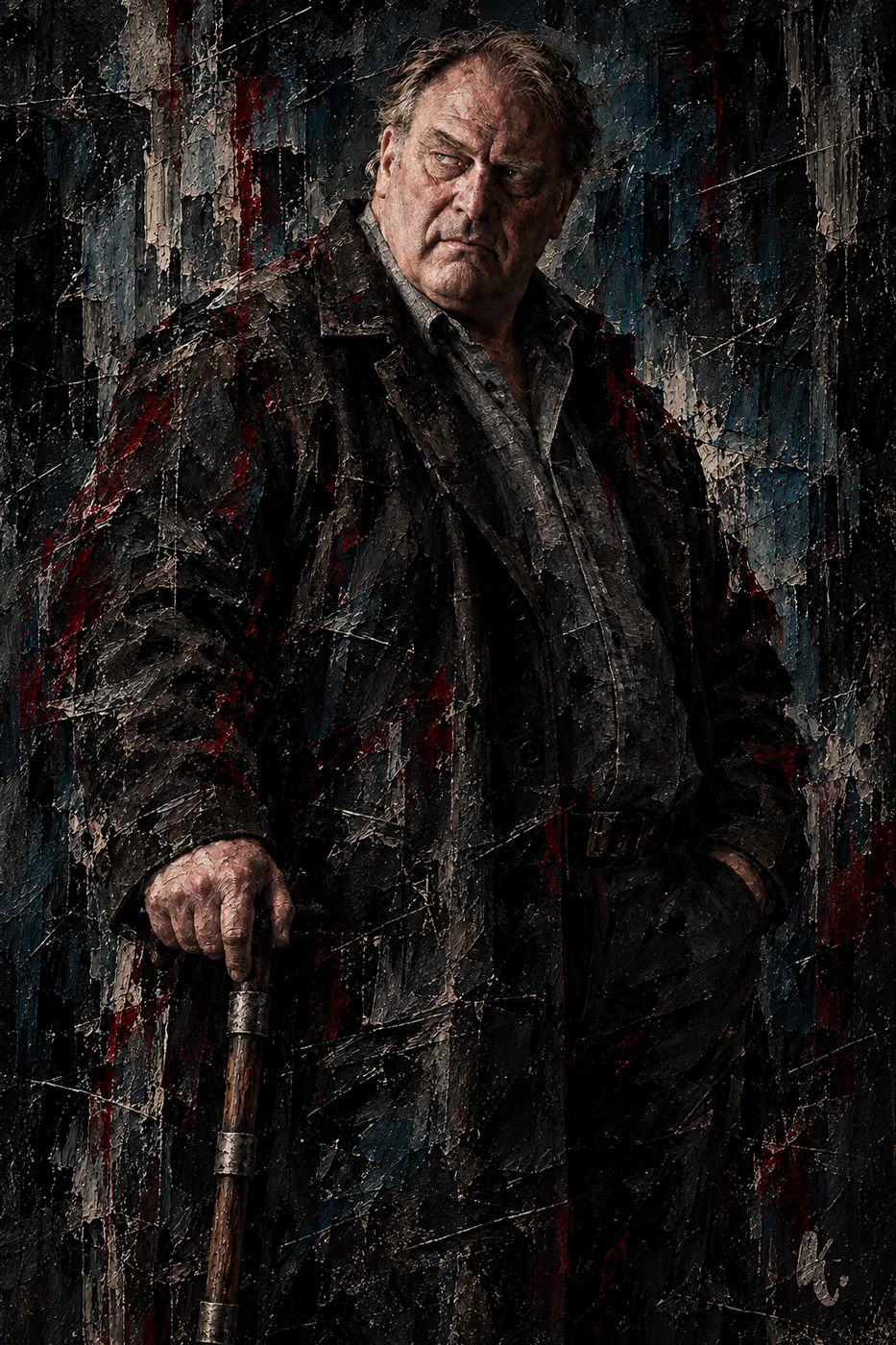
Brujah
Étienne Ravel
A former teacher of social history, Étienne was chosen for his ability to turn anger into method and transmission. He protects Brujah willing to learn but despises those who confuse rage with courage.
Active, teacher and mediator
Explore the public record
Caitiff
Victoire Langlois
Victoire sought to help Anarchs find an Elysium without a Court intermediary. She used an imperfect orientation Mark and remains staked and detained pending judgement.
Staked, detained pending judgement
Explore the public record
Brujah
Jeanne « Nine » Morel
A former independent local journalist, Jeanne works under several identities and watches media and digital traces of the Anarch network.
Media traces and Masquerade
Explore the public record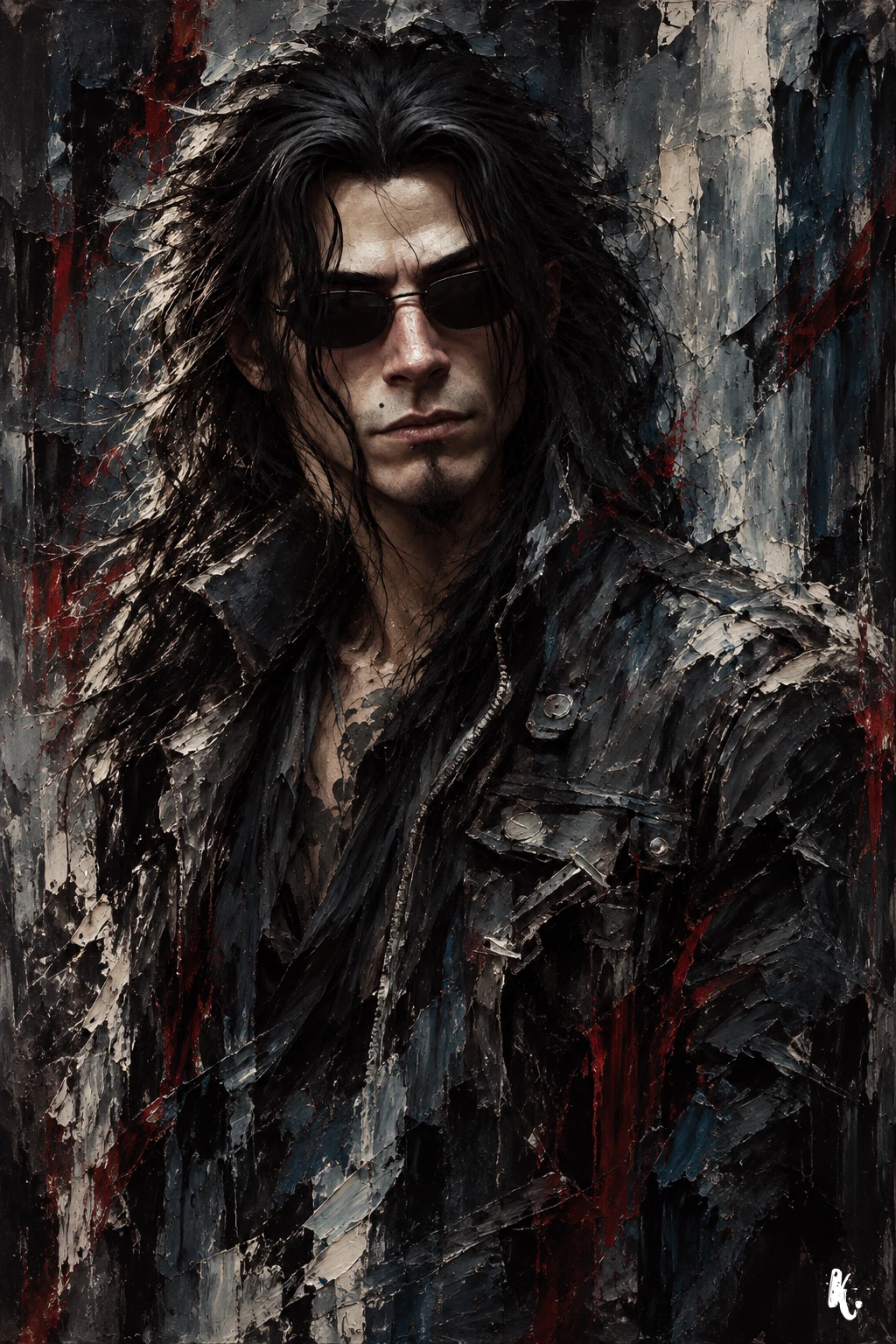
Brujah
Malik « Malko » Benacer
A former specialist educator who later became a trade unionist in the voluntary sector, Malik negotiates with independent Domains, Anarch groups, Caitiffs, thin-bloods and Camarilla intermediaries.
Negotiation and diplomacy
Explore the public record
Gangrel
Sofia « Sève » Marek
A former landscape worker and green-space technician, Sofia knows parks, derelict plots, railways and gardens. She provides the Anarch network with temporary havens and safe routes.
Territory, havens and logistics
Explore the public record
Ravnos
Mirela « Nox » Drăgan
A former events and independent production professional, Mirela understands who really controls a room and builds credible social contexts.
Covers, identities and access
Explore the public record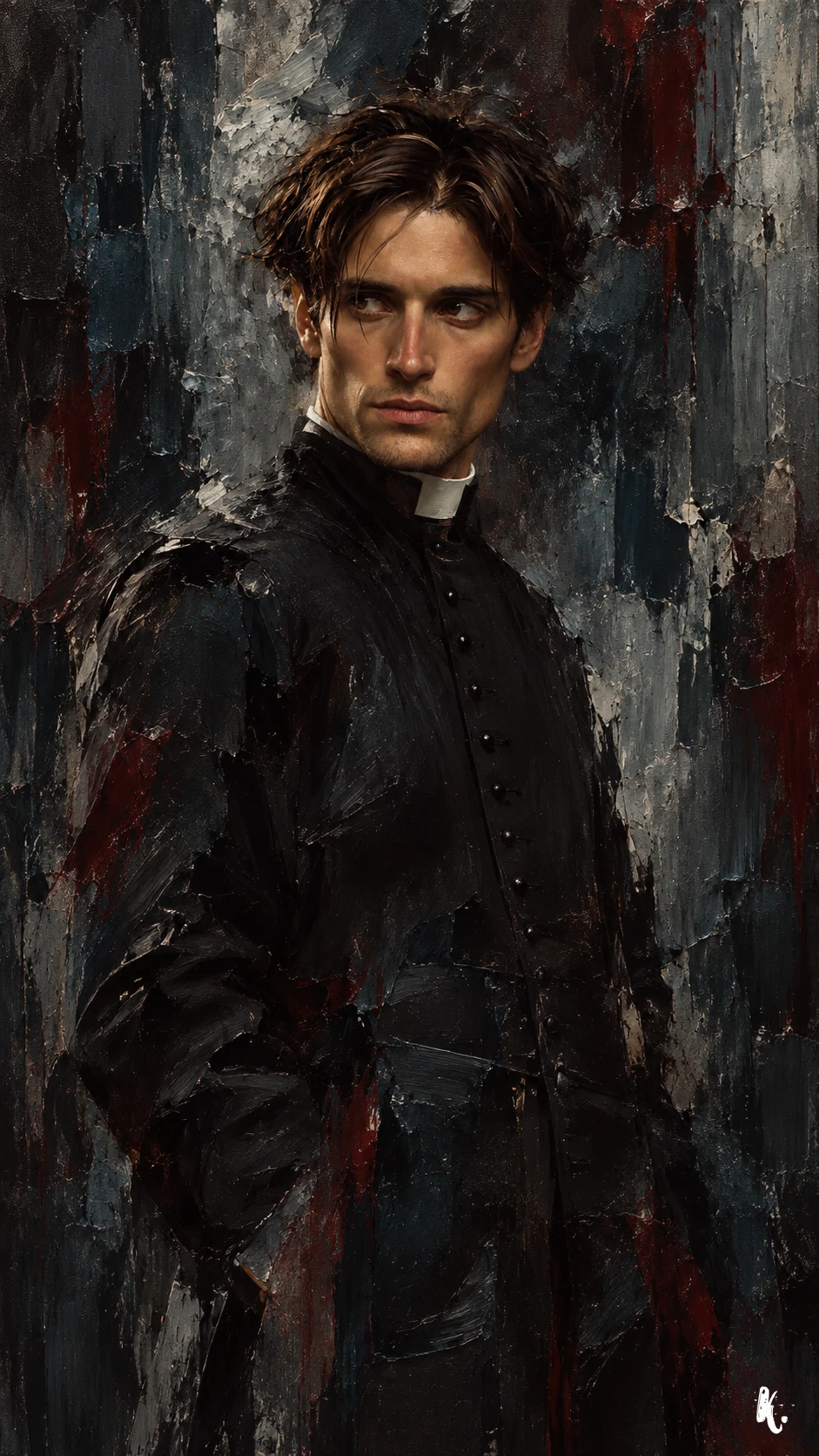
Sacerdoce
Elias « Père Zéro » Khoury
A former student of philosophy and religious history, Elias became an ideological mediator and cautious recruiter. He seeks those who have already stopped believing in authority.
Mediation, recruitment and ideology
Explore the public record11 / Institutions and responsibilities
Institutions and responsibilities
The Praxis makes Satomé answer for the territory. It replaces neither arrondissement administrations, transport services, co-owners' associations, property holders nor workers. The Court may sanction a Kindred; it cannot issue a demolition permit. A human authorisation may be lawful and politically disastrous for the Bourg. Important decisions must be read in mortal records as well as nocturnal relationships.
The Familia has a presence in eastern Paris without becoming Les Tours. Hecata interests around Père-Lachaise do not form a recognised parallel government. Associations and Anarch networks have their own aims; contact with the Bourgmestre does not absorb them into her administration. Nora keeps an Elysium when one is actually established for an occasion. A list of possible venues makes no room a permanent institution or an active venue on a given date.
12 / Public traces
Public traces
The public Bercy Archive reports eleven seconds of footage, several copies and a media explanation that did not settle every question. It confirms no supernatural identity. Player characters may seek the original, trace the copies or protect those filmed; the document does not select a hidden truth for them. Its date matters: April 2025 is not the date of every later scene in Les Tours.
Other traces arise without an article: a work order, renewed lease, badge log, pre-works photograph or message between neighbours. A vampire may see only a moved fence; documents show who ordered and pays for it. Destroying one record need not erase its copies. The Storyteller may let several human explanations coexist until player characters check them.
Nora's Marks belong to a city already full of technical marks. The public text describes their visual family, not a key with which to exploit them. That limit protects playability as well as the boundary between public information and Storyteller preparation. Readers can understand why a painted arrow interests Nora without receiving a clandestine map of routes, caches or meetings.
13 / Playing Les Tours
Current tensions
The interrupted passage
- Situation
- Renovation closes a route used by residents and Kindred.
- Actors
- Satomé, residents, the building manager and an Anarch group.
- Stakes
- Access to homes and an old territorial agreement.
- Why it persists
- Written rights and tolerated uses do not match.
- What could worsen it
- An improvised entrance endangers residents.
- Player character involvement
- Player characters can verify rights, negotiate a detour or relinquish their advantage.
The room still occupied
- Situation
- A possible Elysium venue retains unexpected human activity.
- Actors
- Nora, a cultural team, Satomé and prospective guests.
- Stakes
- The Peace of Paris and staff safety.
- Why it persists
- Cancellation costs favours; displacing humans leaves evidence.
- What could worsen it
- A safety inspection reveals an unexplained presence.
- Player character involvement
- Player characters can move the reception, help staff or propose a verifiable cover.
One voice for a whole neighbourhood
- Situation
- A local protest is presented as every Anarch’s position.
- Actors
- Yanis, Malik, Satomé and a residents’ association.
- Stakes
- The protest’s legitimacy and residents’ autonomy.
- Why it persists
- Media prefer one spokesperson to real disagreement.
- What could worsen it
- An ultimatum turns a practical claim into a claim of sovereignty.
- Player character involvement
- Player characters can make distinct positions heard or negotiate a limited agreement.
The cemetery’s memory
- Situation
- Works around Père-Lachaise disrupt several uses.
- Actors
- Satomé, families, site staff and Hecata contacts.
- Stakes
- Ceremonies, access and political balance.
- Why it persists
- Each party describes a different kind of claim on the same space.
- What could worsen it
- A limited favour is announced as a cession of the Bourg.
- Player character involvement
- Player characters can document uses, protect a ceremony or clarify the agreement.
D10 / Rumours
- 01
Satomé supposedly knows every worksite that will alter a haven; workers doubt this omniscience.
- 02
Nora reportedly rejected a room because its accurate plan was already two weeks old.
- 03
An Anarch network supposedly owns all Belleville; even its members disagree.
- 04
An intact copy of the Bercy footage supposedly exists; nobody has established who holds it.
- 05
The Hecata supposedly received Père-Lachaise; no public record confirms a cession.
- 06
An old mark of Nora’s reportedly remains beneath a moved fence.
- 07
At Tour Mercure, a badge supposedly opens a floor absent from the current list.
- 08
Victoire Langlois was supposedly seen free in the Bourg; this contradicts her established detention.
- 09
A neighbour reportedly keeps every pre-renovation plan without knowing who asks for them.
- 10
École Diderot is supposedly available every week; the works schedule makes that uncertain.
D10 / Incidents
- 01
A fence moves before neighbours receive the promised notice.
- 02
A badge valid yesterday denies a contractor entry today.
- 03
Guests arrive during a safety inspection that was scheduled for the following morning.
- 04
An association demands a passage a coterie used secretly be reopened.
- 05
A maintenance worker recognises a Mark on a new wall.
- 06
A copy of the Bercy footage circulates with an altered date.
- 07
A municipal inventory reveals an unlogged delivery.
- 08
A Père-Lachaise ceremony moves without every family being told.
- 09
A new camera watches a route hunters now use routinely.
- 10
An owner invokes title to close a shared entrance.
14 / Playing Les Tours
Story hooks
The door onto the worksite
Renovation closes an entrance the day before a promised meeting.
- Problem
- The route was tolerated but never contracted.
- Actors
- Satomé, residents and the contractor.
- Complication
- A detour crosses space whose residents want more security.
- Open question
- Will the characters protect the meeting, side with residents or seek a new compromise?
Nora’s plan
A possible Elysium appears ready, but its evacuation plan no longer matches the doors.
- Problem
- The Peace cannot rely on an obsolete plan.
- Actors
- Nora, managers and prospective guests.
- Complication
- An official check will leave a record.
- Open question
- Will the characters obtain a check, change venue or cancel the gathering?
Eleven seconds at Bercy
A new copy of the archived footage reaches a witness.
- Problem
- The versions still do not identify the figures.
- Actors
- The witness, Satomé and those reposting the clip.
- Complication
- Contacting the witness may expose them publicly.
- Open question
- Will the characters trace copies, protect the witness or let the rumour fade?
Victoire’s name
A leaflet claims Victoire Langlois is acting freely in Les Tours.
- Problem
- The account contradicts her detention after being staked.
- Actors
- Victoire’s associates, Yanis and the leaflet’s authors.
- Complication
- Publicly correcting the rumour would expose other facts.
- Open question
- Will the characters deny it, seek its author or treat the rumour as a political manoeuvre?
Père-Lachaise remembered
Works move a ceremony and reopen an access negotiation.
- Problem
- A local interest is wrongly described as sovereignty.
- Actors
- Families, Satomé, cemetery staff and Hecata contacts.
- Complication
- Families need a solution before vampires settle their debate.
- Open question
- Will the characters defend the ceremony, limited access or clarification of rights?
The price of representation
A neighbourhood demand is attributed to every Anarch.
- Problem
- The signatories do not speak for everyone affected.
- Actors
- Satomé, Malik, Yanis and a human association.
- Complication
- Local media demand a single spokesperson.
- Open question
- Will the characters convene several voices, negotiate a limited deal or refuse the spectacle?